What to remember
- Lavender starts blooming from late June to mid-August, so the purple rows are at their best in the middle of summer.[1]
- Farm Tomita covers 29 hectares and welcomes over a million tourists annually, after doubling in size in 2008 with Lavender East.[2]
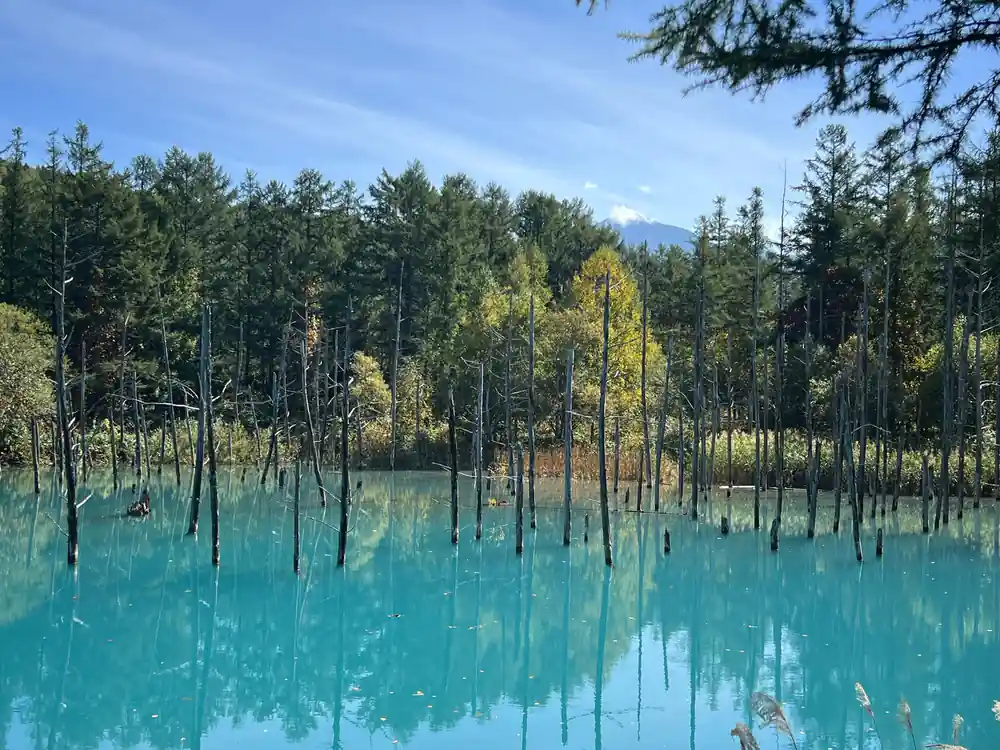
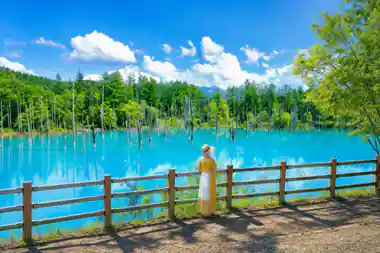
- The Shirogane Blue Pond formed after the December 1988 eruption of Mount Tokachi, and its colour comes from suspended aluminium colloids.[3]
- Furano is about a two hour drive from Sapporo, and day tours from the city travel by coach with a live guide.[4][5]
- The Furano and Biei day trip from Sapporo starts from US$48, with free cancellation up to 24 hours in advance.[5]
- Top choice Furano and Biei Blue Pond from US$48 Duration1 day[5]Rating4.56 from 122 reviews[5]LanguagesEnglish, Chinese, Japanese, KoreanMain stopsPatchwork Road, Blue Pond, Farm Tomita[5]Free cancellationCancel up to 24 hours ahead[5] Check availability
- Biei and Furano Flower Sea from US$43 Duration10 hours[6]Rating4.76 from 51 reviews[6]LanguagesChinese, English, Japanese, Traditional ChineseMain stopsBiei, Furano, Farm Tomita[6]Free cancellationCancel up to 24 hours ahead[6] See this tour
- Hokkaido Highlights Trip from US$56 Duration10 hours[7]Rating4.55 from 87 reviews[7]LanguagesChinese, English, JapaneseMain stopsCape Kamui, Otaru Canal[7]Free cancellationCancel up to 24 hours ahead[7] See this tour
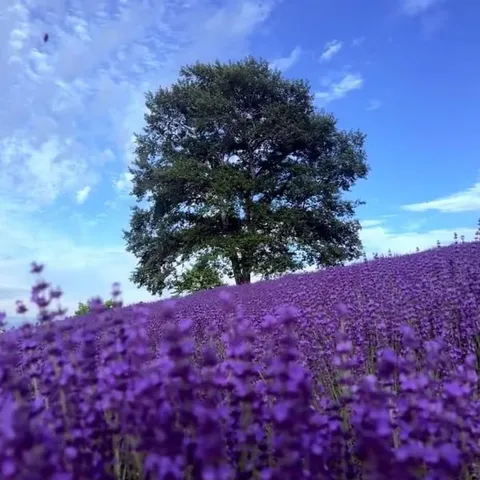
Lavender has been cultivated in Hokkaido since the 1940s.
Worth it for the flowers and the story
Pre-booking checklist
How Lavender Reached Hokkaido's Frontier Valley
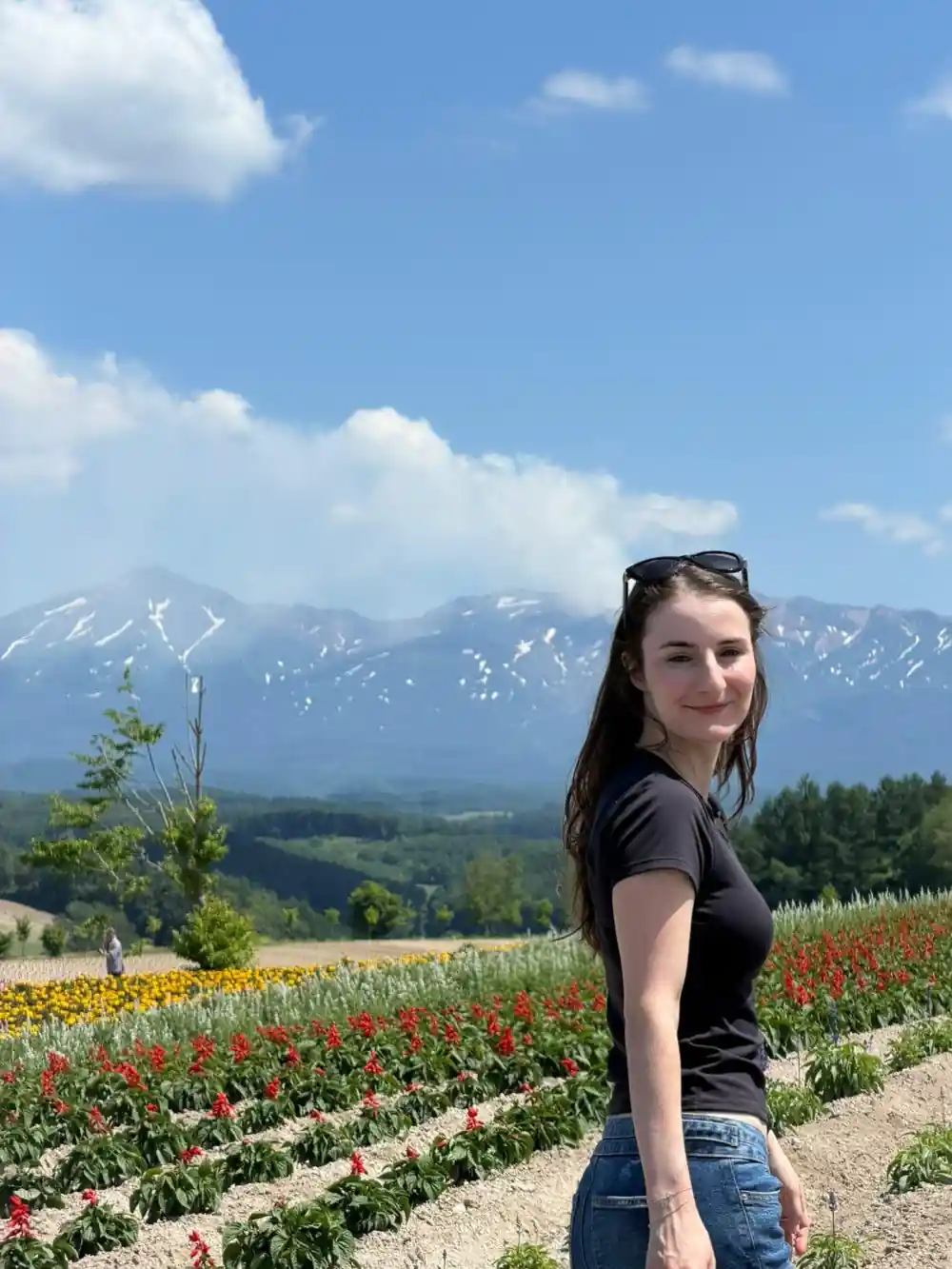
Furano sits in a farming basin in the middle of Hokkaido, ringed by low hills and watched over by Mount Tokachi, which stands 2,077 meters high.[9] This is working country first: wheat, potatoes, beans and melons fill the plots, and the mountains behind them hold snow into early summer. Lavender arrived here as a crop rather than an ornament. Lavender has been cultivated in Hokkaido since the 1940s.[10] The plant wants sharp drainage, a real winter chill and plenty of sun, and the valley offers all three. Furano's population is approximately 26,000, including the incorporated communities in the outskirts.[11] It is a small town with a very large view.
Reaching the valley is straightforward. Furano is about a two hour drive from Sapporo using the Doo Expressway between Sapporo and Mikasa.[4] The road leaves the city, crosses farmland, then drops into the basin with the Tokachi range filling the windscreen. Summer here is short and generous. Lavender starts blooming from late June to mid-August.[1] In July the average temperature in Furano is 22.1°C, warm enough for a shirt and cool enough to keep walking all afternoon, with long light that lasts well into the evening.[8]
The Synthetic Fragrance Crisis and Near Collapse
Lavender was planted here for oil, not for postcards. Growers cut the flowering spikes and steamed them in small stills, then sold the oil on to makers of perfume and soap. That market changed underneath them. Synthetic fragrance compounds became cheap, consistent and easy to blend, and the price paid for natural oil from a remote valley in northern Japan fell away. One by one, farmers pulled up their lavender and put the land back into crops that paid. The fields shrank to a few survivors, and the practical knowledge of planting, cutting and distilling the crop nearly went with them.
Farm Tomita is the name attached to the refusal. The family kept the rows in the ground and kept the stills working while neighbours moved on, and that stubbornness now shows up in the number of coaches in the car park rather than in barrels of oil. What began as an oil business opens its gates to visitors through the summer. People walk between beds that are still farmed, past drying bunches and distillation sheds, and the smell in the air is the same one the growers were chasing decades ago.
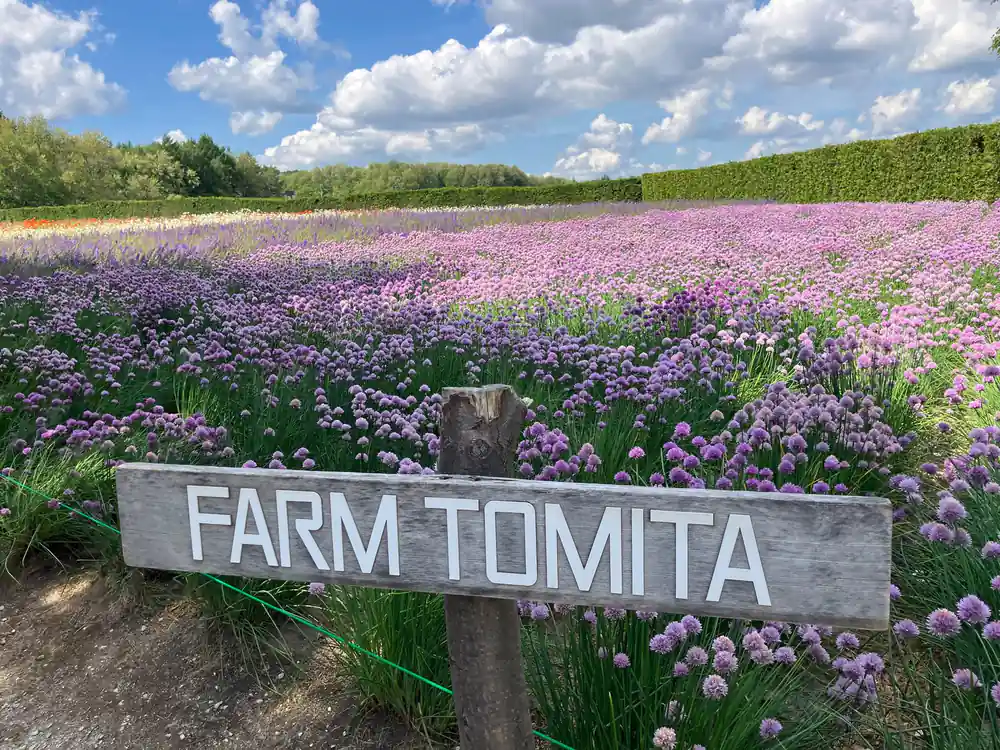
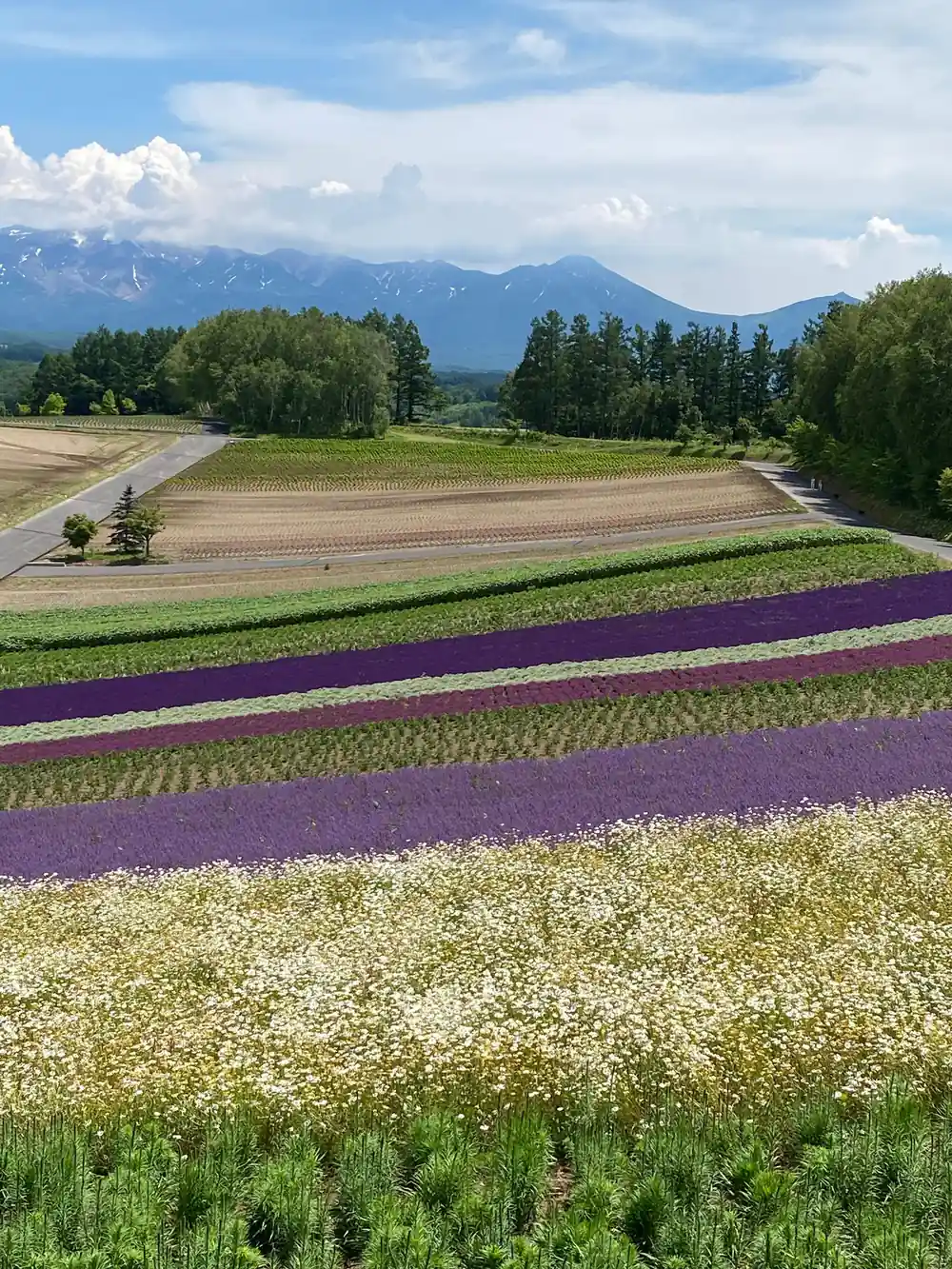
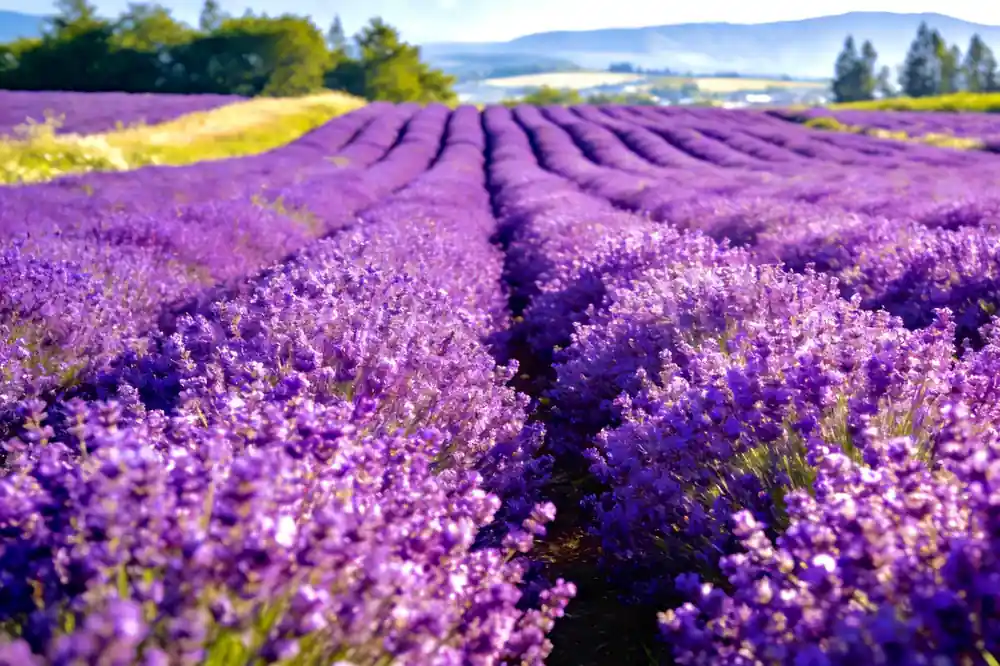
Rows of lavender running towards the Tokachi range above Furano
The Photograph That Changed Everything
The turnaround is usually told as a story about a picture. Rows of purple running towards the mountains, caught in low evening light, travelled far beyond Hokkaido, and people who had never heard of Furano started asking how to get there. The fields that had been nearly given up became a destination. Colour is the whole draw, and colour is seasonal. Lavender starts blooming from late June to mid-August, so anyone arriving outside that window sees green beds and quiet farm roads instead.[1]
What visitors find today is arranged for that flow of people while still being a farm. Paths run between the beds, a raised viewpoint looks across the colour, and the working rows carry on past the edges of the photograph. Farm Tomita is 29 hectares, after doubling in size in 2008 with the addition of Lavender East, and it welcomes over a million tourists annually.[2] That is a great many people for a small farming town, so the calmer hours are the early ones, before the coaches cycle through.
The Tomita Family's Stewardship and Distillation
Distillation is the part that disappears behind the colour. Lavender oil is made by cutting stems as the buds open, then steaming the flowers so the volatile oil can be separated and collected. It takes timing and a good nose: cut too early and the oil is thin, cut too late and the scent has already gone. The Tomita family built their working life around that craft and kept it going through the years when the commercial market for Japanese lavender oil was shrinking. The fields are the visible half of the business, and the sheds and stills behind them are the other half.
That craft also shapes what a visit feels like. Lavender has been cultivated in Hokkaido since the 1940s.[10] Walk past the beds, look at the drying bunches hanging in the shade, and step into the shop where oil, soap and dried flowers are sold. The growing calendar runs everything here, so what you see depends on the week you arrive, and a field that is flat green early in the season can turn solid purple later on.
from US$48
The Colored Hokkaido day trip from Sapporo runs for 1 day, with stops at Blue Pond, Shikisai No Oka and Farm Tomita.[5]
Crop Rotation and the Birth of Patchwork Hills
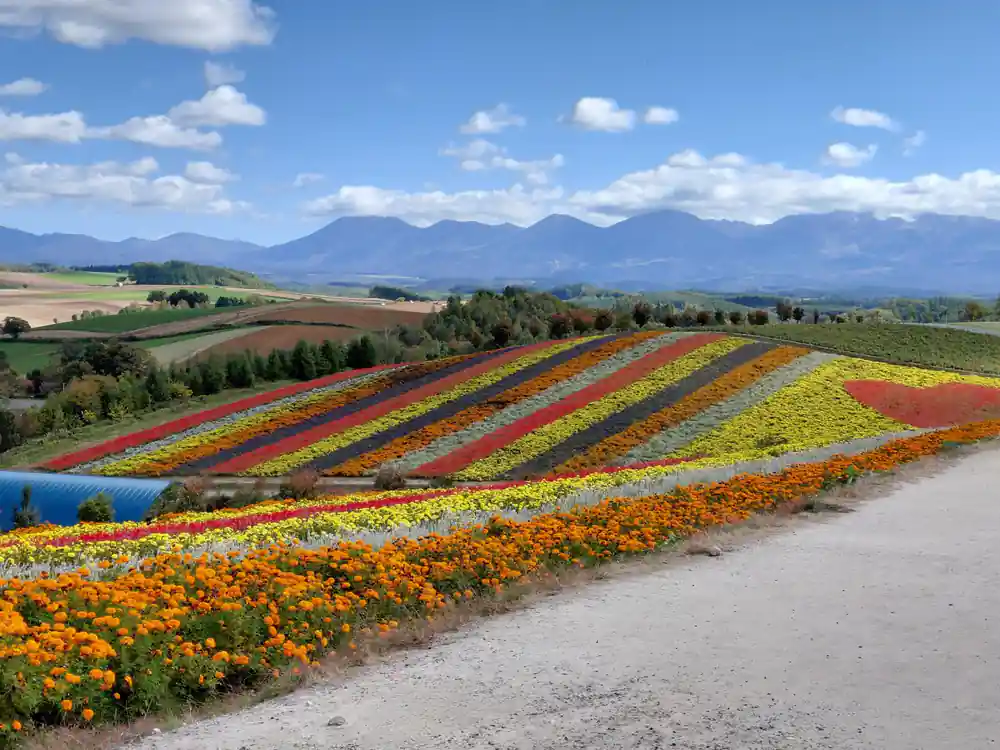
The hills between Furano and Biei are not a garden. They are a grid of farm plots, and the colour comes from farming rather than planting for effect. The area around the Seven Stars Tree in Biei is known as Patchwork Road, where different crops are planted in each plot, forming Biei's iconic scenery.[12] The palette is agricultural: golden wheat, purple potato flowers, green bean fields, brown plowed earth.[13] Expect the picture to change with the farming calendar, and expect farmhouses and barns to punctuate the plots.
Shikisai-no-oka is the other famous stop on the same run: a panoramic flower garden in Biei that covers fifteen hectares of land.[14] Where the patchwork hills are working farmland, this is a planted garden, with striped beds rolling over a slope and a view back across the fields. The two make a natural pair, and most itineraries include both in a single day. Bring a wide lens for the hills, something with a little reach for the flowers, and be ready for the light to change quickly as cloud moves over the range.
The Named Trees of Patchwork Road
A single tree standing alone in the middle of a field becomes a landmark. The named trees around Biei work exactly that way: one trunk, one silhouette and a line of people at the roadside waiting for a gap in the traffic. The area around the Seven Stars Tree is known as Patchwork Road, where different crops are planted in each plot.[12] The trees are fixed points in a landscape that changes with every harvest, and that contrast is the appeal.
Seeing them takes patience and a little manners. The trees stand on private farmland, so the view is from the road and the verge, and walking into a crop to get closer is not the way to do it. Drivers pull onto the shoulder, take their shot and move on; the whole exchange takes a couple of minutes. On a coach day trip the stops are usually brief, so have your camera ready before the doors open and know which tree you are looking for.
Planning Your Visit to Farm Tomita, Furano and Biei
Most visitors reach the flowers from Sapporo, by car or on an organised day trip. Furano is about a two hour drive from Sapporo using the Doo Expressway between Sapporo and Mikasa, so a self-drive day works if you leave early.[4] The coach option removes the driving, the parking and the navigation. The Colored Hokkaido tour has 2 starting location options in Sapporo and travels by coach to Patchwork Road, the Shirogane Blue Pond, Shikisai No Oka, a local restaurant and Farm Tomita, running for 1 day with a live guide in English, Chinese, Japanese and Korean.[5]
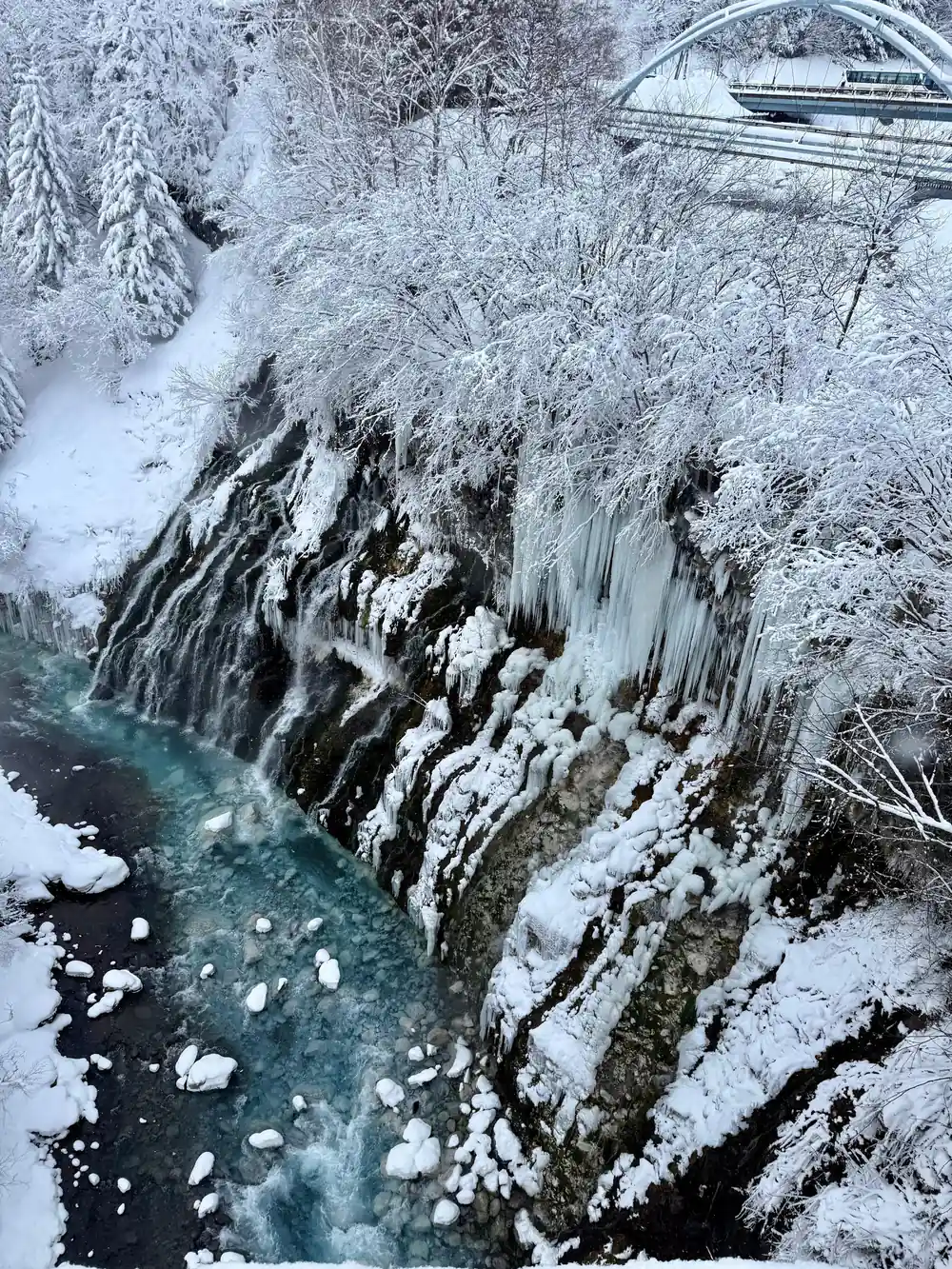
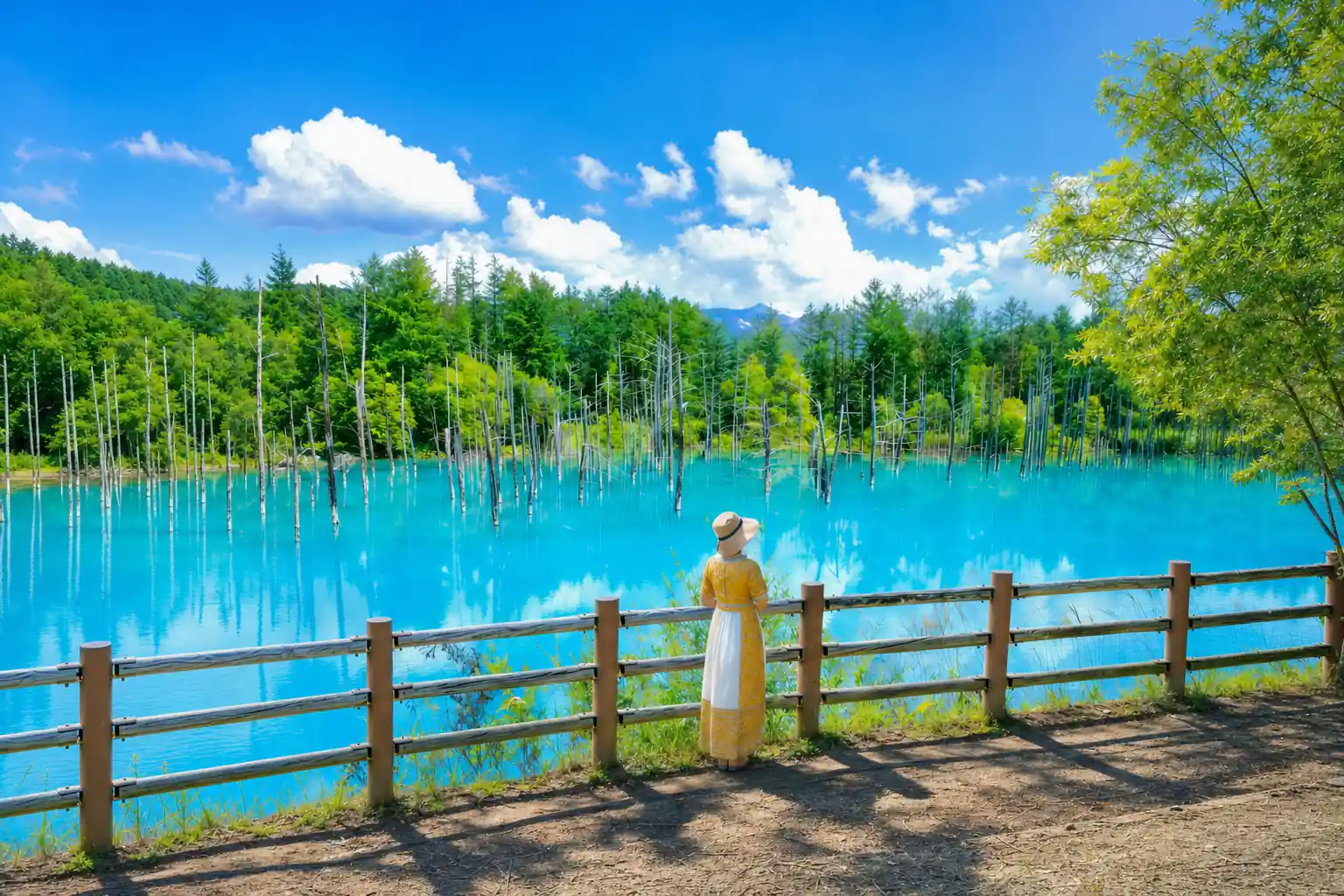
The Blue Pond is the stop that surprises people most. Emergency erosion-control dams backed up water after the December 1988 eruption of Mount Tokachi, and suspended aluminium colloids scatter light to give the pond its turquoise colour.[3] It looks different in every weather, grey and flat under cloud, almost luminous in sun. Nearby, Shirahige Waterfall plunges about 30 metres from the rock face to the river below, and some itineraries add it to the same run.[15] Both stops are short walks from a car park, and both reward a slow look rather than a quick photograph.
If you have time either side of the flower fields, Ningle Terrace, in the forest above Furano, is a cluster of shops built as wood cabins and lit up after dark.[16] It fits neatly at the end of a day in the hills. Details vary between listings, so read the booking page for what each tour includes on your date, and check whether pickup is available near your hotel. Then pack a light layer, a hat and a camera, and let the valley do the rest.
Traveller ratings for Furano and Biei day tours
Every value is a GetYourGuide rating from these listings:[5][6][17][18]
What a Furano and Biei day trip costs
Amounts are US dollar from-prices of GetYourGuide tour listings:[5][6][18][19]
When the valley blooms
Plan your Farm Tomita day
Pick your season
Lavender starts blooming from late June to mid-August, so book inside that window if purple is the point.[1]
Choose the coach
The Sapporo day trip runs for 1 day and includes a live guide in English, Chinese, Japanese and Korean.[5]
Start early
Coaches and cars both arrive through the morning, so the quietest hours are the first ones.
Dress for the valley
July in Furano averages 22.1°C, so bring a light layer, a hat and sunblock for the open beds.[8]
Carry a wide lens
Patchwork Road, the Blue Pond and Shikisai No Oka all reward a wide view and a steady hand.
Coaches from Sapporo to the flower fields and the Blue Pond
from US$48Reserve now & pay later