What to remember
- Aluminium colloids suspended in the water scatter light, producing the distinctive turquoise hue seen in Shirogane Blue Pond.[1]
- The pond formed when emergency erosion-control dams backed up water after the December 1988 eruption of Mount Tokachi.[1]
- Furano is about a two hour drive from Sapporo using the Doo Expressway between Sapporo and Mikasa.[2]
- Lavender starts blooming from late June to mid-August, and July in Furano averages 22.1°C.[3][4]
- At Shirahige Waterfall, groundwater seeping from the rock face plunges about 30 metres to the river below.[5]
- Top choice Furano & Biei Blue Pond from US$48 Rating4.56 from 122 reviews[6]Duration1 day[6]Guide languagesEnglish, Chinese, Japanese, Korean[6]HighlightsBlue Pond, Shikisai-no-oka, Farm Tomita[6] Check availability
- Biei & Furano Flower Sea from US$43 Rating4.76 from 51 reviews[7]Duration10 hours[7]Guide languagesChinese, English, Japanese[7]HighlightsBiei, Furano, Farm Tomita[7] See this tour
- Noboribetsu & Lake Toya from US$47 Rating4.30 from 323 reviews[8]Duration10 hours[8]Guide languagesEnglish, Japanese[8]HighlightsJigokudani, Cape Chikyu, Lake Toya[8] See this tour
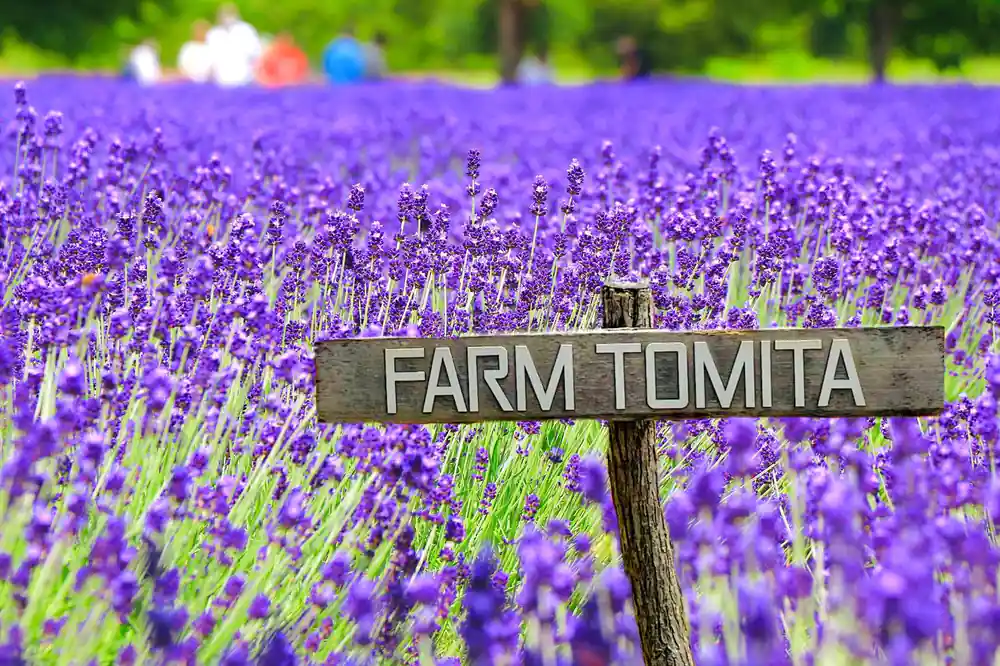
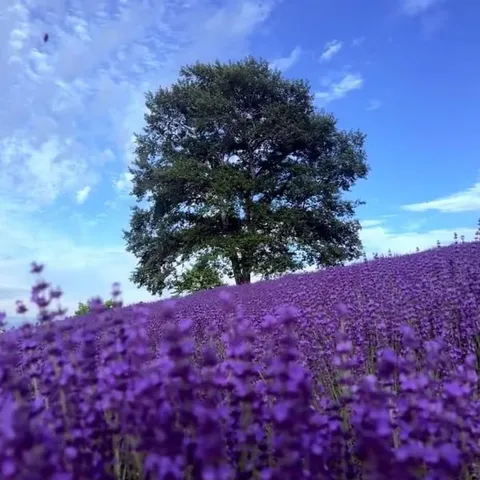
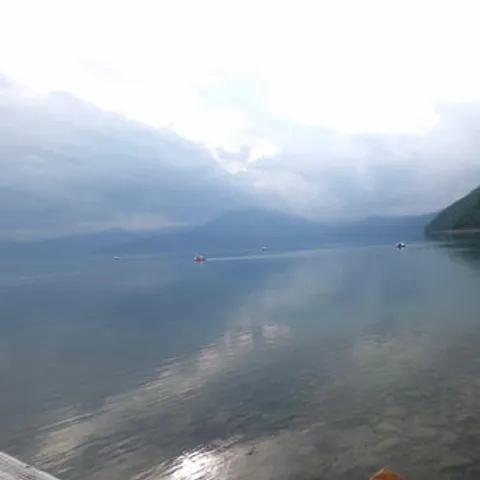
The December 1988 eruption sent volcanic mudflows down the Biei River, forcing emergency erosion-control dams whose backed-up water became the pond. Aluminium colloids suspended in the water scatter light, producing the distinctive turquoise hue seen in Shirogane Blue Pond.
Verdict: Is the Blue Pond Day Tour Worth It
Pre-booking checklist
On the day
Why the Blue Pond Turns Turquoise
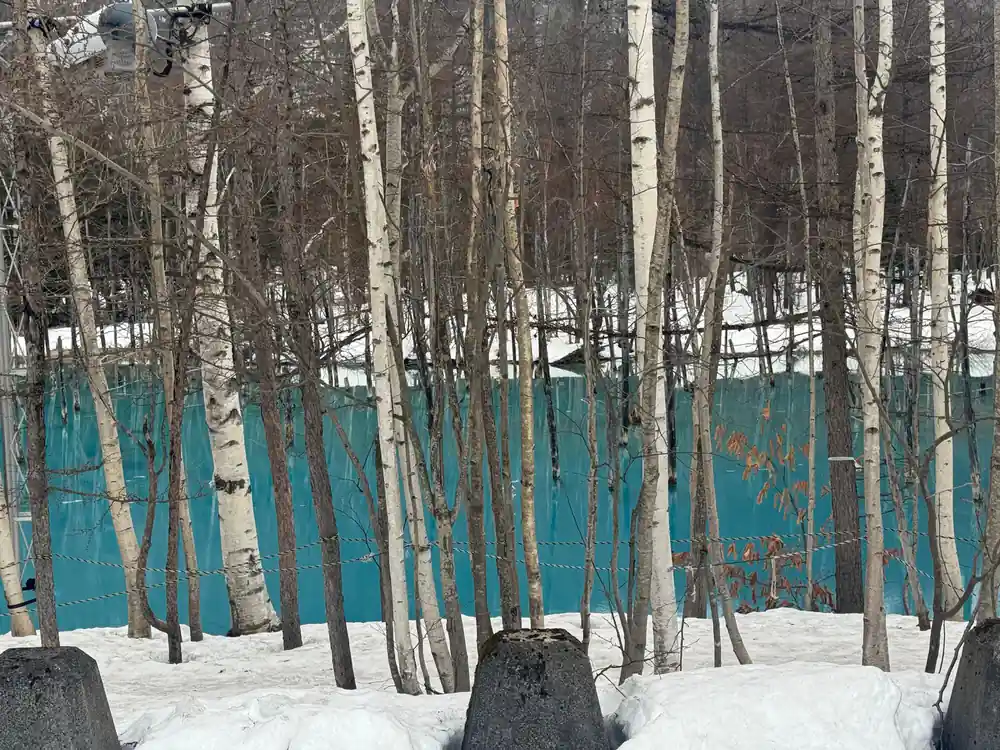
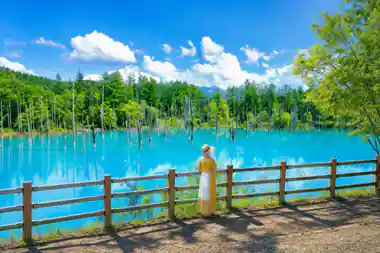
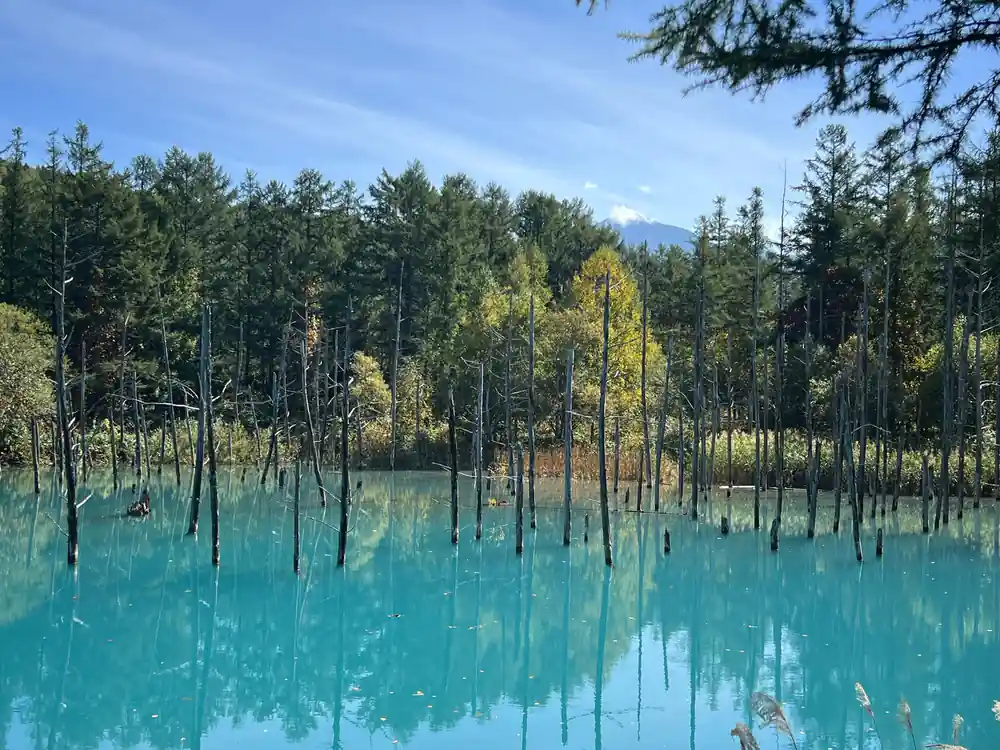
The Blue Pond sits in a hollow on the edge of Biei, a sheet of water the colour of a glass bottle held up to the sun. On a calm morning the surface is almost perfectly smooth, holding the pale trunks of drowned larch trees and a rim of forest in a mirror. Photographers call the shade Japan blue, and it is the reason many people ride north from Sapporo in the first place. What you are looking at is light rather than paint. Aluminium colloids suspended in the water scatter light, producing the distinctive turquoise hue seen in Shirogane Blue Pond.[1]
If you have ever wondered why are some ponds blue, the usual answer is what the water carries. Very fine particles held in suspension send short wavelengths of light back to your eye and let the longer ones travel on, so the water reads as blue or green rather than grey. Depth matters too. A still basin with a pale bottom gives the light more to work with than a shallow puddle, and a cloudy sky flattens the effect while direct sun lifts it.
That is why the pond never looks the same twice. On an overcast afternoon it can seem pale and milky, with the trees dark against it. In bright morning sun the same water turns vivid. The colour is real and reliable enough to have made the place famous, and changeable enough that two visits a week apart can feel like different scenery.
How an Erosion Dam Made the Pond
The Blue Pond is not an old mountain lake. The December 1988 eruption of Mount Tokachi sent volcanic mudflows down the Biei River, forcing emergency erosion-control dams whose backed-up water became the pond.[1] What began as a piece of flood defence, built to slow debris and protect the valley, ended up holding a still basin of water above the town. The mountain behind it all, Mount Tokachi, stands 2,077 meters high.[9]
It is a young pond in a working landscape, water pooled behind a barrier in a fold of the hills above the Biei River. When the water rose it swallowed the larch trees that were growing on the valley floor, and they are still standing in it, stripped and silvered. Nothing about the place looks engineered until you notice how level and calm the water sits in its basin.
Visitors often assume they are looking at a natural lake fed by snowmelt. The truth is stranger and, for most people, more interesting: a piece of engineering that became one of Hokkaido's most photographed views. That does not make the colour any less remarkable. It simply means the pond has a short story, told in decades rather than in geological time.
Pale larch trunks stand in the turquoise water of the Blue Pond above Biei.
The Drowned Larch Trees
The trees are the pond's signature. Pale trunks rise straight out of the blue water, some upright, some leaning, a few snapped off near the surface. In a photograph they read as dark lines against the turquoise; close up they look like driftwood planted upright, waterlogged and grey. Because the water is so still on a calm day, each trunk has a mirrored twin below it, which gives the pond its depth and its slightly unreal quality.
Their presence turns a pleasant pool into a picture. A bare sheet of blue water is hard to compose; a set of vertical lines in the middle of it gives the eye somewhere to go. Many of the famous images of the Blue Pond are built on that geometry, one or two trunks placed off-centre, the far treeline soft behind them, and a band of bright water across the middle of the frame.
Look after the trees rather than trample towards them. The bank is soft, the viewing area is small, and everyone is trying to take the same photograph. If you want the classic frame without a stranger's shoulder in it, arrive early or wait for a gap between coach groups, and be quick when the gap comes.
Shirahige Waterfall and the Biei Water
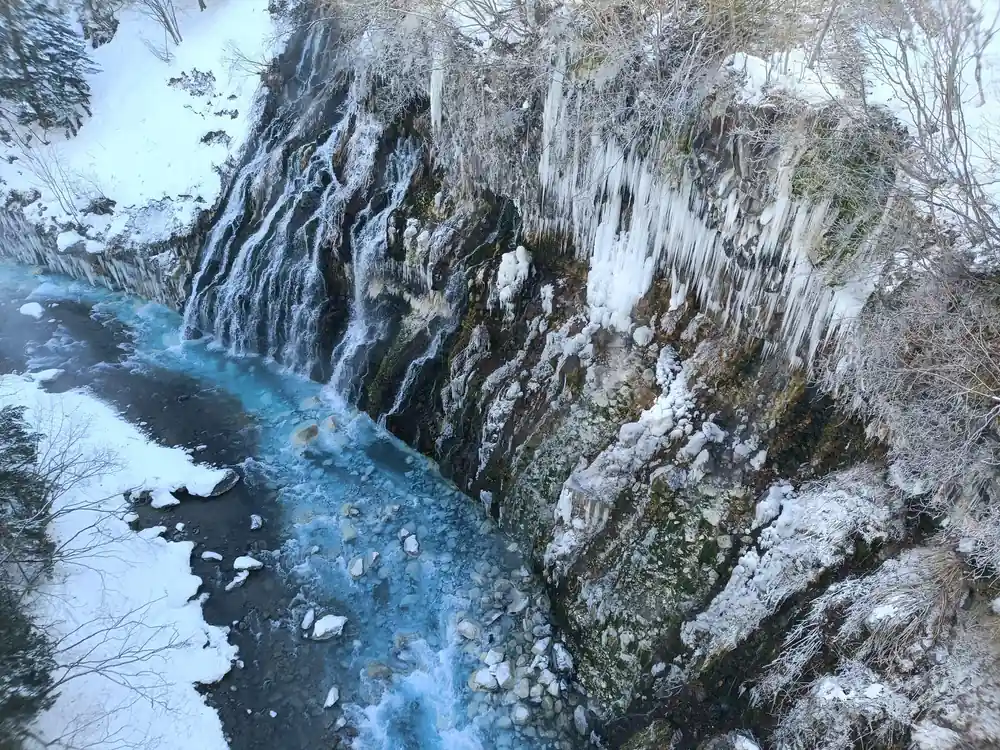
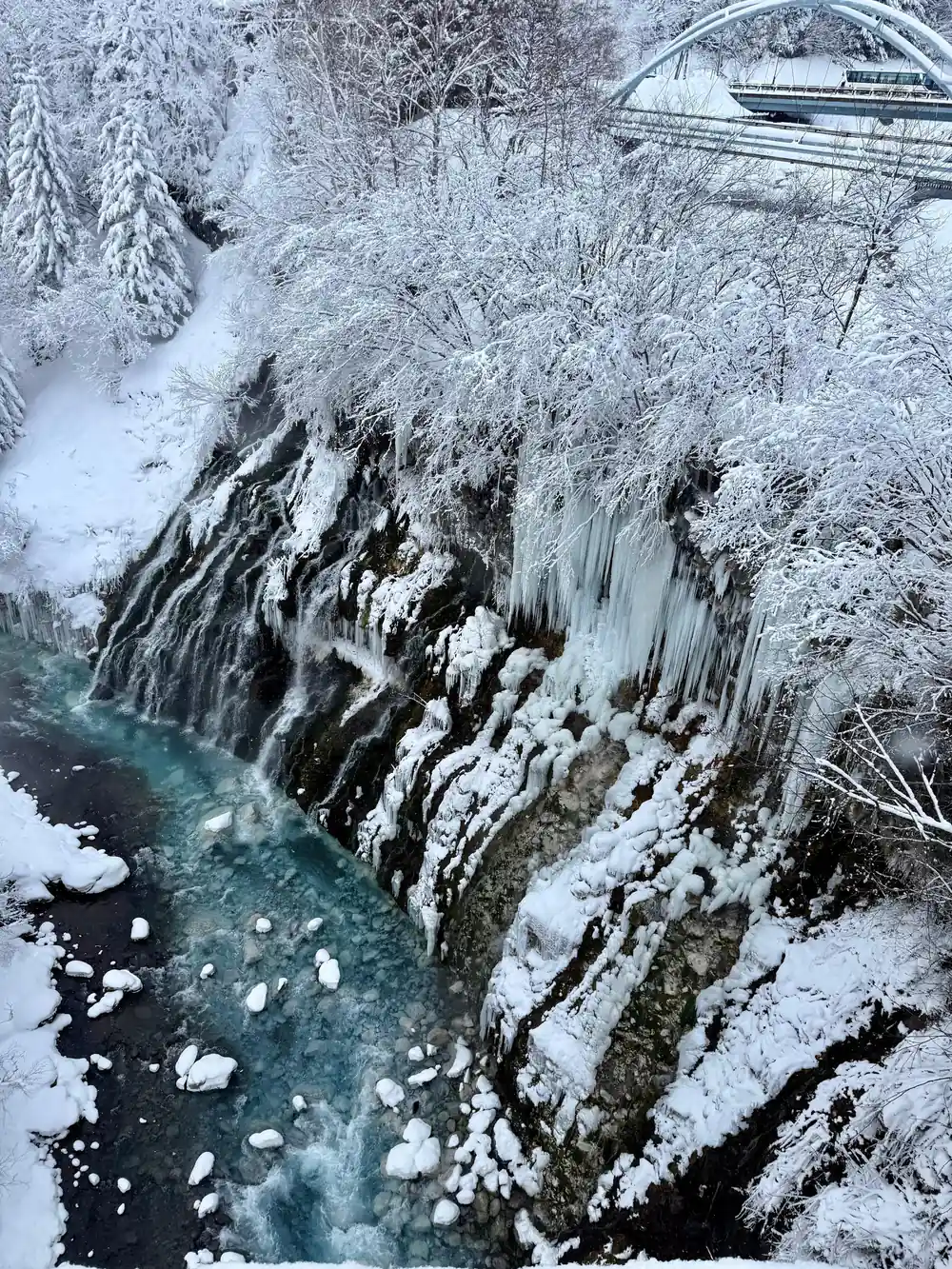
Groundwater seeping from the rock face plunges about 30 metres to the river below at Shirahige Waterfall, sending up sprays into the Biei River, commonly called the Blue River.[5] The Blue Pond and Shirahige Waterfall sit within a short drive of each other in the hills above Biei, and some Sapporo day tours fold both into one route.[10]
The falls are not a single thundering curtain. They are a spread of thin white threads down a mossy cliff, which is where the name comes from: shirahige means white beard. The water arrives from underground rather than from a glacier at the top, and the river below keeps its odd, milky blue.
Practically, this is a quick stop with a walkway and a viewpoint. Spray drifts across the path, so a jacket or a lens cloth earns its place, and the footing can be slippery in wet weather. If you are on a coach tour, use the time to walk the full length of the viewing area rather than stopping at the first rail.
from US$48
The Colored Hokkaido tour from Sapporo stops at Patchwork Road, the Blue Pond, Shikisai-no-oka and Farm Tomita.[6]
How Light and Season Change the Colour
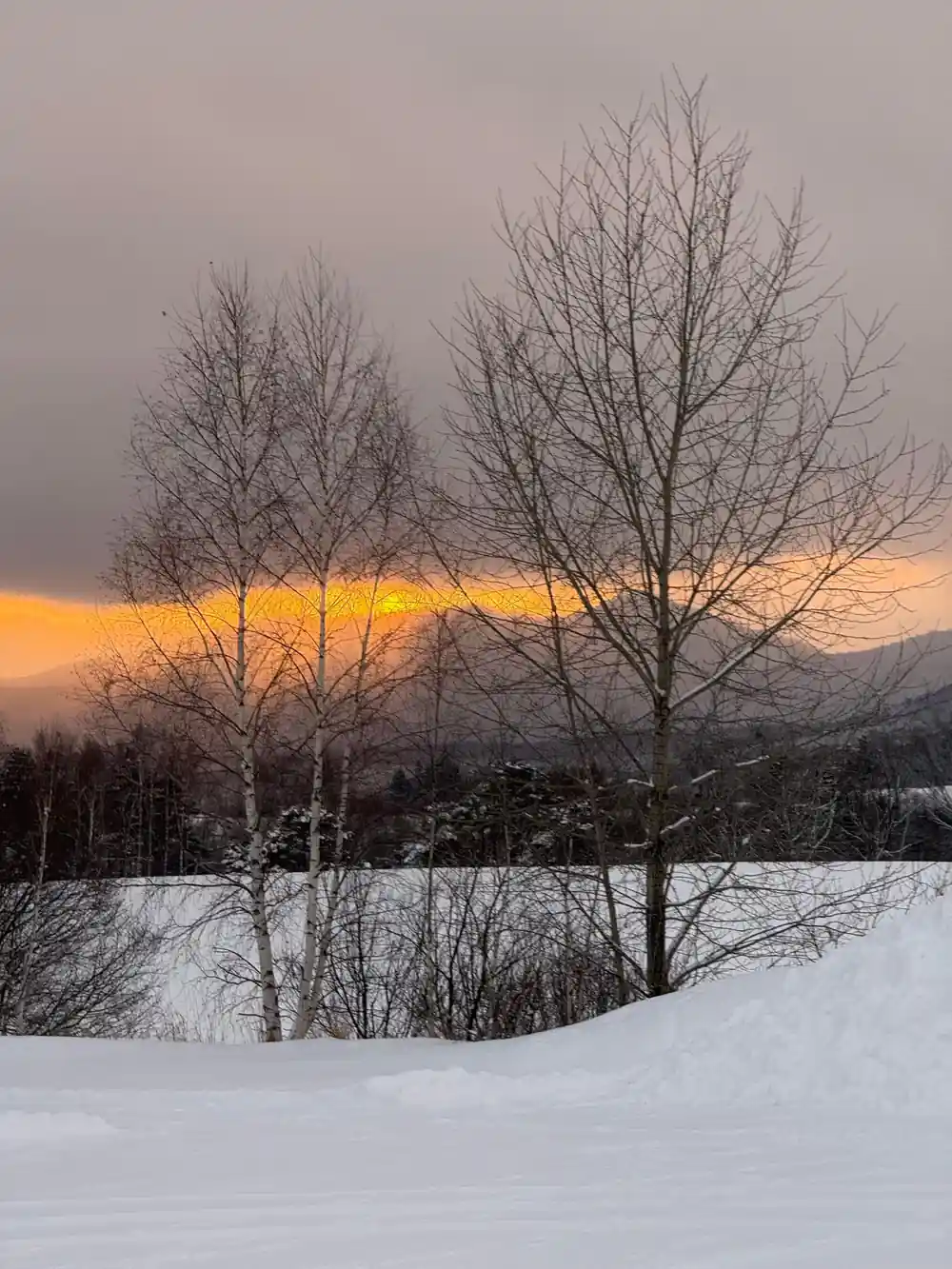
A Blue Pond Biei winter visit looks nothing like the summer photographs. Snow piles on the hills and the whole valley goes quiet and white. In one reported season Furano received 158 cm of cumulative snowfall in the first two weeks of December, on top of 45 cm that fell in November.[11] The landscape around the pond is deep in snow, and the light is low and soft for much of the day.
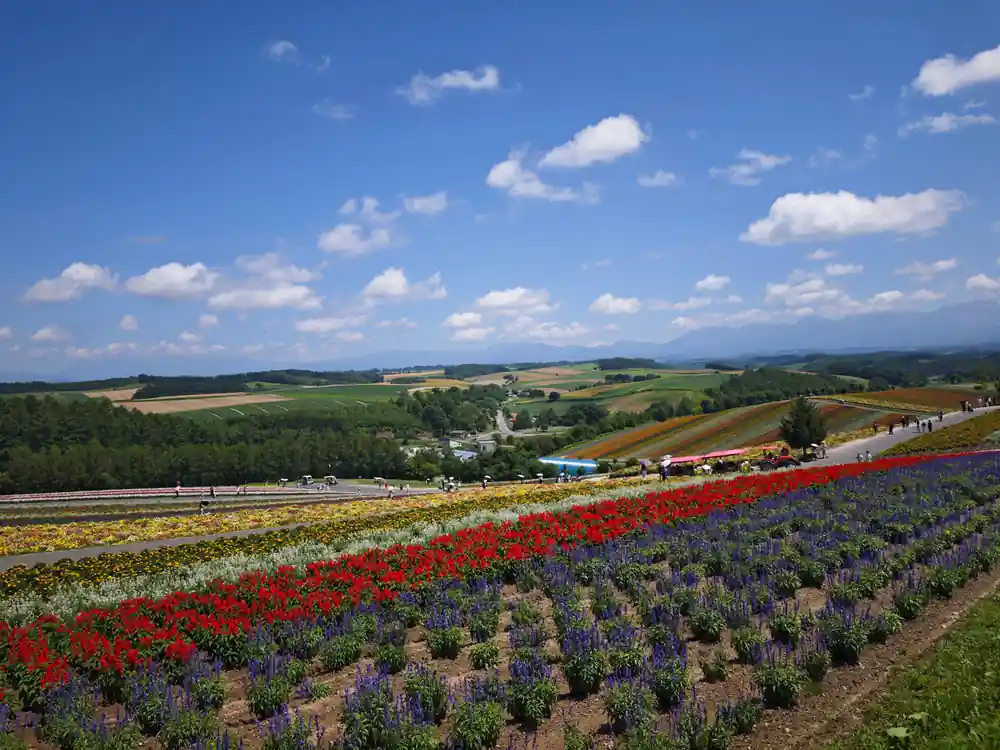
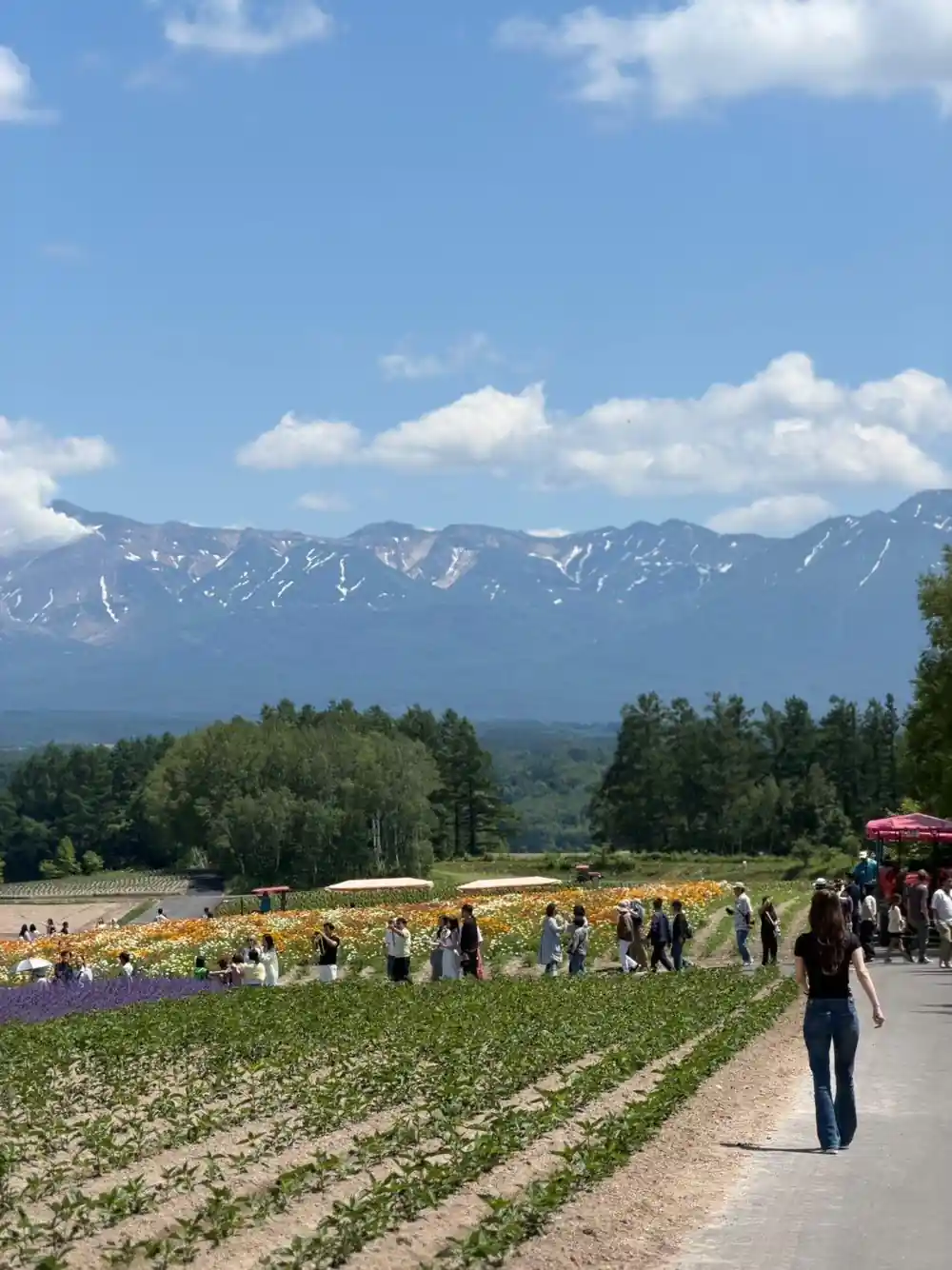
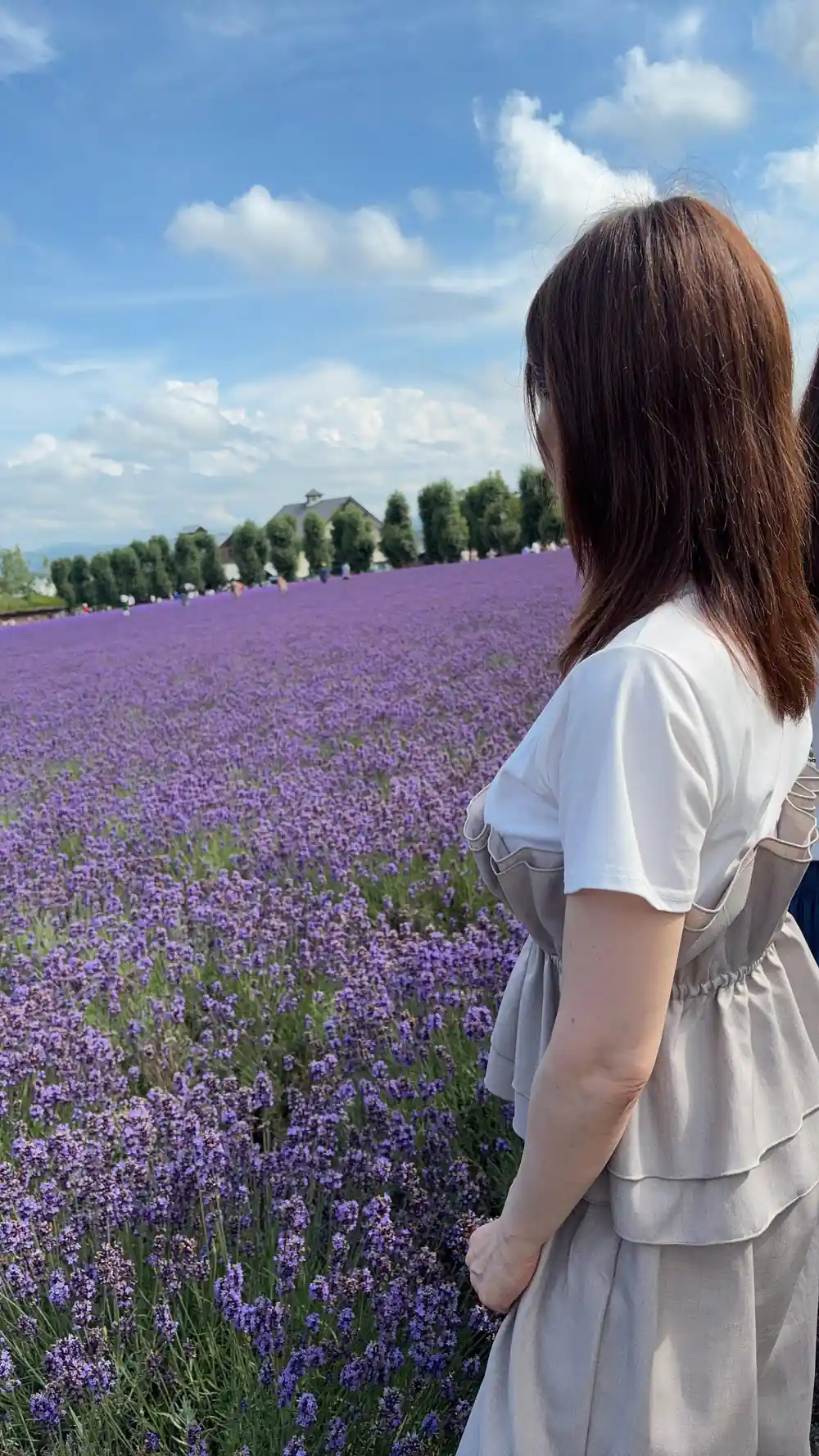
Summer is the busy half of the year. Lavender starts blooming from late June to mid-August, and the fields around Furano and Biei fill with colour.[3] July in Furano averages 22.1°C, warm enough for shirtsleeves and cool enough to keep walking.[4] Lavender has been cultivated in Hokkaido since the 1940s.[12] The purple rows are older than most visitors assume.
Spring and autumn give you the pond with fewer people and a different palette: new green on the hills, or bare branches and early frost. Check what is actually in bloom before you commit to a flower-focused day, and remember that a wet forecast is not always bad news, since light wind and damp air often mean fewer people at the rail.
Sapporo to Biei: Driving and Day Tours
Furano is about a two hour drive from Sapporo using the Doo Expressway between Sapporo and Mikasa.[2] Biei sits in the same part of the island, and the two areas work naturally as one long day out of the city. Driving gives you freedom, but it also means tolls, parking and a long return leg after a full day of walking.
Coach tours take the driving out of your hands. The Colored Hokkaido tour from Sapporo runs from US$48, is rated 4.56 from 122 reviews, has a live guide in English, Chinese, Japanese and Korean, and lasts 1 day.[6] It can be reserved now and paid later, and free cancellation is available up to 24 hours in advance.[6]
There are cheaper and pricier alternatives. The Biei Furano Flower Sea tour starts from US$43, the Noboribetsu and Lake Toya day tour from US$47, and the Hokkaido Highlights trip from US$56.[7][8][13] Each of those listings offers free cancellation up to 24 hours in advance.[7][8][13] Pick by the stops you care about rather than by price alone.
Viewing Angles and Making the Most of Your Day
The pond is seen from a small viewing area beside the water, with a path and a rail rather than a long trail. Move along it before you settle: a few steps left or right changes which trunks sit against the open turquoise and how much sky enters the frame. Low, flat angles put the reflections to work; higher ground shows the shape of the whole basin.
The pond is one stop on a bigger day. Farm Tomita covers 29 hectares and welcomes over a million tourists annually, so the flower fields are a serious operation.[14] Shikisai-no-oka, a panoramic flower garden in Biei, spreads across 15 hectares of hillside.[15] Patchwork Road is the area around the Seven Stars Tree, where different crops are planted in each plot.[16] Expect golden wheat, purple potato flowers, green bean fields and brown plowed earth along the farm roads.[17]
If your day finishes in Furano, Ningle Terrace is a shopping area in the green forest, made up of wood-cabin shops that are lit up after sunset.[18] Buy something small, walk the gravel path, and let the day wind down before the drive back to Sapporo.
Sapporo day tour from-prices
From-prices per person on these GetYourGuide listings.[6][7][8][13]
What a Sapporo day tour costs, from
Adult from-prices in US dollars on these GetYourGuide listings.[6][7][8][13]
When to go to Biei and Furano
Planning your Blue Pond day
Book a Sapporo day tour
The Colored Hokkaido tour runs from US$48, with free cancellation up to 24 hours in advance.[6]
Meet the coach in Sapporo
The tour has 2 starting location options in Sapporo and ends at 2 drop-off locations.[6]
Pack for the weather
Furano averages 22.1°C in July, so a light layer is enough by day, but the Biei hills can be cool and breezy.[4]
Check the flowers
Lavender starts blooming from late June to mid-August, which sets the window for the purple fields at Farm Tomita.[3]
Add the waterfall
At Shirahige Waterfall, groundwater seeping from the rock face plunges about 30 metres to the river below.[5]
See the Blue Pond on a day tour from Sapporo
from US$48Reserve now & pay later