What to remember
- A guided coach day tour from Sapporo covers Biei's Patchwork Road, the Blue Pond, Shikisai No Oka and Farm Tomita in one day, with a live guide.[1]
- The Hokkaido train network reaches Furano, and lavender starts blooming from late June to mid-August, so build the trip around that window.[2]
- Furano is about a two hour drive from Sapporo using the Doo Expressway between Sapporo and Mikasa.[3] Winter driving needs proper tyres and patience.
- Day tour listings from Sapporo start from US$43 for the Biei flower sea route and from US$48 for the Colored Hokkaido Furano and Biei tour.[1][4]
- The average temperature in Furano in July is 22.1°C, mild weather for a full day out among the flower fields and the Blue Pond.[5]
- Top choice Furano and Biei day tour from US$48 Duration1 day[1]LanguagesEnglish, Chinese, Japanese, Korean[1]Rating4.56 from 122 reviews[1]RoutePatchwork Road, Blue Pond, Farm Tomita Check availability
- Biei Furano Flower Sea from US$43 Duration10 hours[4]LanguagesChinese, English, Japanese[4]Rating4.76 from 51 reviews[4]RouteBiei, Furano, Shikisai No Oka See this tour
- Noboribetsu and Lake Toya from US$47 Duration10 hours[6]LanguagesEnglish, Japanese[6]Rating4.30 from 323 reviews[6]RouteJigokudani, Cape Chikyu, Showa-shinzan See this tour
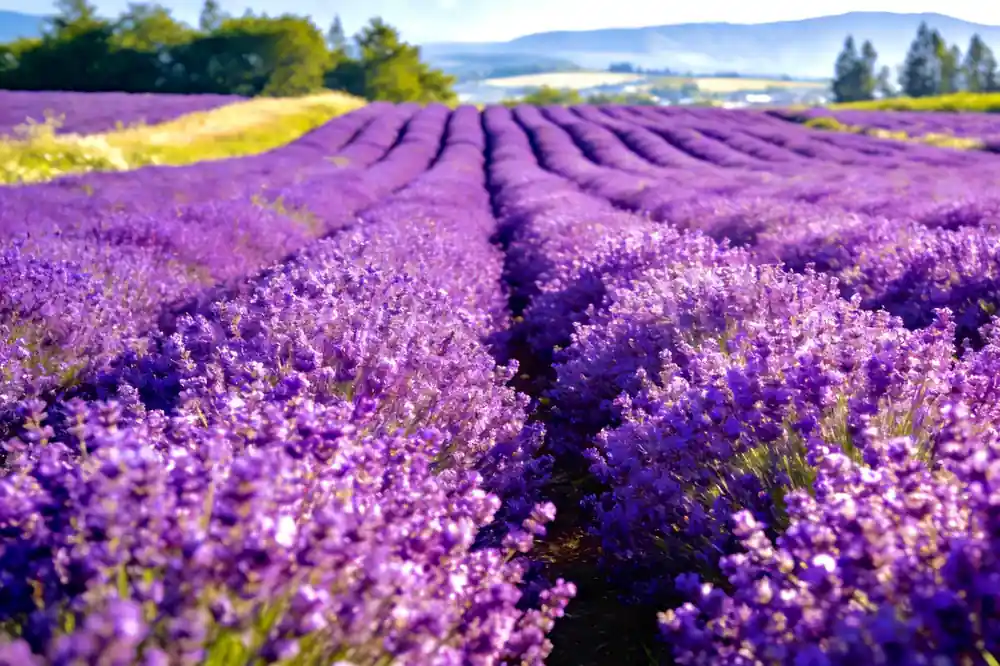
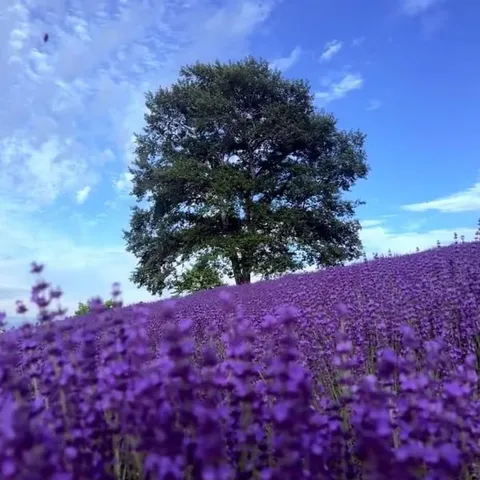
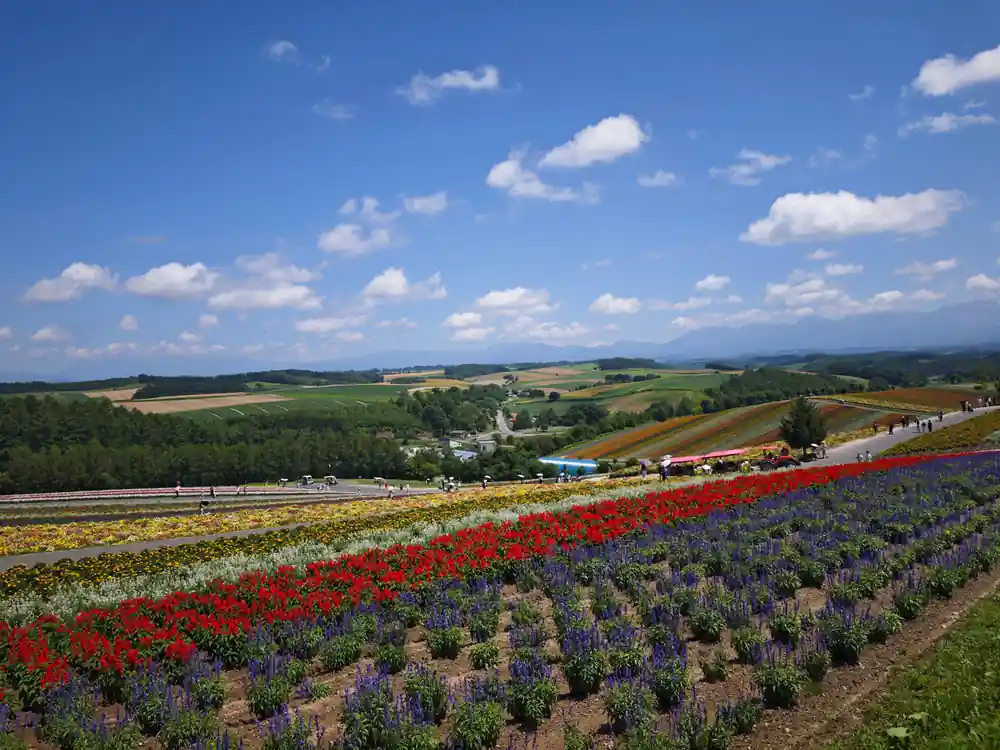
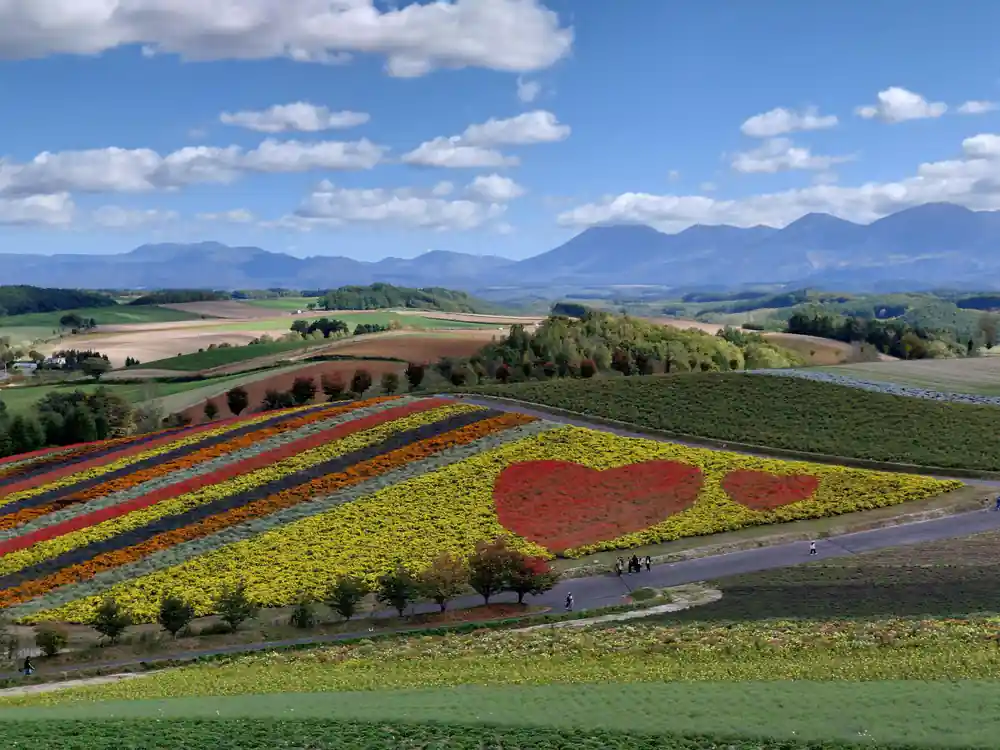
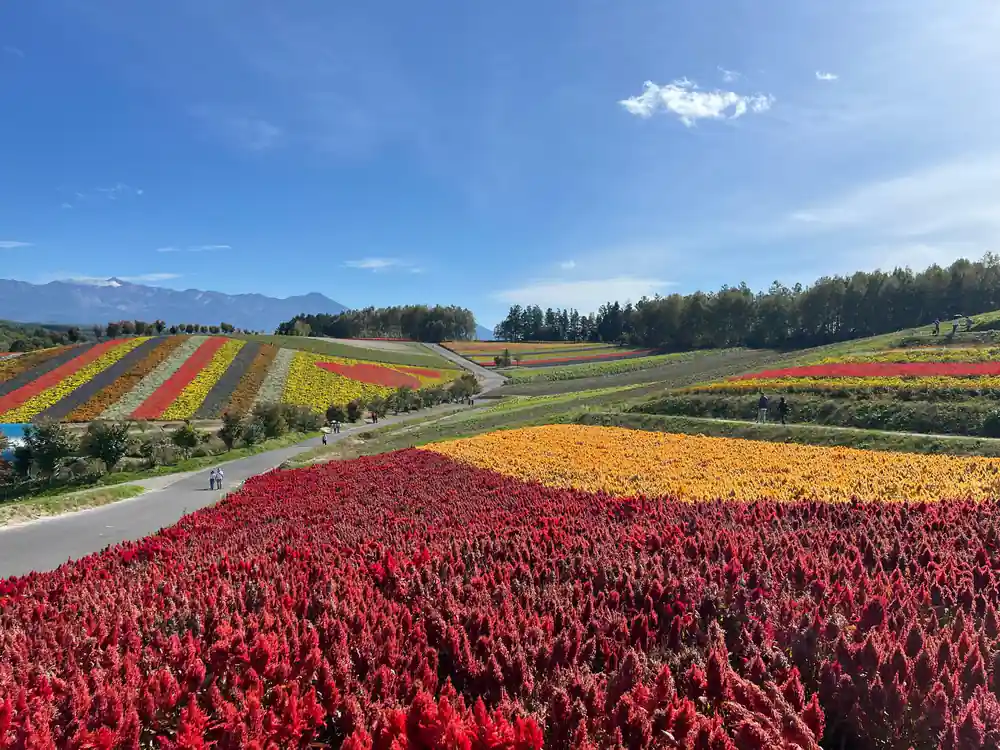
This area is known as “Patchwork Road,” where different crops are planted in each plot, forming Biei’s iconic scenery.
A guided day tour is the simplest way to see Furano and Biei
Pre-booking checklist
- Lavender starts blooming from late June to mid-August, so pick the season first.[2]
- Guided day tours from Sapporo start from US$43 on the Biei flower sea listing.[4]
- The Biei Furano Flower Sea tour offers private or small groups.[4]
- Free cancellation up to 24 hours in advance applies to the Colored Hokkaido tour.[1]
On the day
- The Colored Hokkaido tour is listed as 1 day, with 2 starting location options in Sapporo.[1]
- The average temperature in Furano in July is 22.1°C, mild for a full day outdoors.[5]
- One coach loop takes in Patchwork Road, the Blue Pond, Shikisai No Oka and Farm Tomita.[1]
- Biei's farm roads are public and shared with working vehicles, so allow extra time and keep an eye out.
Sapporo to Furano and Biei: the three ways
Most travellers see Furano and Biei on a long day out from Sapporo, and a Hokkaido map makes the reason plain. The two towns sit close together in the island's green middle, ringed by farm roads, low hills and the volcanic country that runs up towards Daisetsuzan. Furano is the larger of the two, with the railway station, the hotels and most of the restaurants; Biei is quieter and much more spread out. You can reach them by rail, by road or on an organised coach tour, and each choice shapes the day in a different way.
Distance is the first thing to settle. Furano is about a two hour drive from Sapporo using the Doo Expressway between Sapporo and Mikasa.[3] Trains and highway buses follow their own timetables and their own routes, so the clock looks different depending on how you travel. Whichever you pick, the last stretch into Biei tends to be the slowest part, with narrow roads and low speed limits once you are out among the fields.
The second thing is where you want to be at which hour. Biei's viewpoints, the Blue Pond, the flower farms and the lavender rows are spread across open country, and summer light shifts quickly from soft to bright. Whoever is driving watches the road; a guided coach lets everyone look out of the window, and someone else handles the parking, the timings and the turnings.
The Hokkaido train and the Furano line
The Hokkaido train network does reach Furano, usually with a change of trains along the way, and it is a comfortable way to watch the countryside slide past. Sapporo's main station is straightforward to use, announcements are clear, and the ride out of the city soon gives way to rice paddies, windbreaks and low mountain profiles. In the lavender weeks, sort your seats as early as you can and leave margin in the plan; in the quiet months the journey is relaxed.
Lavender has been cultivated in Hokkaido since the 1940s, and the purple rows have been part of the island's summer image ever since.[7] The bloom itself lasts well: lavender starts blooming from late June to mid-August.[2] Aim for the earlier half of that window if you can, when the hills behind the flowers are still deep green and the crowds have not yet peaked.
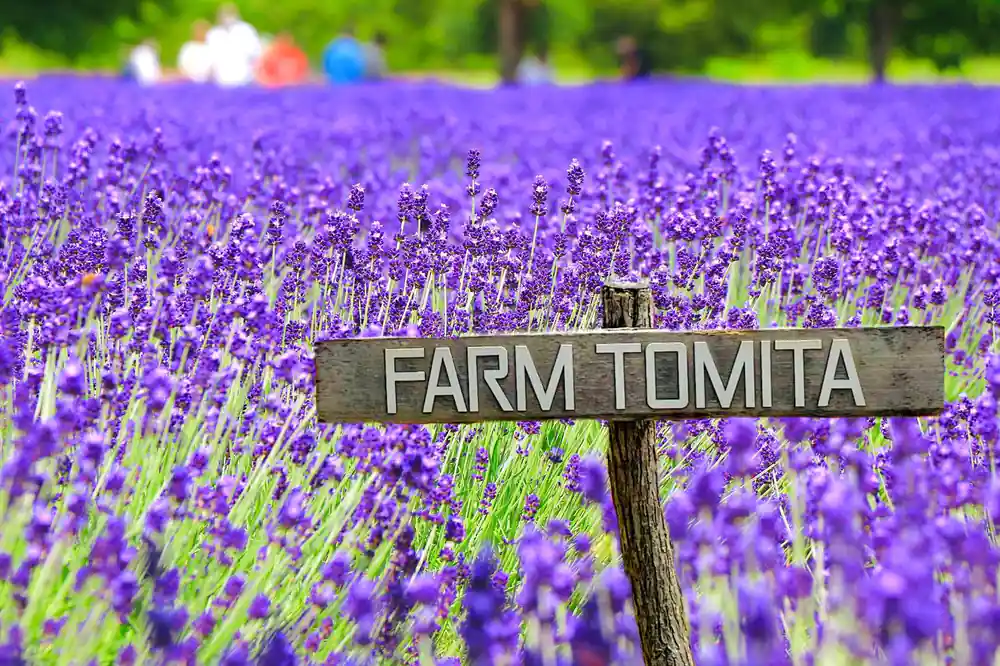
Farm Tomita is the anchor of most rail itineraries. It covers 29 hectares and welcomes over a million tourists annually, so the middle of the day can feel busy.[8] Early morning and late afternoon are calmer, and the light sits better on the long rows of colour. If you travel by train, staying a night in Furano turns a rushed dash into two easy mornings in the fields.
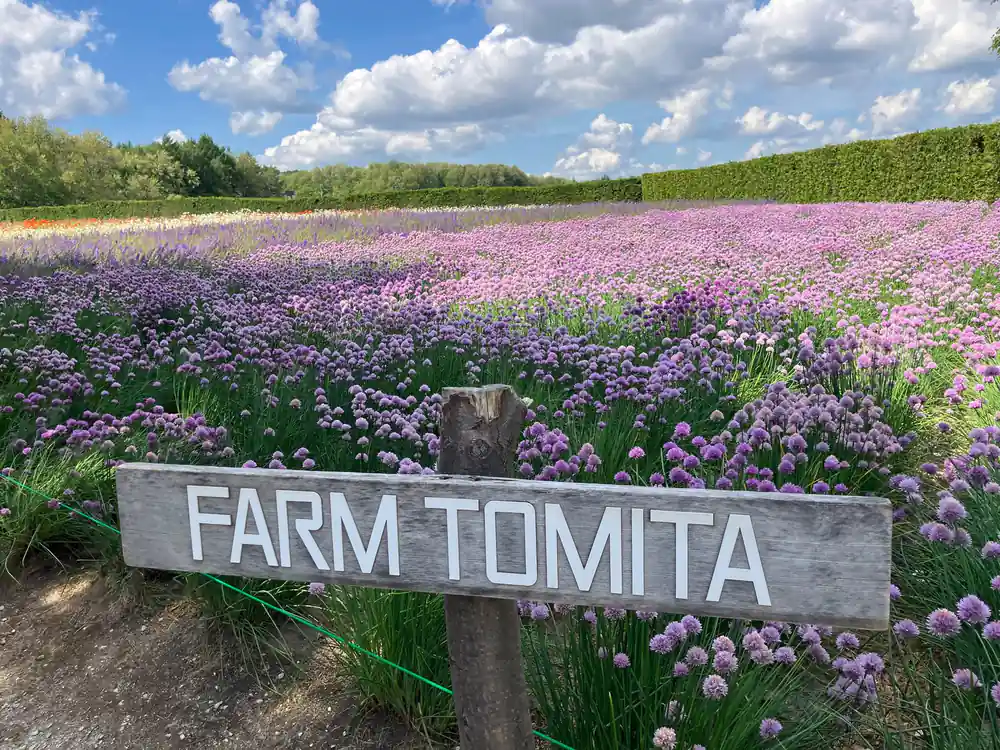
Long rows of lavender running towards the hills outside Furano
Buses, rental cars and the Doo Expressway
Highway buses run from Sapporo towards Furano and Biei and can be a useful middle path for travellers without a car. Services are not frequent, so it is worth checking timetables and building the day around them rather than the other way round. A bus that drops you in the right place in the morning can still make a good day of it, especially if you plan one main stop rather than five.
Driving gives you the most freedom. Furano is about a two hour drive from Sapporo using the Doo Expressway between Sapporo and Mikasa.[3] Visitors often ask how far Hokkaido to Sapporo feels once you are actually on the road, and the honest answer is that it depends on the season, the weather and how often you pull over for photographs.
Winter rewrites the rules. Furano received 158 cm of cumulative snowfall in the first two weeks of December, on top of 45 cm that fell in November.[9] Snow tyres, patience and daylight planning come with the territory if you drive then. In summer the hazards are gentler: narrow farm lanes, slow tractors and the constant temptation to stop for one more view of the hills.
Why Biei's sights are hard to reach without a car
The area around the Seven Stars Tree in Biei is known as Patchwork Road, where different crops are planted in each plot, forming Biei's iconic scenery.[10] The colours shift plot by plot, with golden wheat, purple potato flowers, green bean fields and brown plowed earth.[11] This is working farmland rather than a park, so the best views sit along public roads that link one field to the next, with no single entrance or gate.
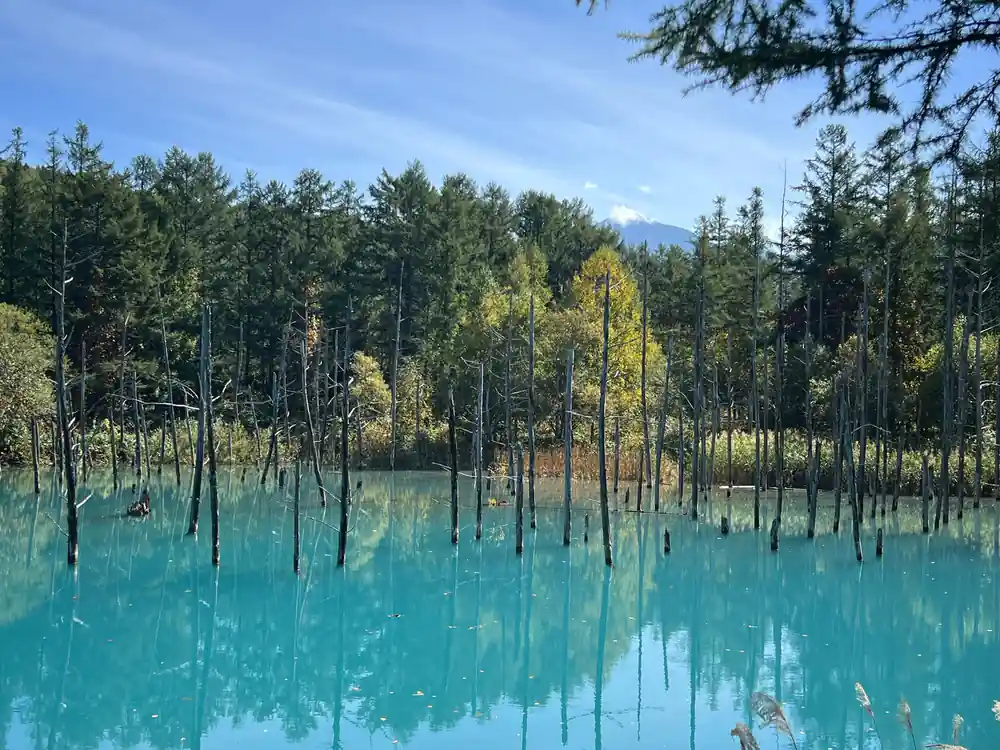
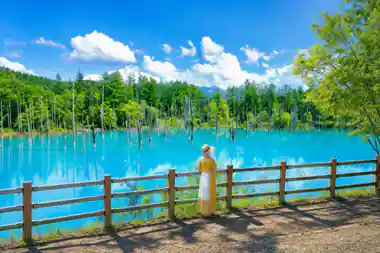
Then there is the water. The Shirogane Blue Pond was created when emergency erosion-control dams backed up water after the December 1988 eruption of Mount Tokachi, and it appears blue because suspended aluminium colloids scatter light.[12] Close by, groundwater seeping from the rock face plunges about 30 metres to the river below at Shirahige Waterfall.[13] Above it all stands Mount Tokachi at 2,077 meters.[14]
Shikisai-no-oka is a panoramic flower garden in Biei that covers fifteen hectares of land.[15] Between the garden, the pond, the waterfall and the farm, you are covering a lot of ground in one outing. Local buses run thinly outside the towns, taxis are not waiting at the roadside, and walking between the stops is not realistic for most visitors in a single day.
from US$48
The Colored Hokkaido tour from Sapporo takes in Patchwork Road, the Blue Pond, Shikisai No Oka and Farm Tomita, with pick-up in the city.[1]
What a guided coach day tour covers in a day
The Colored Hokkaido tour from Sapporo is built around exactly this problem. It is listed from US$48, rated 4.56 from 122 reviews, has a live tour guide in English, Chinese, Japanese and Korean, and its listed duration is 1 day.[1] You board a coach at one of the Sapporo meeting points, you sit back, and the driving becomes someone else's job for the whole day.
The route reads like a roll call of the Biei and Furano countryside: Patchwork Road, the Shirogane Blue Pond, Shikisai No Oka, a stop at a local restaurant and Farm Tomita, with 2 starting location options in Sapporo and 2 drop-off locations at the end.[1] It is a full day, and the schedule does the hard thinking about distances for you.
Booking terms are relaxed. Free cancellation applies up to 24 hours in advance for a full refund, and you can reserve now and pay later.[1] Other guided options from Sapporo include the Biei Furano Flower Sea tour, listed from US$43 over 10 hours[4], and the Hokkaido Highlights day trip, listed from US$56 over 10 hours.[16]
When to go: lavender, flowers and snow
Summer is the classic window. The average temperature in Furano in July is 22.1°C, which is mild for a Japanese summer and pleasant for walking between flower beds.[5] Lavender starts blooming from late June to mid-August, which is when the fields around Furano and Biei turn purple.[2] Either side of that window the hills keep changing colour, from fresh green through to gold.
Farm Tomita covers 29 hectares and welcomes over a million tourists annually.[8] Shikisai-no-oka spreads across fifteen hectares of Biei hillside.[15] Both are at their best early or late in the day, when the light is low, the colours are richer and the coach parties have not yet arrived in force.
Furano is not only a summer place. The snowfall figures show how deep winter gets, with 158 cm of cumulative snowfall in the first two weeks of December, on top of 45 cm in November.[9] In the forest, Ningle Terrace is a shopping area in the green forest of Furano, where shops take the form of wood cabins that are lit up after sunset.[17]
Choosing the right option for your Hokkaido trip without a car
Can you do Hokkaido without a car? Yes, and Sapporo is the easiest place to prove it. Trains and buses reach the larger towns, guided tours fill the gaps, and the awkward spots, the ponds, the hilltop gardens and the farm roads, are exactly where a coach earns its place.
If the lavender fields are your priority and you enjoy rail travel, take the train and stay a night in Furano so you can be in the fields when they are quiet. If Biei's scattered viewpoints are the priority, a guided day tour settles the logistics and adds a guide who can explain what you are looking at as you go.
For most first visits the day tour is the sensible compromise. It leaves from Sapporo, covers Patchwork Road, the Blue Pond, Shikisai No Oka and Farm Tomita, and returns you to the city the same day.[1] If you would rather drive yourself, the Doo Expressway puts Furano about a two hour drive from Sapporo.[3]
Reviews for guided day tours from Sapporo
Review counts as listed: Noboribetsu and Lake Toya[6], the Colored Hokkaido Furano and Biei Blue Pond tour[1], Hokkaido Highlights[16] and Biei Furano Flower Sea[4].
Guided day tours from Sapporo: from prices in US dollars
From prices on these GetYourGuide listings:[1][4][6][16]
When to plan your Sapporo to Furano trip
Planning the trip
Fix your dates
Lavender starts blooming from late June to mid-August, so aim for that window if the purple fields are the point of the trip.[2]
Pick your base
Sapporo works well: Furano is about a two hour drive away using the Doo Expressway between Sapporo and Mikasa.[3]
Choose your transport
Train, highway bus, rental car or guided coach all work. The difference shows up in how much of Biei you manage to see in one day.
Book the guided day
The Colored Hokkaido tour starts from US$48 and cancels free up to 24 hours in advance for a full refund.[1]
Pack for the day
The average temperature in Furano in July is 22.1°C, so bring a light layer for the Biei hills and shoes for farm paths.[5]
See the lavender, the patchwork hills and the Blue Pond in one day
from US$48Reserve now & pay later