What to remember
- The farmland around Biei is split into plots that carry different crops, and the hills read as a quilt of shifting colour through the growing season.
- Wheat, potatoes and beans sit alongside plowed soil, giving the hills their bands of gold, purple, green and brown as the season moves from sowing to harvest.
- Biei and Furano sit north east of Sapporo, reached by expressway, coach or rail, and day tours from the city run through the same farmland.
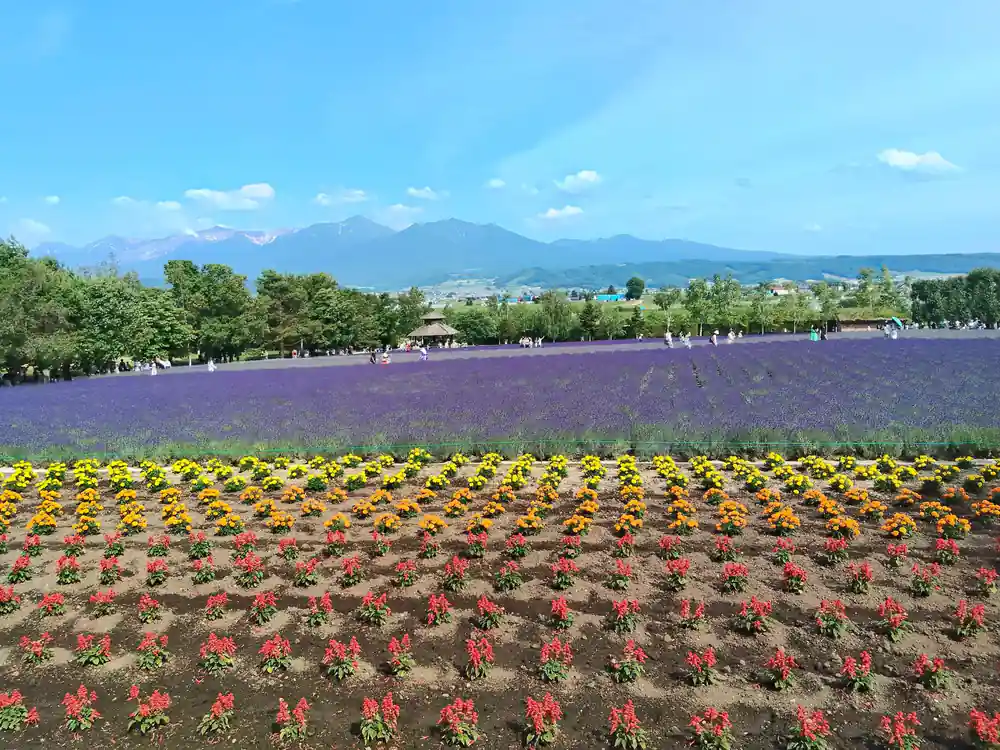
- Lavender and the big flower farms give the area a second season of colour in high summer, with rows that are easy to walk beside.
- A coach day from Sapporo links the patchwork hills with the Blue Pond and the flower farms, with a live guide and free cancellation.
- Top choice Furano, Biei & Blue Pond from US$48 Rating4.56 from 122 reviews[1]Duration1 day[1]Main stopsPatchwork Road, Blue Pond, Farm Tomita[1]Starting points2 starting location options[1]CancellationFree cancellation, 24 hours before[1] Check availability
- Biei Furano Flower Sea from US$43 Rating4.76 from 51 reviews[2]Duration10 hours[2]Main stopsBiei, Furano, Shikisai No Oka[2]Starting pointsPickup available, check availability[2]CancellationFree cancellation, 24 hours before[2] See this tour
- Hokkaido Highlights Tour from US$56 Rating4.55 from 87 reviews[3]Duration10 hours[3]Main stopsCape Kamui, Otaru Canal, Shiroikoibito[3]Starting points2 starting location options[3]CancellationFree cancellation, 24 hours before[3] See this tour
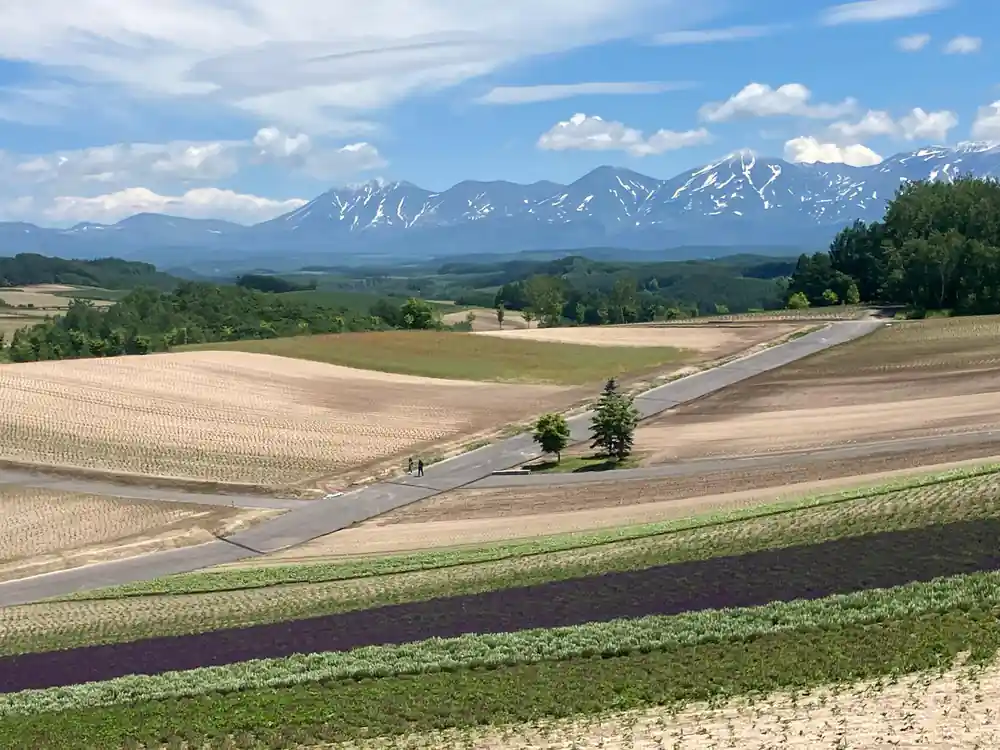
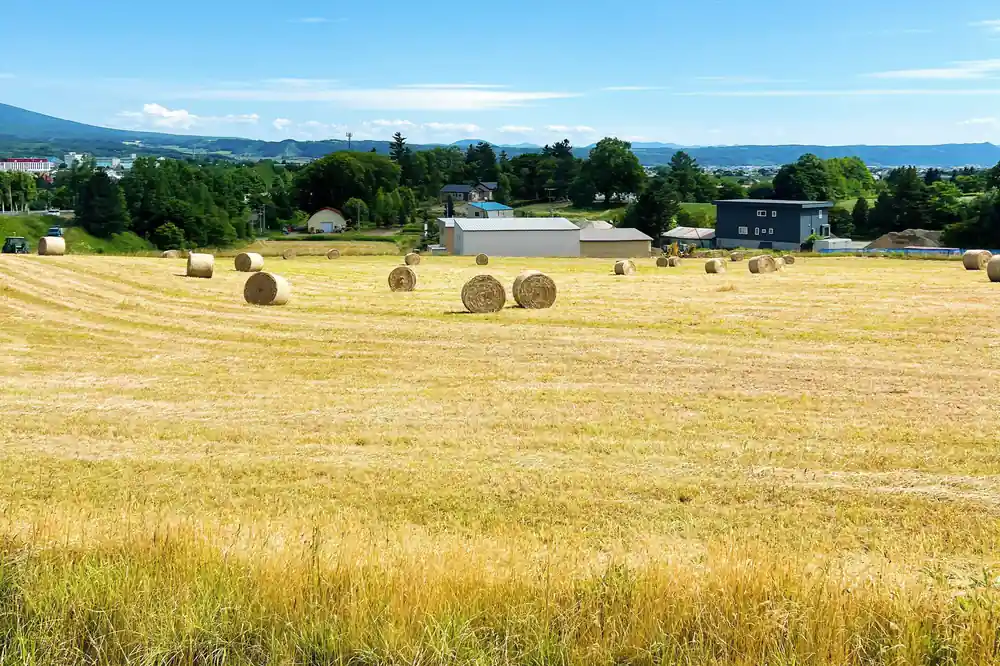
golden wheat, purple potato flowers, green bean fields, brown plowed earth, with occasional farmhouses and barns as punctuation.
Is the Biei Patchwork Day Trip Worth It?
Pre-booking checklist
Reading the Biei Patchwork from the Road
Biei sits in the farmland of central Hokkaido, north east of Sapporo, and the lanes that cross it are working farm roads as much as viewpoints. The area around the Seven Stars Tree is known as Patchwork Road, where different crops are planted in each plot, forming Biei's iconic scenery.[7] Nothing here is staged for visitors. The fields are farmed, the barns are in use, and the pattern you photograph in high summer is not the pattern you would find in late autumn.
Furano is about a two hour drive from Sapporo using the Doo Expressway between Sapporo and Mikasa.[4] The Colored Hokkaido tour from Sapporo covers the same country in 1 day, calling at Patchwork Road (Biei), Shirogane Blue Pond, Shikisai No Oka, a local restaurant and Farm Tomita.[1] If you drive yourself, treat the farm roads as shared working space: they are narrow, often busy with machinery, and not built for stopping wherever the view opens. On a coach day the guide handles the timing, and your job is simply to look, get out, and look again.
The Colours: Wheat, Potatoes, Beans and Plowed Earth
From the roadside the hills read as bands rather than fields. The views along these farm roads are listed as golden wheat, purple potato flowers, green bean fields and brown plowed earth, with occasional farmhouses and barns as punctuation.[8] The mix shifts through the season as each crop grows, flowers and is cleared. A hillside can look entirely different a fortnight apart, and the same corner of Biei is worth revisiting on a second day if you have the time.
July sits in the middle of the growing season, and the average temperature in Furano in July is 22.1°C, mild enough for a long day outdoors with a light layer for the evening.[6] Bring sun protection and water: the hills are open, the light is strong, and shade is scarce along the farm roads. On bright afternoons a lens hood helps when the wheat catches the sun and the sky behind it turns pale.
Early summer and late summer reward different approaches. In the first weeks the greens dominate and the hills look soft and low; later the golds and browns take over and the edges between plots sharpen. Both are worth a day out, and neither is a bad time to visit. If you are photographing, flat light merges the bands while strong sun separates them, so walk the same stretch twice at different hours and you will come away with two different hillsides.
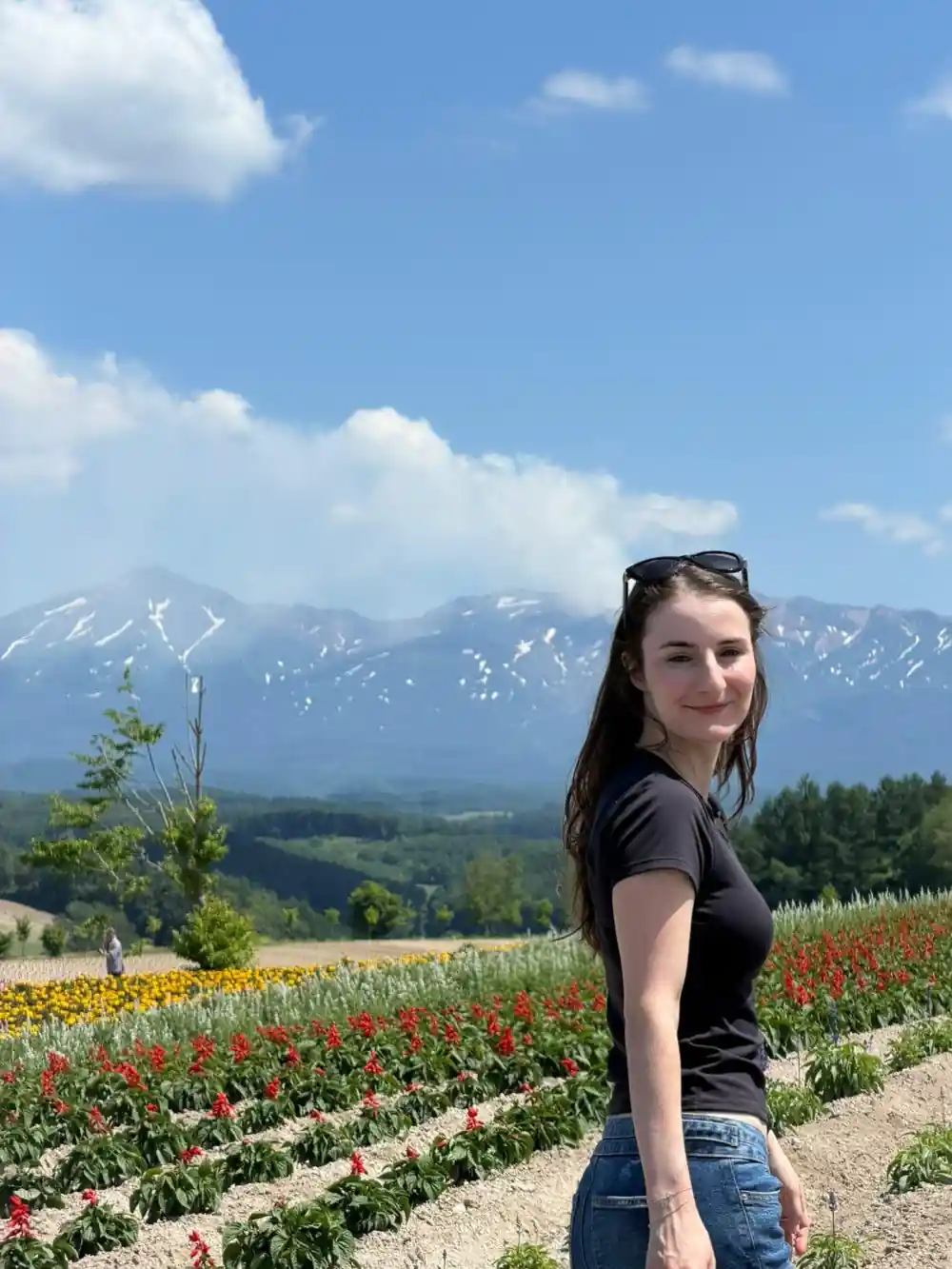
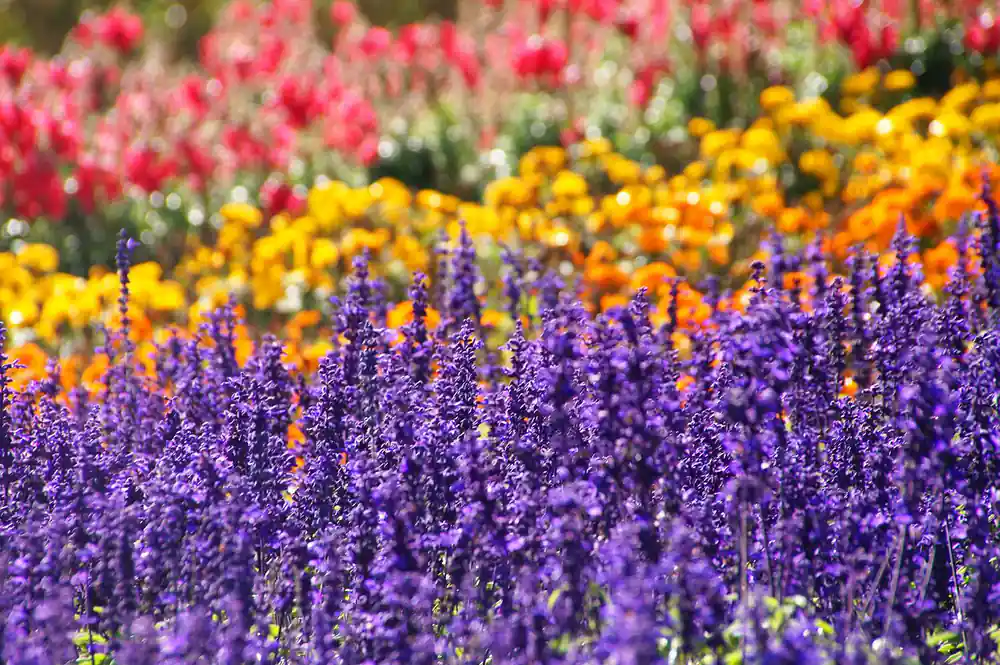
Rows of flowers below the Biei hills, with the Daisetsuzan peaks behind.
Potatoes and the Purple Bands
Potato fields are easy to read once you know what you are looking at. From a distance they sit as low, even blocks of green, flatter and more uniform than the wheat. Up close, the plants stand in ridged rows, and in mid-summer flowers open across the tops. In the patchwork palette the colour is given as purple potato flowers, and those bands are among the most striking stripes of the summer hillside.[8]
Potatoes are a working crop, and a field changes character quickly: flowers, then fading tops, then bare brown earth where the rows were. Do not walk in among the plants to get closer. The roads and the established stopping places give you the long views, and a longer lens does the rest. On the coach day the route calls at Patchwork Road (Biei), where the plots and their boundaries lie open in front of you.[1]
Wheat and the Amber and Pale Gold Fields
Wheat gives the patchwork its warmest colours. Early on the fields are soft green; later they turn, and the wheat becomes the golden band in the quilt.[8] Wind moving across a ripening wheat field is one of the quiet pleasures of the Biei hills, and it photographs well from the roadside in the low light of late afternoon, when the rows pick up shadow and the colour deepens.
The hills are open enough that a single high point lets you read the whole pattern at once: wheat, potato, bean and plowed earth repeating in strips and blocks. Windbreak lines of tall trees cut across the fields and break the view into smaller rooms, and they make useful landmarks when you are working out which direction to look. Keep to the road edges and pull-offs, and remember that a field is someone's workplace long before it is a photograph.
from US$48
A 1-day coach tour from Sapporo calls at Patchwork Road (Biei), Blue Pond, Shikisai No Oka and Farm Tomita.[1]
Beans and the Green Bands
Beans hold the green in the palette, and bean fields are listed among the colours of the Biei patchwork.[8] They read as flatter, lower bands than wheat, with a duller leaf colour that holds its tone in flat midday light, when the wheat and the plowed earth can look washed out.
A patchwork built from several crops looks different from a single block of one thing, and the small differences matter when you are choosing where to stop. A green bean field beside a gold wheat field gives you contrast in one frame; a plowed brown plot gives you a clean edge and a strong line. Walk a short stretch of farm road rather than chasing every famous tree on a list. The pattern is the point, and it repeats all over the hills around Biei and Furano.
Photographers get more from one short stretch of road than from a long list of stops. Find a bend with three or four different plots in view, park safely, and wait for the light to move across them. The same frame at midday and in the evening will not look like the same place, and the colours you came for often sit in the middle distance rather than at your feet.
Rolling Hills, Field Size and Windbreak Lines
The land is not flat. The fields follow rolling ground shaped by volcanic activity and old water, with the peaks of the Daisetsuzan group standing behind the farmland. Mount Tokachi, in that group, is 2,077 meters high.[9] The soils are volcanic in origin, and the ground rises and falls enough that a stand of trees or a farmhouse can hide an entire field from the road.
For a sense of scale, start with the flower farms. Shikisai-no-oka is a panoramic flower garden in Biei that covers fifteen hectares of land.[10] Farm Tomita is 29 hectares and welcomes over a million tourists annually.[11] Hedgerows and windbreak tree lines mark many field edges and give the hills their rhythm of field, tree, field. In winter those same lines are the only dark shapes left against the snow.
Winter rewrites the view completely. According to Snow Japan records reported by Ski Asia, Furano received 158 cm of cumulative snowfall in the first two weeks of December, on top of 45 cm that fell in November.[12] Under that much snow the colour bands disappear, and what remains is the shape of the ground, the tree lines and the buried edges of fields.
Lavender, Flower Farms and the Blue Pond Loop
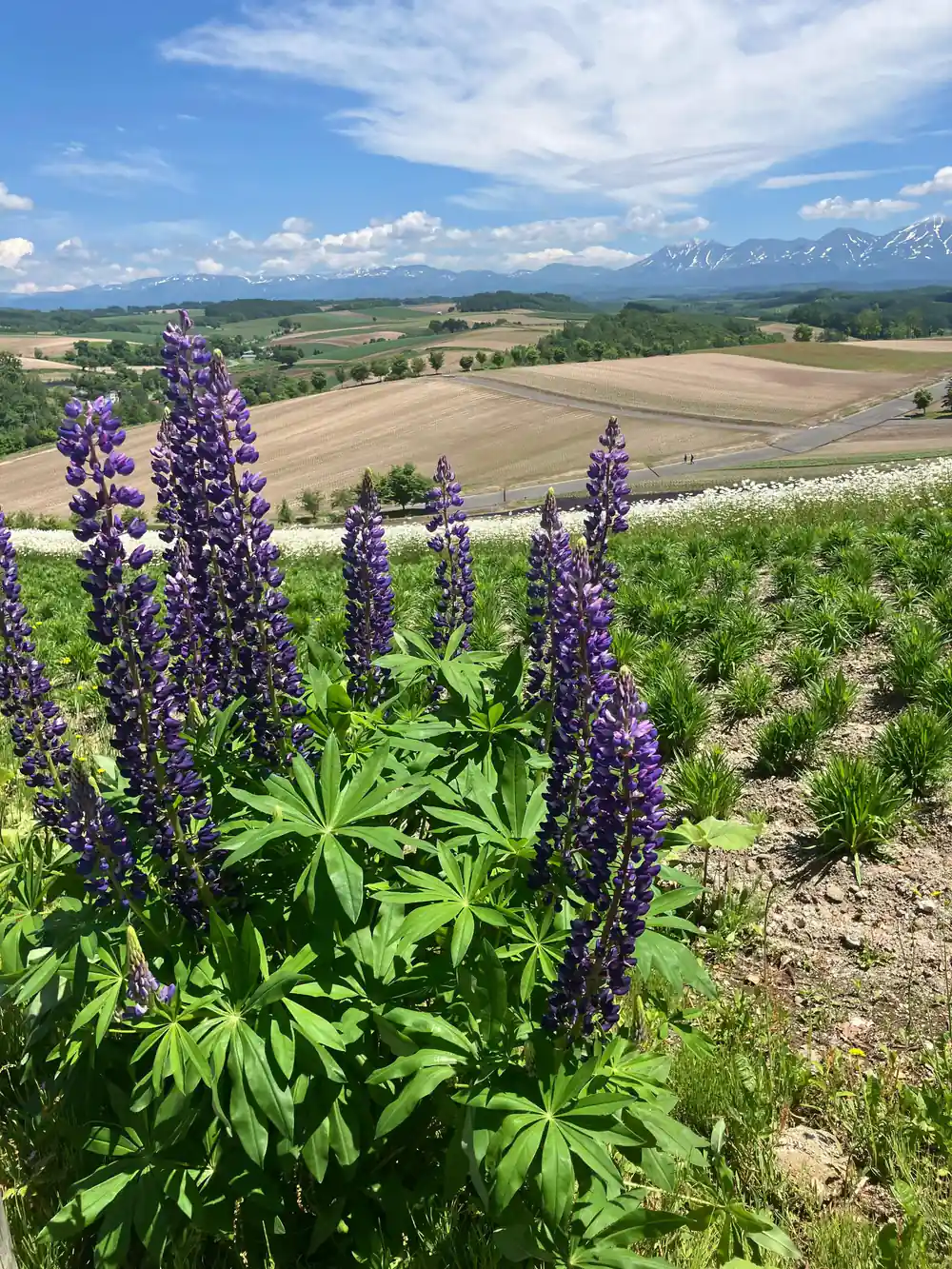
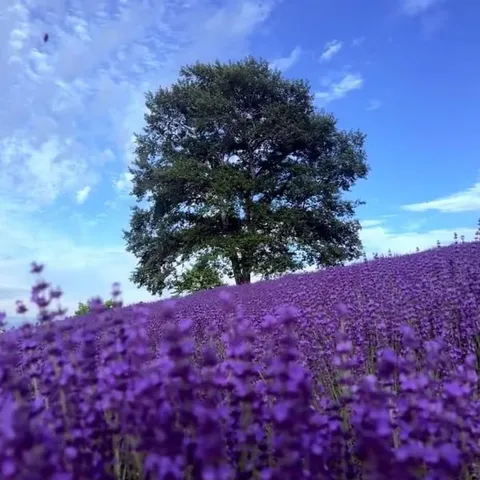
Lavender starts blooming from late June to mid-August, and it has been cultivated in Hokkaido since the 1940s.[5][13] The flower farms around Furano and north of Biei lean on that history, and their rows of purple are a different pleasure from the crop bands: ordered, close planted and easy to walk beside. If you have an evening in Furano, Ningle Terrace is a shopping area in the green forest, where the shops take the form of wood cabins and are lit up after sunset.[14]
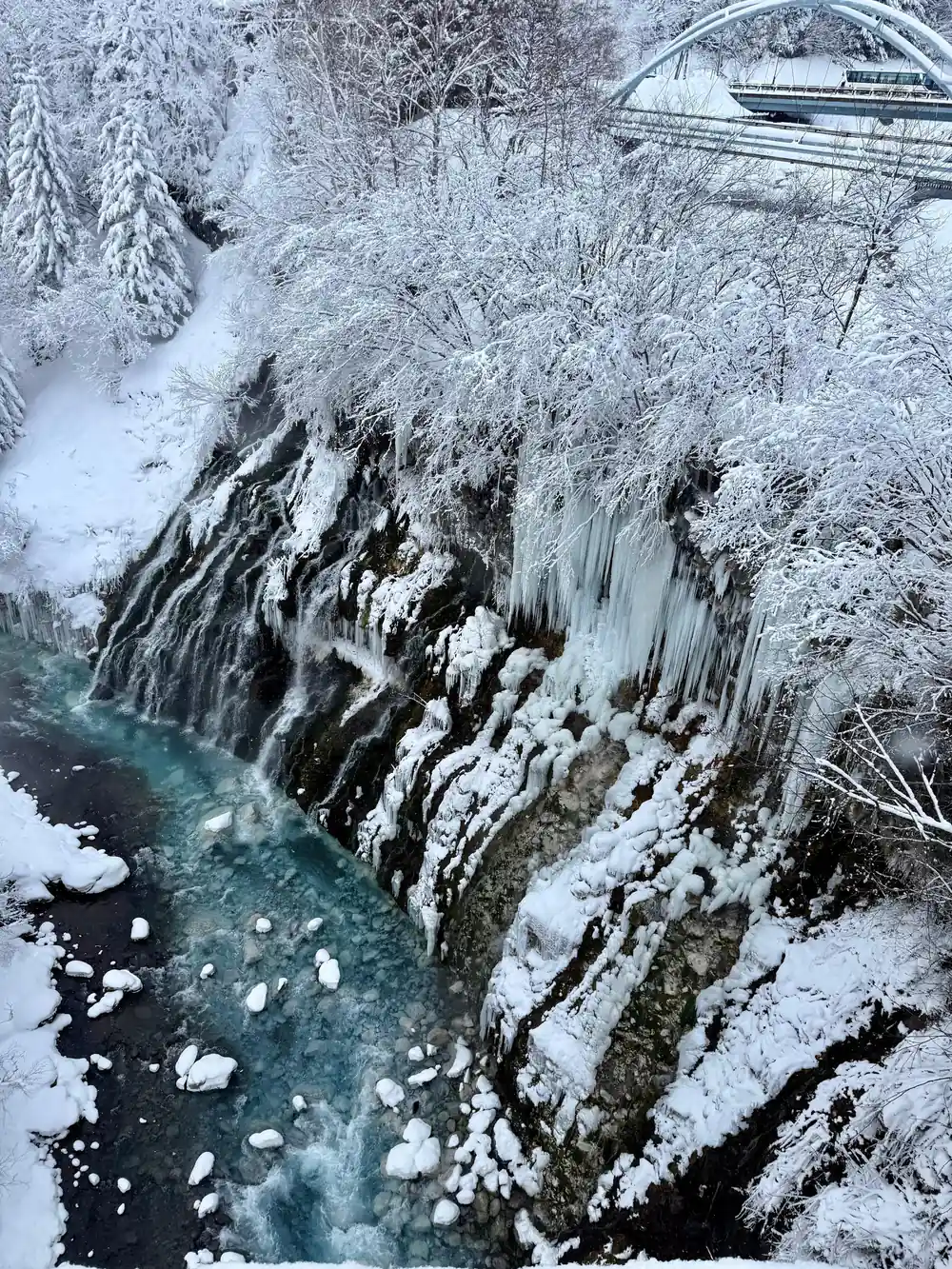
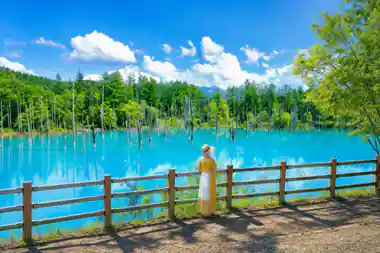
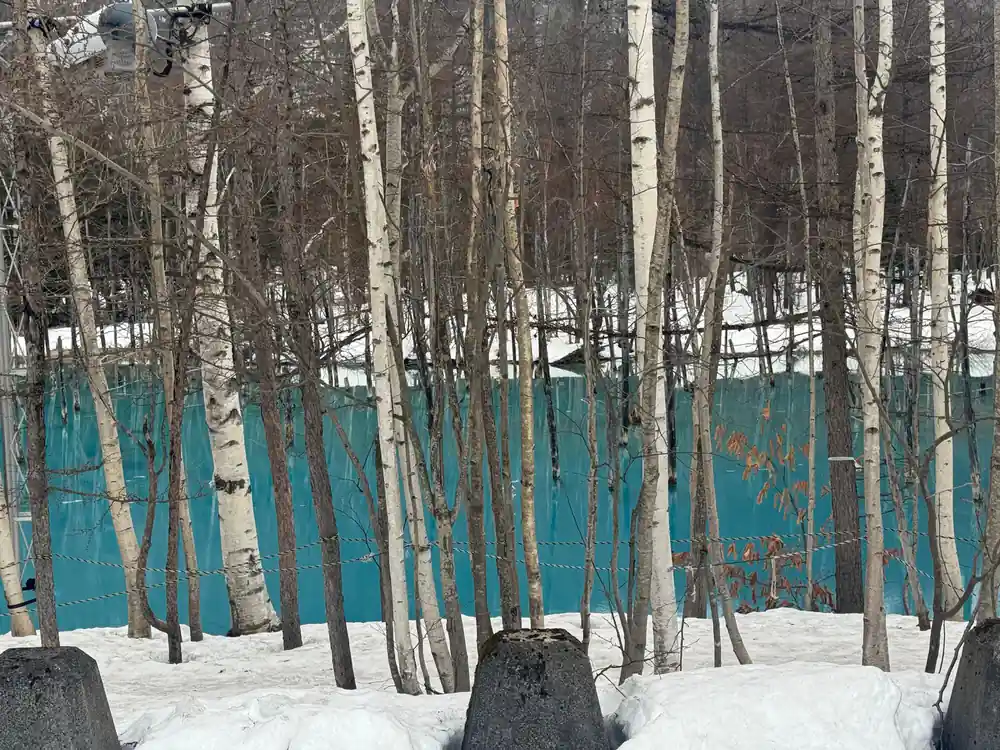
The wider loop is worth the drive in its own right. Shirogane Blue Pond was created when emergency erosion-control dams backed up water after the December 1988 eruption of Mount Tokachi, and it appears blue because suspended aluminium colloids scatter light.[15] Close by, groundwater seeping from the rock face plunges about 30 metres to the river below at Shirahige Waterfall.[16] The Colored Hokkaido tour from Sapporo links the patchwork, the pond and the flower farms in a 1-day run, with a live guide and free cancellation up to 24 hours in advance.[1]
Reviews Behind Four Sapporo Day Tours
Review counts from the GetYourGuide listings for these four tours.[1][2][3][17]
From-prices of Sapporo day tours that reach the Biei hills
From-prices per person on the GetYourGuide listings for these four tours.[1][2][3][17] Child rates are not shown on these listings.
When to Plan Your Biei Patchwork Visit
Plan Your Patchwork Day
Book the Sapporo departure
The Colored Hokkaido tour runs for 1 day and stops at Patchwork Road (Biei), Blue Pond, Shikisai No Oka and Farm Tomita.[1]
Sort your start point
Two starting location options are listed in Sapporo, and free cancellation is available up to 24 hours in advance.[1]
Pack for open country
The hills are breezy and the light is strong; bring sun cover, water, and a layer for the evening coach ride back.
Time your season
Lavender starts blooming from late June to mid-August, and the average temperature in Furano in July is 22.1°C.[5][6]
Keep the day flexible
Reserve now and pay later, or drive yourself: Furano is about a two hour drive from Sapporo using the Doo Expressway.[1][4]
See the Biei patchwork on a day trip from Sapporo
from US$48Reserve now & pay later