What to remember
- The easy way is a coach day tour: one day out of Sapporo covering Biei, the Blue Pond, Shikisai No Oka and Farm Tomita, from US$48.[1]
- Furano is about a two hour drive from Sapporo using the Doo Expressway between Sapporo and Mikasa, which leaves more of the day for the fields.[2]
- Lavender starts blooming from late June to mid-August, and the average temperature in Furano in July is 22.1°C.[3][4]
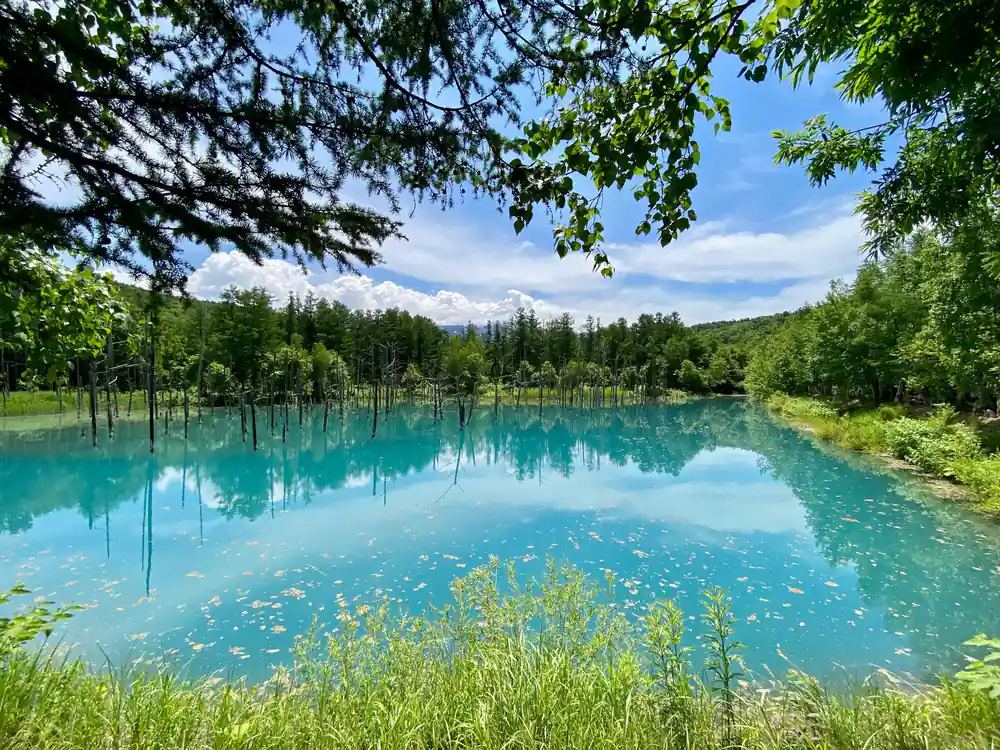
- The Shirogane Blue Pond formed after the December 1988 eruption of Mount Tokachi, and its colour comes from suspended aluminium colloids scattering light.[5]
- Farm Tomita covers 29 hectares and welcomes over a million tourists annually.[6]
- Top choice Furano & Biei Blue Pond from US$48 Rating4.56 from 122 reviews[1]Duration1 day[1]GuideEnglish, Chinese, Japanese, Korean[1]CancellationUp to 24 hours in advance[1]StopsFarm Tomita, Blue Pond, Shikisai No Oka[1] Check availability
- Biei Furano Flower Sea from US$43 Rating4.76 from 51 reviews[7]Duration10 hours[7]GuideDriver: Chinese, English, Japanese[7]CancellationUp to 24 hours in advance[7]StopsBiei, Furano, Shikisai No Oka[7] See this tour
- Hokkaido Highlights from US$56 Rating4.55 from 87 reviews[8]Duration10 hours[8]GuideChinese, English, Japanese[8]CancellationUp to 24 hours in advance[8]StopsCape Kamui, Otaru Canal[8] See this tour
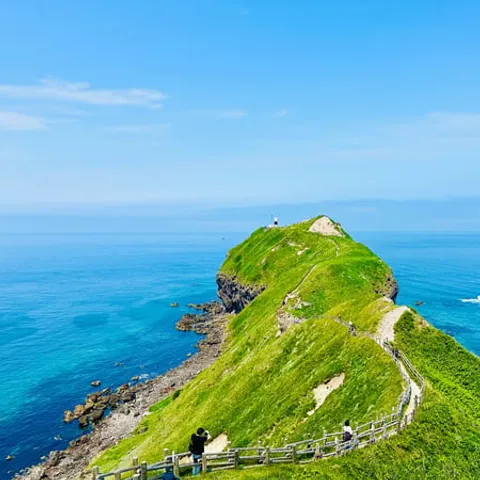
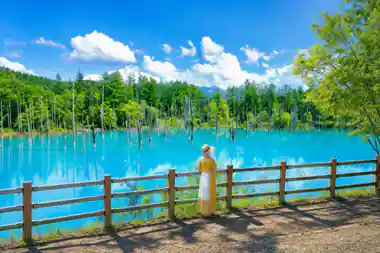
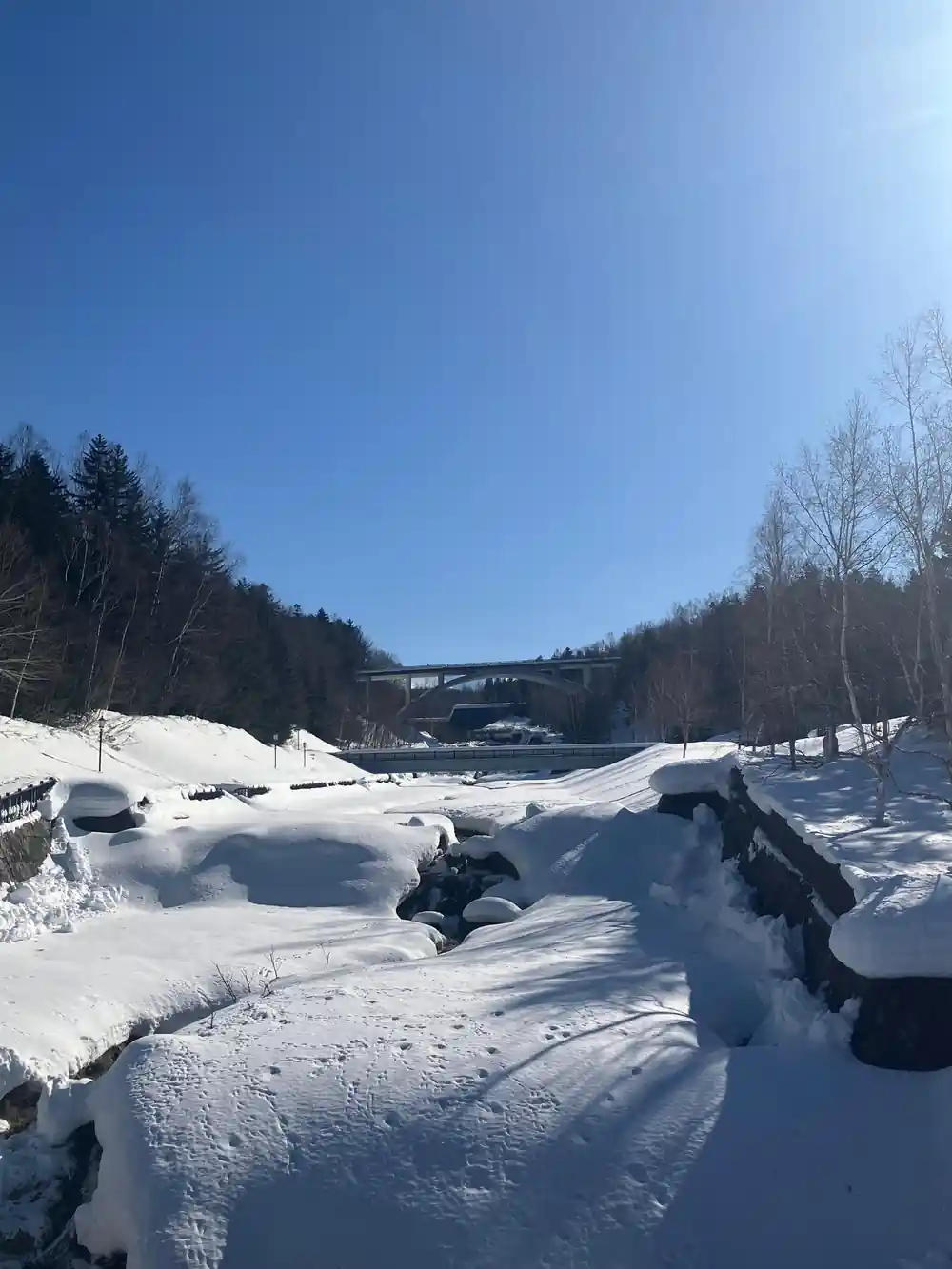
The December 1988 eruption sent volcanic mudflows down the Biei River, forcing emergency erosion-control dams whose backed-up water became the pond. Aluminium colloids suspended in the water scatter light, producing the distinctive turquoise hue seen in Shirogane Blue Pond.
Verdict: coach, car or train for Furano
Getting ready
Why Furano is worth the ride from Sapporo
Furano sits in a wide bowl of farmland and low hills in the middle of Hokkaido, with lavender rows, potato fields and wheat laid out across the slopes. It is a small town: the population is approximately 26,000 including the incorporated communities on the outskirts, with about 16,000 in the main municipal area.[10] Lavender has been cultivated in Hokkaido since the 1940s, and the fields that grew out of that tradition now pull in visitors every summer.[11]
The scenery comes in two halves. Around Furano you get flower farms and forest, while the hills of Biei next door give you a patchwork of crops: golden wheat, purple potato flowers, green bean fields and brown plowed earth, with farmhouses and barns dotted between them.[12] Both are gentle, walkable landscapes rather than wilderness, which is what makes them work in a single long day out.
You can make it a day trip from Sapporo and be back in the city the same evening, or stay two nights, hire a car for a morning and spend the rest of the time walking the farm roads and eating melon. Either way, the town is compact and easy to move around once you are there, and the main sights sit within a short drive of one another.
Sapporo to Furano train, bus or coach tour
There are three sensible ways to make the journey: drive yourself, take public transport, or join a coach tour. Driving is the simplest, and Furano is about a two hour drive from Sapporo using the Doo Expressway between Sapporo and Mikasa.[2] That leaves you free to pull over at a viewpoint or stay late in a flower field, and it also means you are the one driving home in the evening.
The Sapporo to Furano train and the highway buses both put you in town without a car, which suits anyone staying overnight. Once you arrive, the town is compact and walkable, but the flower farms and the Blue Pond sit out in the countryside, so a vehicle or a guide makes those stops much easier. A coach tour loops through the countryside in one day, from two starting location options in Sapporo back to two drop-off locations.[1]
If you would rather not drive, the train and the long-distance buses reach central Furano without a car. They suit an overnight stay, where you can spread the flower farms over two mornings and let the weather settle before you commit. The trade-off is the last stretch out to the Blue Pond and the Biei hills, which is where a coach, a taxi or a hire car earns its keep. A common pattern is to ride out by train, sleep in Furano and join a local loop for the farm stops the next morning.
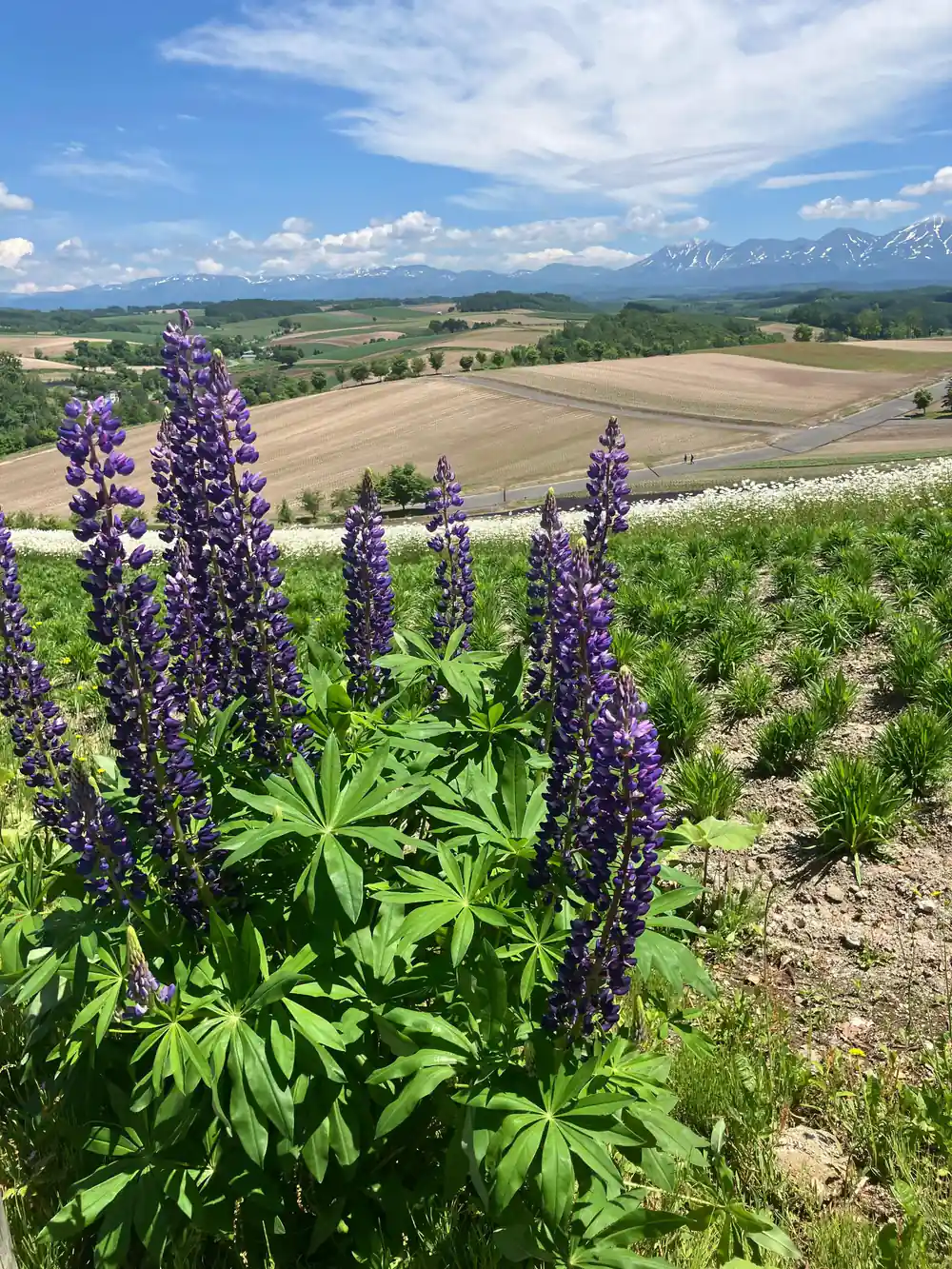
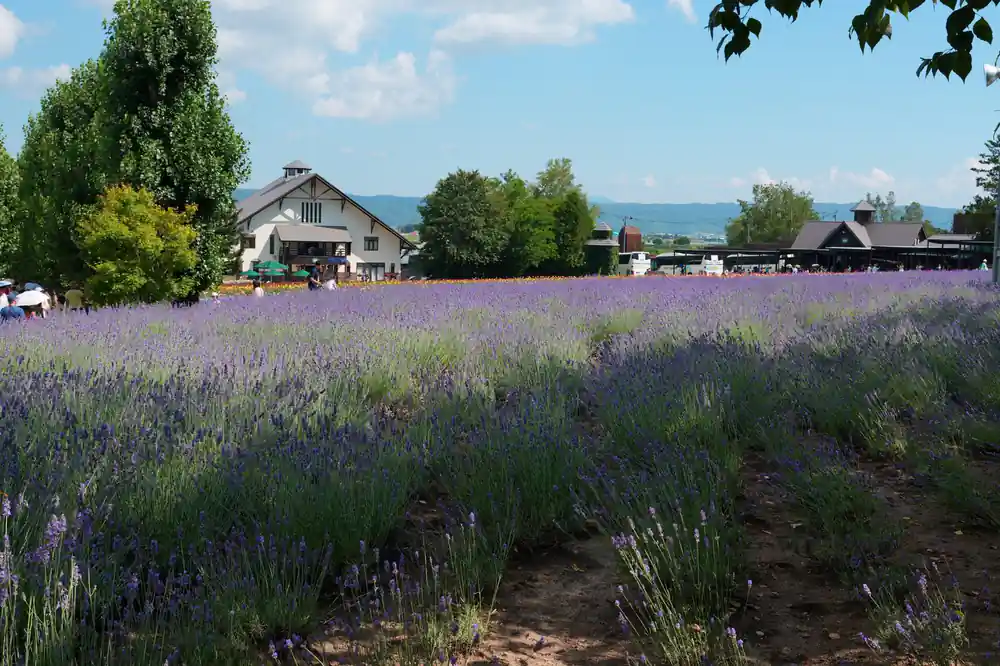
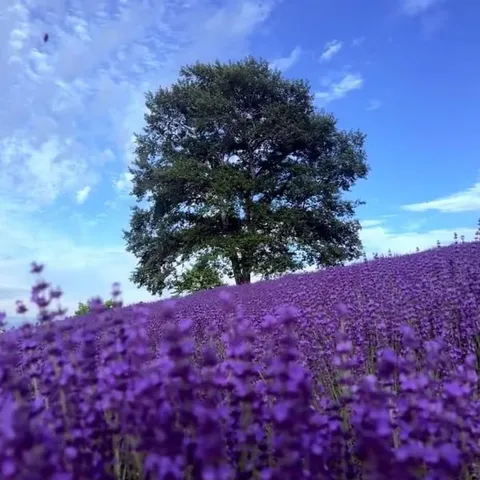
Lavender rows running out towards the Furano hills on a clear summer morning.
What the Furano and Biei coach tour does
The Colored Hokkaido: Furano Flower&Biei Blue Pond From Sapporo listing runs for 1 day and starts from two starting location options in Sapporo, which gives you a choice of meeting point.[1] The route moves by coach between Patchwork Road in Biei, Shirogane Blue Pond, Shikisai No Oka, a local restaurant and Farm Tomita, and ends at two drop-off locations.[1]
A live tour guide travels with the group in English, Chinese, Japanese and Korean, and the price starts from US$48.[1] The listing is rated 4.56 from 122 reviews, you can reserve now and pay later, and free cancellation runs up to 24 hours in advance.[1]
Starting times vary by date, so check availability for the day you want and build your morning around the meeting point.[1] Take a light bag, a water bottle and a layer for the coach, since the stops are short and you will want to move quickly once the bus doors open. Bring a little cash for the local restaurant stop and any farm shop purchases, and keep your phone charged for the map back to your hotel.
Farm Tomita and the lavender window
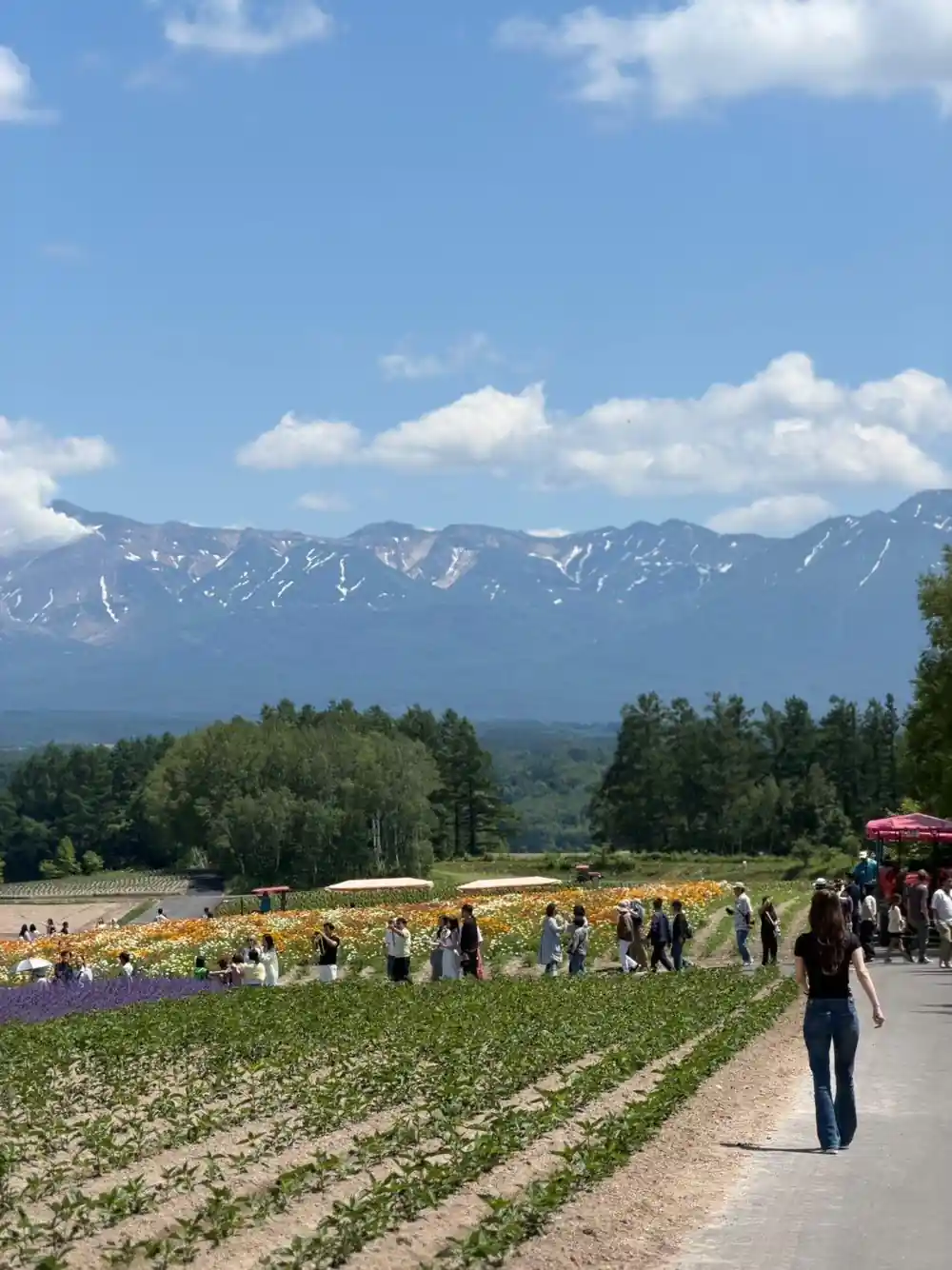
Farm Tomita is the anchor of a Furano summer. The farm doubled in size in 2008 with the addition of Lavender East and now covers 29 hectares, and it welcomes over a million tourists annually.[6] Lavender starts blooming from late June to mid-August, which is the window most people plan around.[3]
Outside those weeks the farm still has colour and the countryside is quieter. If you are in the area in the evening, Ningle Terrace is a shopping area in the green forest of Furano, where the shops take the form of wood cabins that are lit up after sunset.[13] It is a calm way to finish a day in the fields.
Plan the farm stop around the light and the bus schedule. The paths are open and walkable, the colour reads best in soft sun, and the fields are laid out so you can wander a loop rather than stand still. Allow time to sit with a drink before the coach leaves, and keep an eye on the meeting time, since the stop is short on a one day tour. If your itinerary also includes Shikisai No Oka or a local restaurant, eat lightly at the farm so you still have room later.
from US$48
One day from Sapporo, stopping at Patchwork Road, Shirogane Blue Pond, Shikisai No Oka, a local restaurant and Farm Tomita.[1]
Shirogane Blue Pond and the Biei patchwork hills
The Shirogane Blue Pond was created when emergency erosion-control dams backed up water after the December 1988 eruption of Mount Tokachi.[5] Aluminium colloids suspended in the water scatter light, which is what gives the pond its distinctive turquoise hue.[5] The colour shifts with the light, so it is worth walking the full length of the viewing area.
Biei's other big draw is Shikisai-no-oka, a panoramic flower garden covering fifteen hectares of land.[9] Nearby, at Shirahige Waterfall, groundwater seeping from the rock face plunges about 30 metres to the river below.[14] Both stops are short, so keep your camera ready and your shoes practical.
The hills around Biei are working farmland. The area around the Seven Stars Tree is known as Patchwork Road, where different crops are planted in each plot, and the pattern changes through the season.[15] Above the fields, Mount Tokachi stands at 2,077 meters, a reminder that this fertile landscape is volcanic.[16]
Weather, seasons and what to pack
Summer in Furano is mild rather than hot: the average temperature in Furano in July is 22.1°C.[4] Bring a light layer for the morning coach ride, a hat and sunscreen for the fields, and shoes you do not mind getting dusty on farm paths.
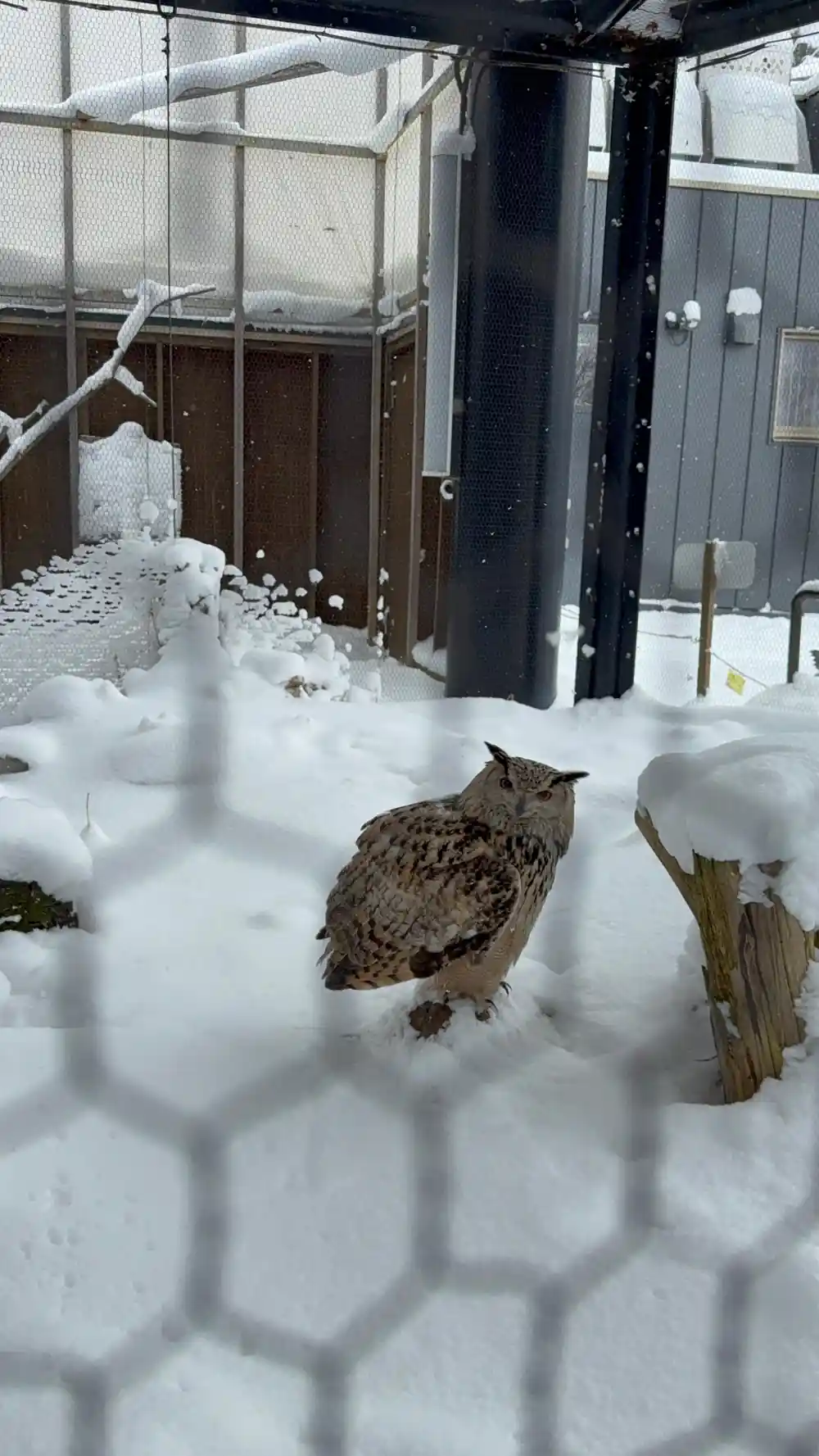
Winter here is a different trip. In one season Furano received 158 cm of cumulative snowfall in the first two weeks of December, on top of 45 cm that fell in November.[17] If you visit in the snowy months, waterproof boots and warm gloves matter more than anything in your camera bag.
Layers work better than one heavy coat in every season here. A warm morning can turn into a bright, breezy afternoon, and the coach air conditioning can feel cold after an hour in a sunny field. Keep a small bag with water, a hat, sunscreen and a light rain shell, and leave the big luggage at your hotel. On winter days, boots with grip and a spare pair of gloves make the difference between a pleasant walk and a cold one.
Booking, meeting points and money
Book ahead if you are travelling in the lavender weeks, and read the meeting point details carefully. The Colored Hokkaido tour lists two starting location options and two drop-off locations.[1] Reserve now and pay later is available on that listing, along with free cancellation up to 24 hours in advance.[1]
Prices across the Sapporo to Furano market vary with group size and extras. The Biei Furano Flower Sea listing starts from US$43.[7] A Blue Pond and Furano Flower Sea tour also starts from US$43 and is limited to 13 participants.[18] For a different mix of stops, the Hokkaido Highlights day trip starts from US$56.[8]
Compare what each tour stops at before you book, then check which meeting point sits closer to where you are staying. A short taxi ride at the start of the day is easier than a long walk with a day bag, and coaches usually wait for the group at each stop.
From prices for Furano and Biei day tours
From prices in US dollars, quoted on these GetYourGuide listings:[1][7][18][19][20].
Estimate your Sapporo to Furano day tour
Amounts are US dollar from prices of these GetYourGuide listings:[1][7][18][19]
Timing your visit, season by season
Planning your Furano day
Pick your season
Lavender runs from late June to mid-August; outside that window you trade flowers for autumn colour or snow.[3]
Choose how to get there
Self-drive takes about two hours from Sapporo on the Doo Expressway, or let a coach handle the loop while you watch the hills.[2]
Book the tour early
Coach seats in the lavender weeks go quickly; reserve now and pay later is offered on the Colored Hokkaido listing.[1]
Check your meeting point
The Colored Hokkaido tour starts from two starting location options in Sapporo and finishes at two drop-off locations.[1]
Pack for the fields
July in Furano averages 22.1°C, so bring a light layer, sun protection and shoes for dusty farm paths.[4]
Furano flowers and the Blue Pond in one day from Sapporo
from US$48Reserve now & pay later