What to remember
- A 29-hectare flower farm in Furano that welcomes over a million tourists annually, with lavender blooming from late June to mid-August.[1][2]
- The farm sits in Furano, about a two hour drive from Sapporo using the Doo Expressway between Sapporo and Mikasa.[3]
- Lavender starts blooming from late June to mid-August, and July in Furano averages 22.1°C, mild weather for walking the beds.[2][4]
- Most travellers arrive by coach from Sapporo. The Colored Hokkaido tour lasts 1 day and starts from US$48, with free cancellation up to 24 hours in advance.[5]
- A typical Sapporo coach tour stops at Patchwork Road, Shirogane Blue Pond, Shikisai No Oka and Farm Tomita, with a local restaurant stop.[5]
- Top choice Furano & Biei Blue Pond from US$48 Duration1 day[5]Rated4.56 from 122 reviews[5]LanguagesEnglish, Chinese, Japanese, Korean[5]Stops includeBlue Pond, Shikisai No Oka, Farm Tomita[5]Free cancellationCancel up to 24 hours ahead[5] Check availability
- Biei Furano Flower Sea from US$43 Duration10 hours[6]Rated4.76 from 51 reviews[6]LanguagesChinese, English, Japanese[6]Stops includeBiei, Furano, Shikisai No Oka[6]Free cancellationCancel up to 24 hours ahead[6] See this tour
- Noboribetsu & Lake Toya from US$47 Duration10 hours[7]Rated4.30 from 323 reviews[7]LanguagesEnglish, Japanese[7]Stops includeLake Toya, Jigokudani, Cape Chikyu[7]Free cancellationCancel up to 24 hours ahead[7] See this tour
Lavender starts blooming from late June to mid-August.
Our verdict: is Farm Tomita worth a day from Sapporo?
Getting ready
- Check the bloom window before you fix your dates
- Reserve a coach seat early for summer weekends
- Carry some cash for farm shops and small stands
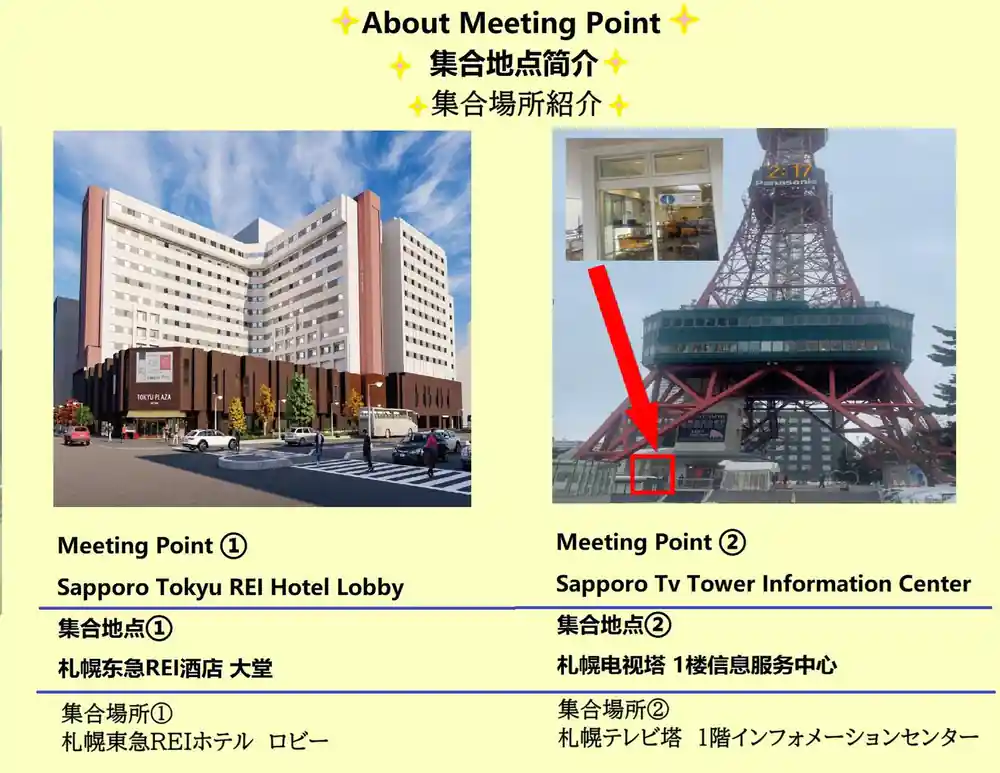
- Note the two starting location options in Sapporo
Where Farm Tomita sits in Furano
Farm Tomita is the flower farm that put Furano on the Hokkaido map. It covers 29 hectares after doubling in size in 2008 with the addition of Lavender East, and it welcomes over a million tourists annually.[1] The town around it is small: Furano's population is approximately 26,000 including the incorporated communities in the outskirts, and about 16,000 in the main municipal area.[8]
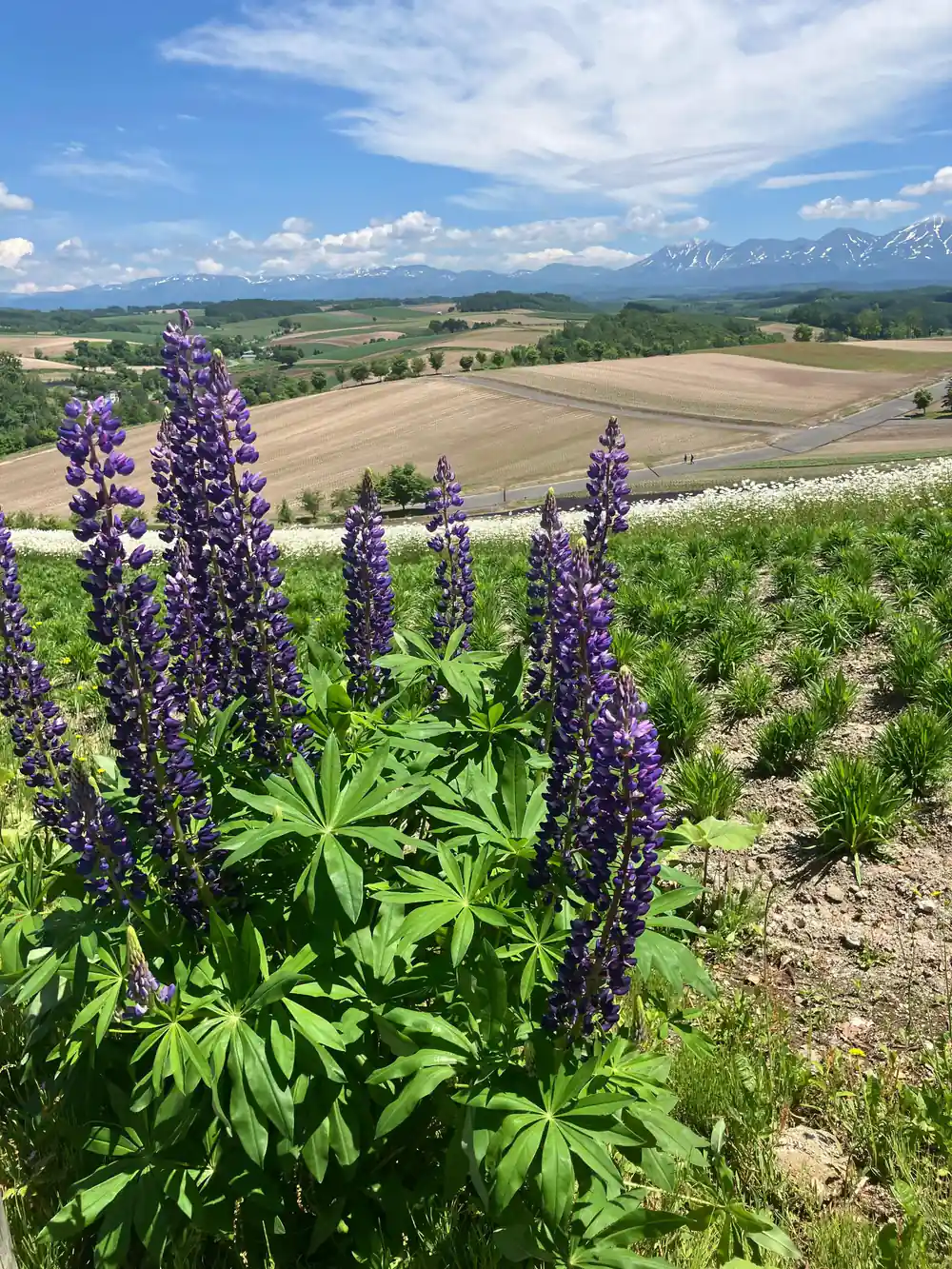
The setting is farmland, low hills and a lot of sky, with mountain ridges standing behind the fields. Farm Tomita itself is a working farm with garden beds, greenhouses and shops, laid out so you can wander between the lavender strips and the other flower beds at your own pace. Furano is about a two hour drive from Sapporo using the Doo Expressway between Sapporo and Mikasa.[3]
Farm Tomita is not the only flower farm in the area, and that is part of the pleasure. Around Furano and Biei you pass one cultivated slope after another, plus vegetable fields, barns and small stands selling melon and soft-serve ice cream in summer. The whole district works as a slow loop rather than a single stop.
When the lavender blooms
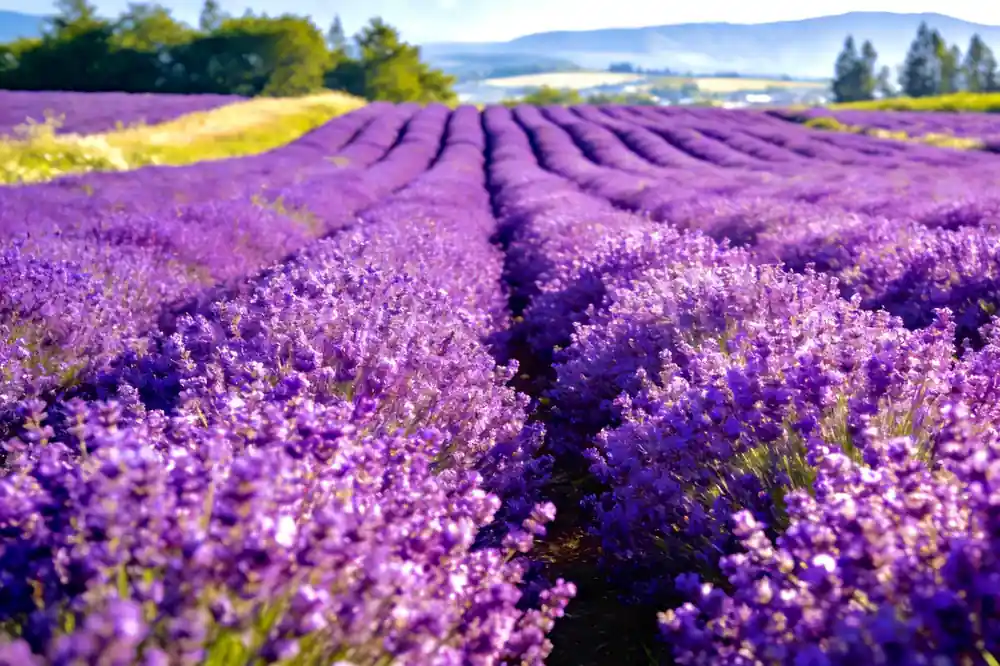
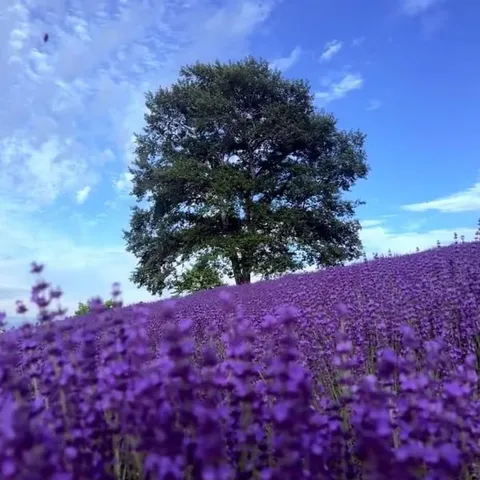
Lavender starts blooming from late June to mid-August.[2] Those weeks are the classic Furano picture, and the long purple rows are what people come to see. Lavender has been cultivated in Hokkaido since the 1940s.[9] Early in the season the rows are softer and mixed with other colour; by midsummer they are dense and scent the whole slope.
The farm sits in a cool inland basin. The average temperature in Furano in July is 22.1°C.[4] Mornings and evenings are cooler than that midday number suggests, so a light jacket over a T-shirt works well through the day, and a hat is worth packing for the open beds. Summer rain tends to pass through quickly, and the fields stay open in light showers.
Farm Tomita is a working farm rather than a theme park, and the paths thread between beds planted for harvest as well as for show. Expect greenhouses, drying racks and small shops alongside the flower strips, and allow time to sit with a lavender soft-serve or a slice of melon before the coach moves on.
Rows of colour running towards the hills outside Furano
Farm Tomita and the wider flower country
Farm Tomita is one stop in a wider circuit of flower gardens and viewpoints around Furano and Biei. Shikisai-no-oka is a panoramic flower garden in Biei that covers fifteen hectares of land.[10] Both are laid out with paths, so a slow walk with a camera is the natural way to see them, and both fill quickly once the morning coaches arrive.
Different crops grow in different plots around here, and the hills change colour week by week through the growing season. That is the appeal of the area: you are not looking at one garden but at a working agricultural landscape that happens to be beautiful. Farmers are still working these fields, so stay on the paths and the marked roads and leave the crops alone.
Pick your timing around the crops as much as the lavender. Wheat and potato fields colour the hills through the summer, and the mix shifts as the season goes on. Early morning and late afternoon light is softer, and the paths are quieter before the first coaches arrive.
Getting to Furano from Sapporo
Furano is about a two hour drive from Sapporo using the Doo Expressway between Sapporo and Mikasa.[3] Driving yourself means a rental car and a long day behind the wheel, and many travellers hand the road over to a coach tour instead. The Colored Hokkaido: Furano Flower & Biei Blue Pond From Sapporo tour runs for 1 day and starts from US$48.[5]
That tour has two starting location options in Sapporo and travels by bus or coach.[5] A live tour guide works in English, Chinese, Japanese and Korean.[5] Its stops run through Patchwork Road in Biei, Shirogane Blue Pond, Shikisai No Oka, a local restaurant, and Farm Tomita, with two drop-off locations at the end.[5]
Reserve now and pay later is available, and cancellation is free up to 24 hours in advance, which makes it easy to hold a place while you sort out flights and hotels.[5]
from US$48
A coach day tour from Sapporo, with live guiding and stops at the Blue Pond, Shikisai No Oka and Farm Tomita.[5]
Shirogane Blue Pond and Shirahige Waterfall
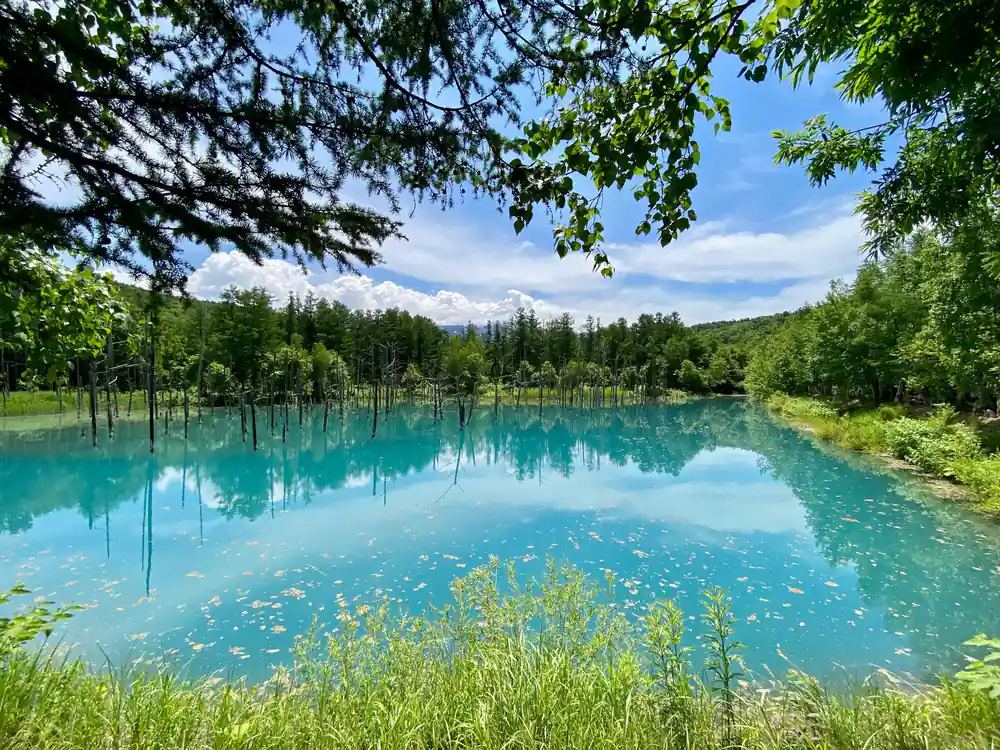
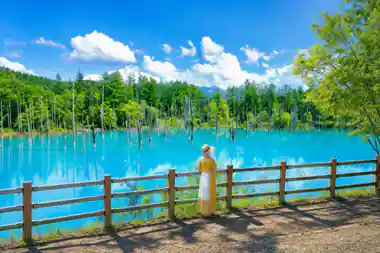
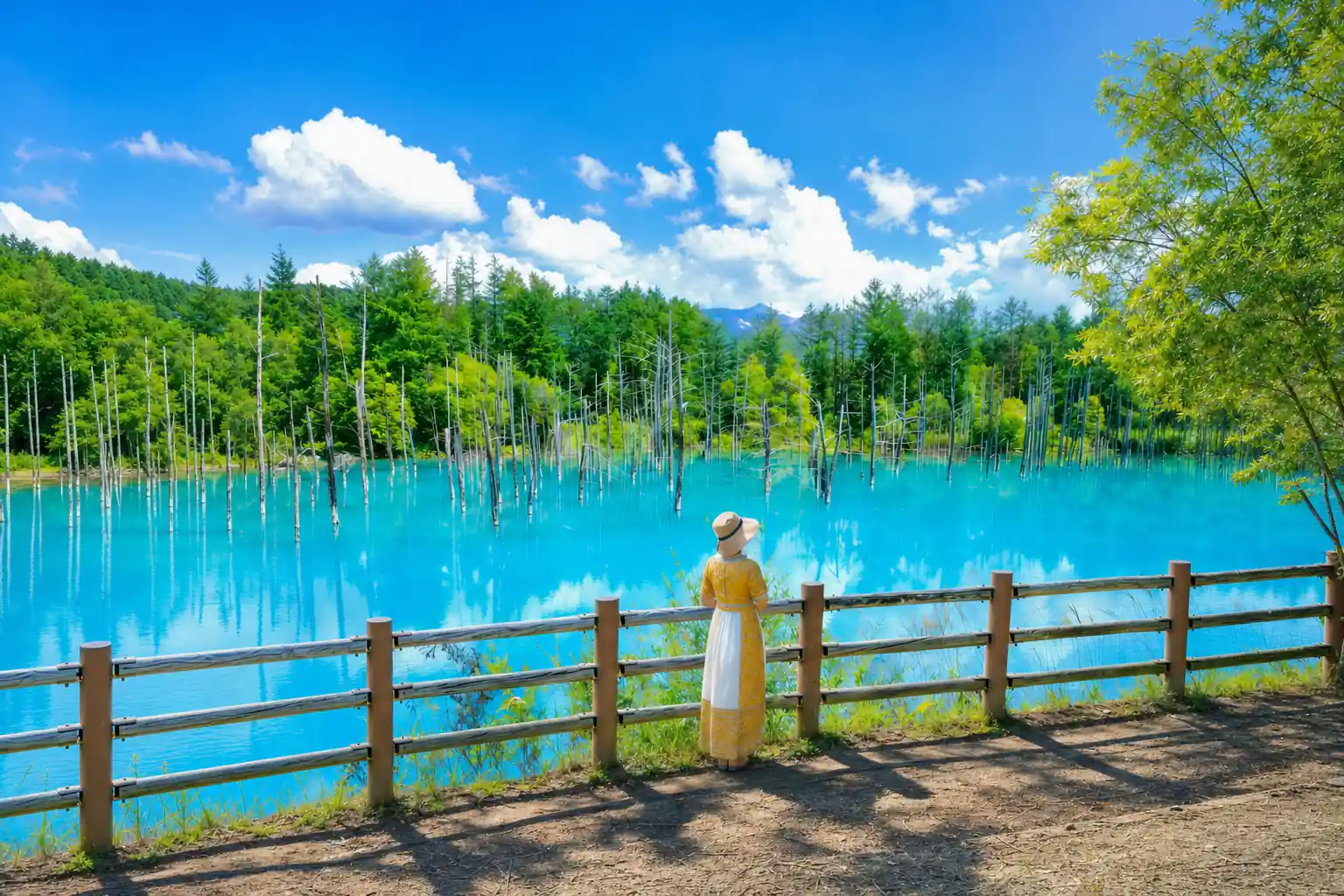
The Shirogane Blue Pond was created when emergency erosion-control dams backed up water after the December 1988 eruption of Mount Tokachi, and it appears blue because suspended aluminium colloids scatter light.[11] Mount Tokachi is 2,077 meters high.[12] The colour shifts through the day, from bright turquoise in strong light to something quieter under cloud, and the pale trunks standing in the water give the scene its strange, still look.
Nearby, groundwater seeping from the rock face plunges about 30 metres to the river below at Shirahige Waterfall.[13] The spray feeds the Biei River, which runs milky blue through the trees. Both the pond and the waterfall sit close to the road with short walks from the parking areas, and they slot easily into a day that also takes in the flower farms.
If you are travelling with a camera, the pond reads differently in strong light and in rain, and a slow walk along the shore is the way to see it. Winter changes both spots completely, and the roads around Biei can be snowy and icy from late in the year.
Patchwork Road and the hills of Biei
Biei's patchwork hill views include golden wheat, purple potato flowers, green bean fields, and brown plowed earth.[14] The area around the Seven Stars Tree is known as Patchwork Road, where different crops are planted in each plot, forming Biei's iconic scenery.[15]
The farm roads through these hills are public, so you can drive, cycle or walk them, and the view changes with every rise. Lone trees stand in the middle of fields, farmhouses and barns break the horizon, and the mountains sit behind everything. If you are on a coach tour, the stops are short and timed; if you are driving, pull over only where it is safe and permitted.
Photographers work these hills in the early morning and late afternoon, when low light picks out the ridges between the plots and the colours separate. Midday light flattens the pattern, so it pays to plan your viewpoints for the softer hours if you are driving yourself.
Seasons, packing and other stops
Summer is the flower season, with lavender from late June to mid-August,[2] but Furano has a second life in winter. One season brought 158 cm of cumulative snowfall in the first two weeks of December, on top of 45 cm in November.[16] Skiers and snowboarders plan around that, while flower visitors plan around the bloom.
Ningle Terrace is a shopping area in the green forest of Furano, where shops take the form of wood cabins that are lit up after sunset.[17] It is a gentle way to end a day, with a short walk between the cabins and the trees.
Pack layers whatever the month, bring a rain shell for the mountains, and keep a little cash for farm shops and small stands. Shoes with grip help on gravel paths and wet gravel paths. If lavender is the point of your trip, build the day around the flower farms and let the Blue Pond and the hills fill the rest; outside the bloom, the same route still works.
From prices for Furano and Biei day tours
From prices per traveller for day tours from Sapporo.[5][6][7][18]
Compare from prices per traveller
From prices in US dollars per traveller, taken from the tour listings above.[5][6][7][18]
When to plan a Farm Tomita visit
Plan your Farm Tomita day
Pick your dates
Aim for the lavender weeks if the flowers are the point, and note that the pond and the hills work across the seasons.[2]
Choose your transport
Driving from Sapporo takes about two hours on the Doo Expressway, or join a coach day tour and let someone else handle the road.[3]
Book the tour
The Colored Hokkaido tour lasts 1 day, starts from US$48, and offers free cancellation up to 24 hours in advance.[5]
Pack for the weather
July in Furano averages 22.1°C, so bring light layers, a hat and a rain shell for the mountains.[4]
Plan your photo stops
The route stops at Patchwork Road, Shirogane Blue Pond, Shikisai No Oka and Farm Tomita, with a restaurant stop in between.[5]
Ride from Sapporo to the Furano flower fields
from US$48Reserve now & pay later