What to remember
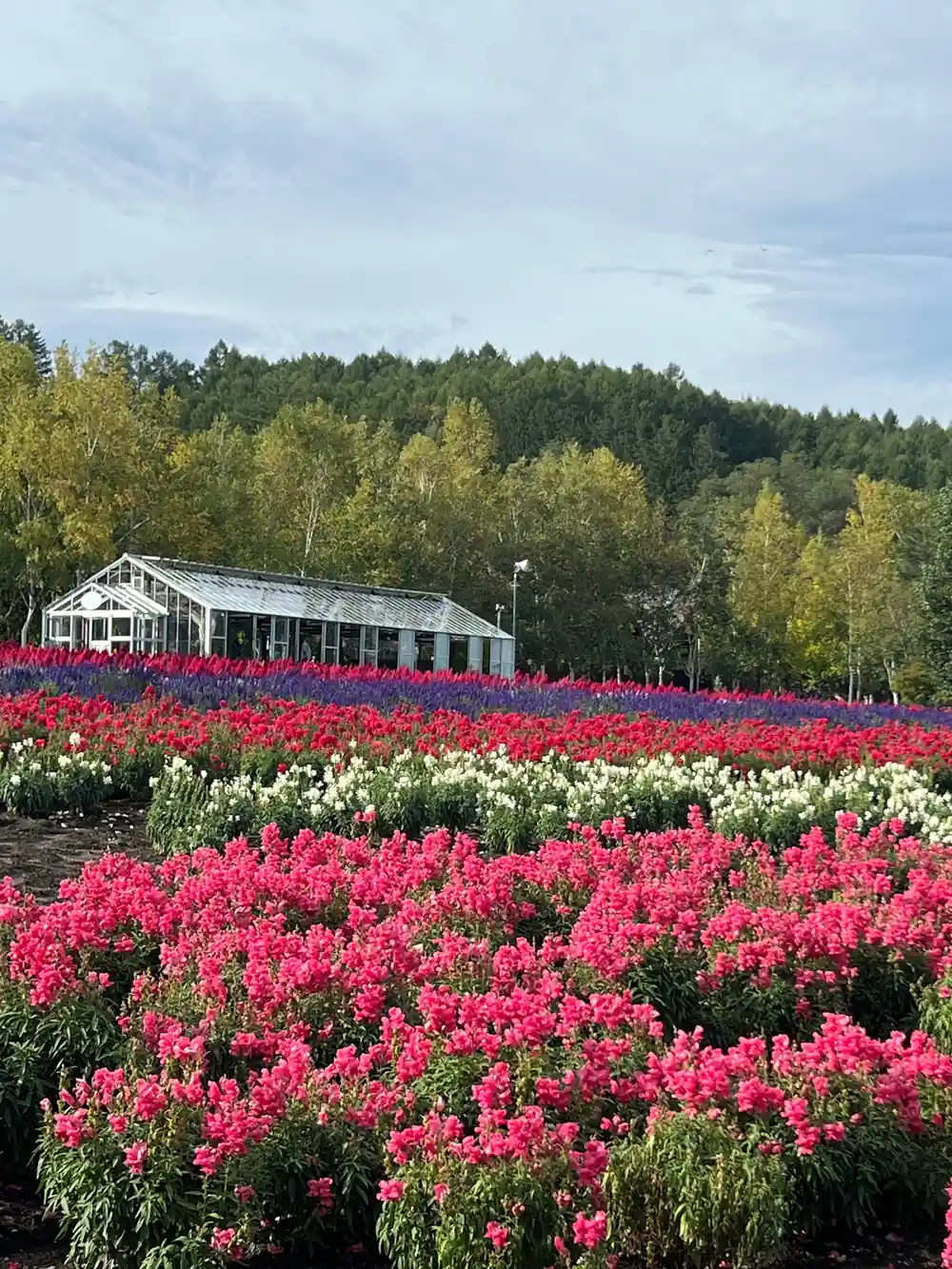
- Shikisai no Oka is a panoramic flower garden in Biei covering fifteen hectares of land on Oka-no-machi.[1]
- Lavender starts blooming from late June to mid-August, and it has been cultivated in Hokkaido since the 1940s.[2][3]
- The Biei patchwork hills show golden wheat, purple potato flowers, green bean fields and brown plowed earth as crops change through the season.[4]
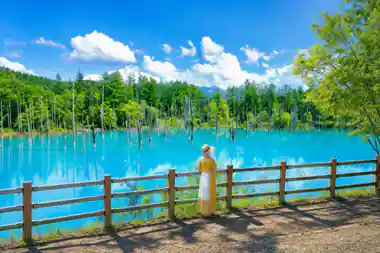
- The Shirogane Blue Pond formed after the December 1988 eruption of Mount Tokachi, and Shirahige Waterfall plunges about 30 metres.[5][6]
- The Colored Hokkaido tour from Sapporo visits Patchwork Road, Blue Pond, Shikisai No Oka, a restaurant and Farm Tomita, from US$48.[7]
- Top choice Colored Hokkaido day tour from US$48 Rating4.56 from 122 reviews[7]Duration1 day[7]GuideEnglish, Chinese, Japanese, Korean[7]CancellationFree up to 24 hours before[7] Check availability
- Biei Furano Flower Sea from US$43 Rating4.76 from 51 reviews[8]Duration10 hours[8]GuideDriver: Chinese, English, Japanese[8]CancellationFree up to 24 hours before[8] See this tour
- Hokkaido Highlights trip from US$56 Rating4.55 from 87 reviews[9]Duration10 hours[9]GuideChinese, English, Japanese[9]CancellationFree up to 24 hours before[9] See this tour
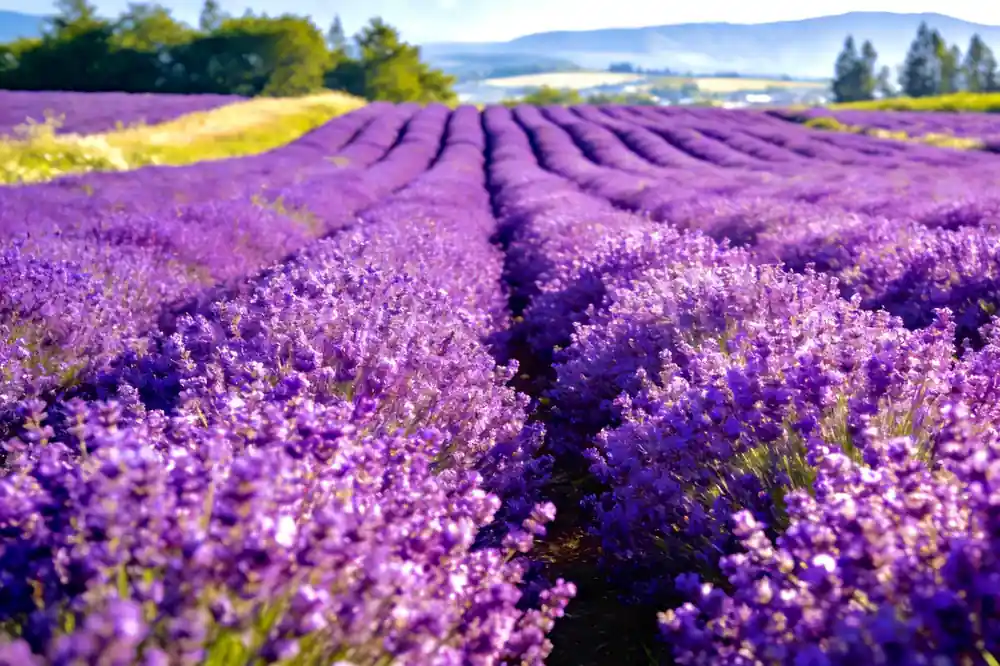
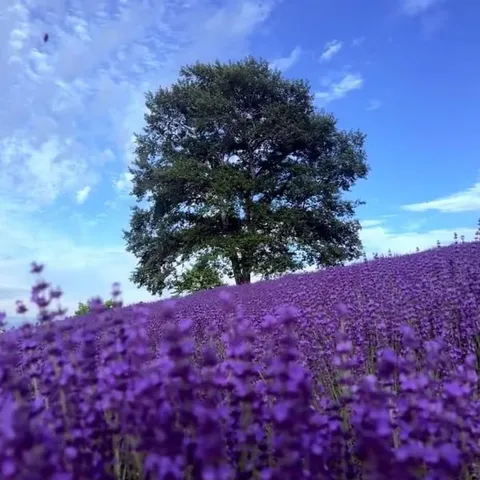
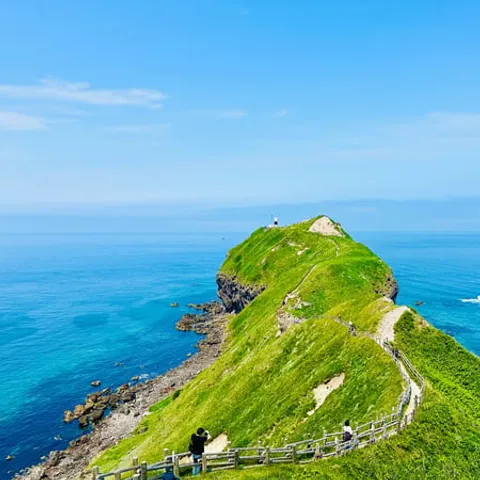
The panoramic flower gardens of Shikisai-no-oka provide spectacular views across fifteen hectares of land on Oka-no-machi Biei.
Is Shikisai no Oka worth your day?
Pre-booking checklist
What Shikisai no Oka Actually Is
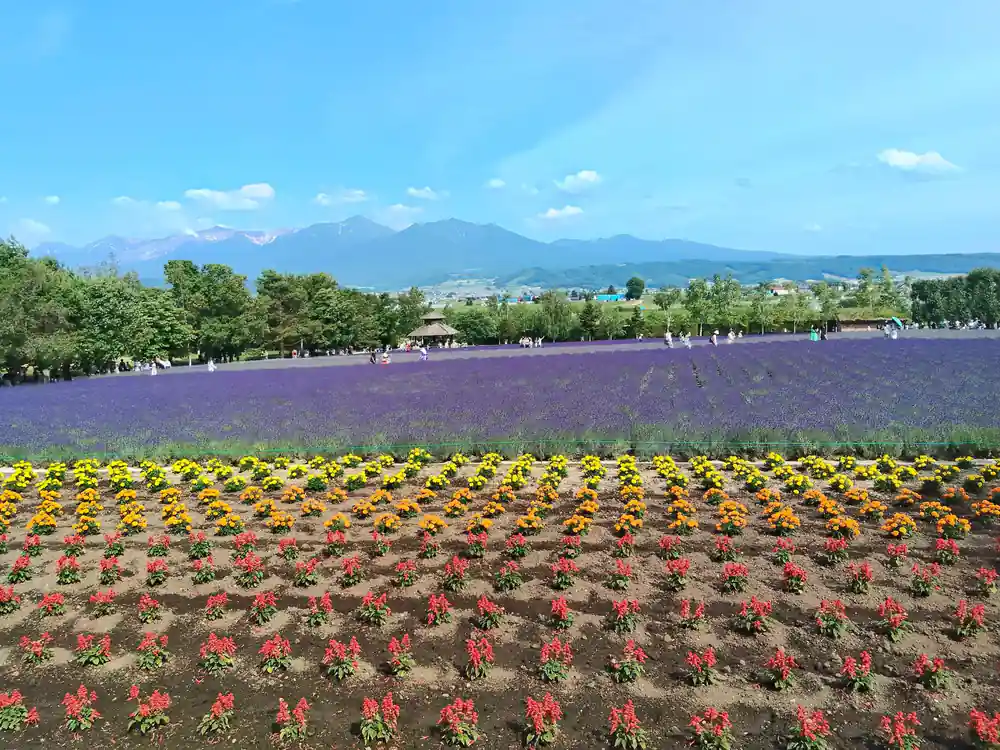
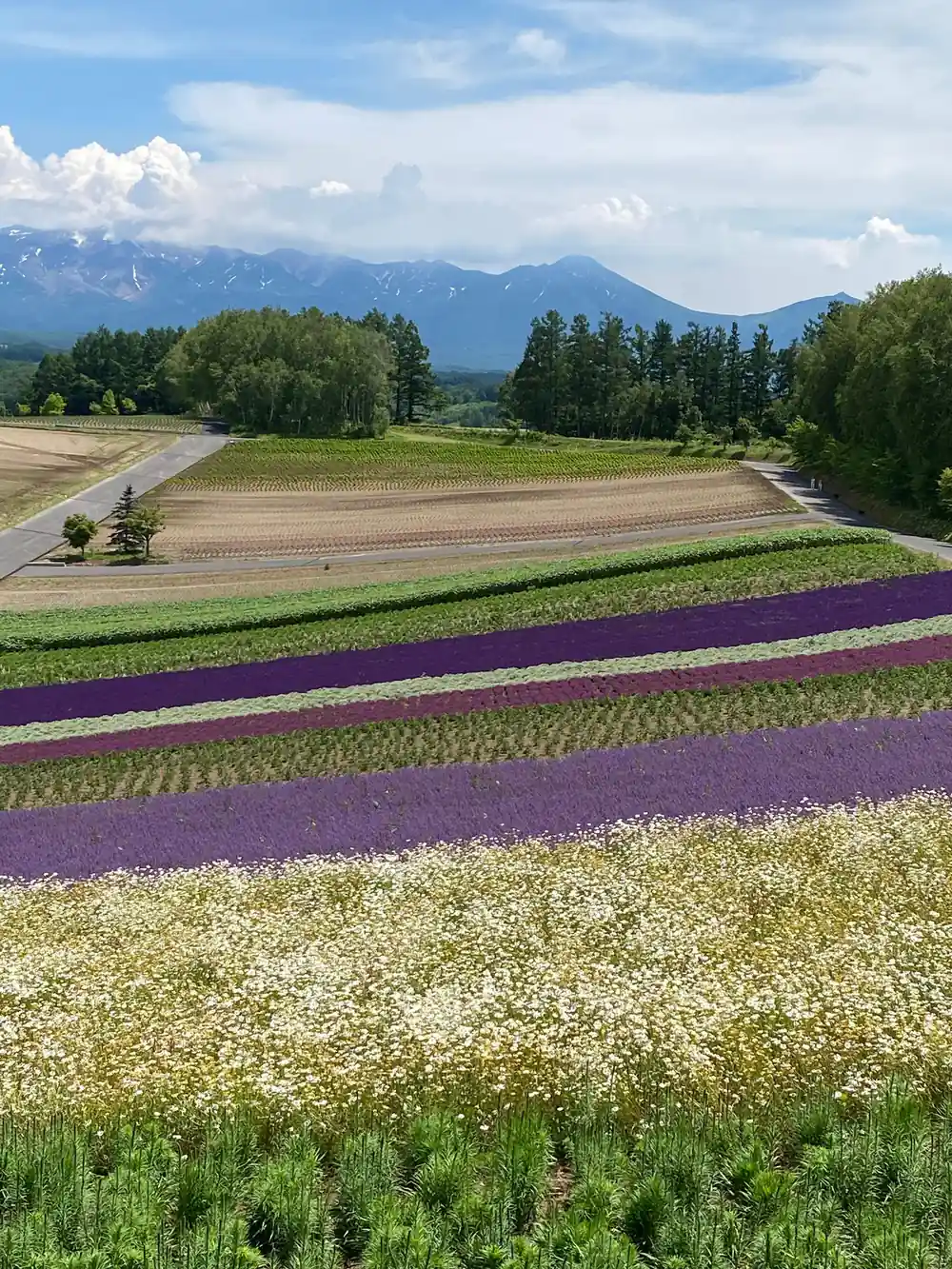
Shikisai no Oka is a panoramic flower garden in Biei that covers fifteen hectares of land on Oka-no-machi.[1] It is a working hillside rather than a formal park: wide beds of flowers are planted in long bands across sloping ground, so from the upper path the whole hill reads as stripes of colour. You walk in among the beds on paths cut between them, and the view changes with every few steps.
The name is usually translated as hill of colours, and the planting is arranged to show that off. As the beds sit on a slope, strong photographs come from the upper path looking down, where the bands stack up behind each other. It is the kind of place where an hour disappears without you noticing, even though the walking itself is gentle.
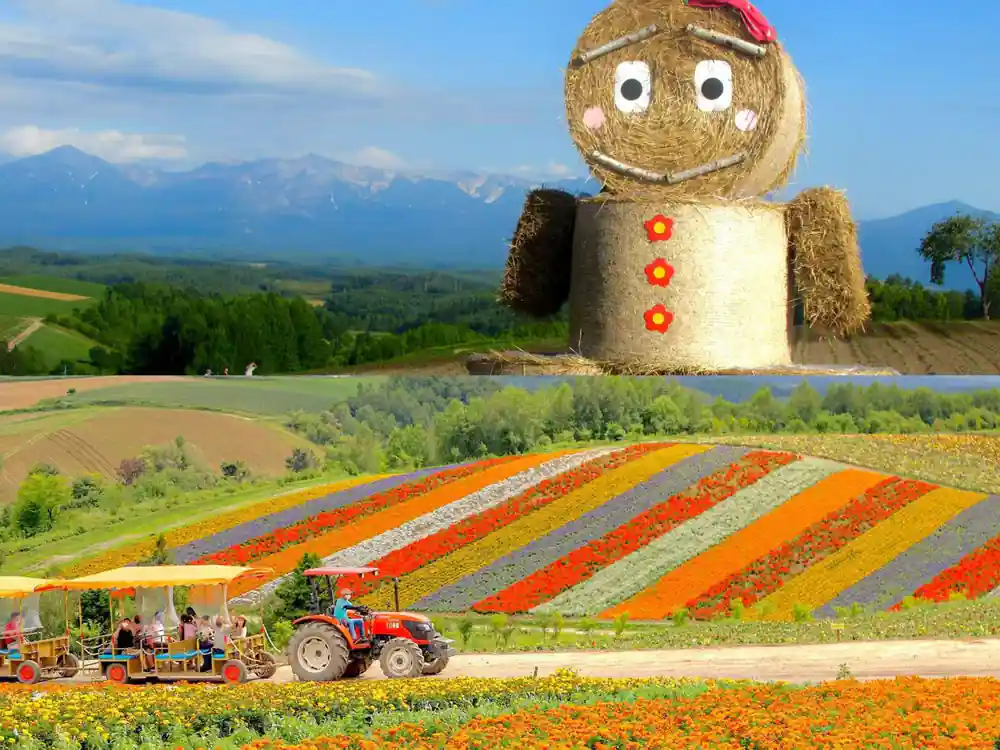
Biei and Furano sit side by side in the middle of Hokkaido, and they pair naturally in one day out. The area around the Seven Stars Tree is known as Patchwork Road, where different crops are planted in each plot, forming Biei's iconic scenery.[12] The Colored Hokkaido tour from Sapporo runs through Patchwork Road, Shirogane Blue Pond, Shikisai No Oka, a local restaurant and Farm Tomita, with two starting location options and a live tour guide in English, Chinese, Japanese and Korean.[7]
The Striped Hills and Bloom Schedules
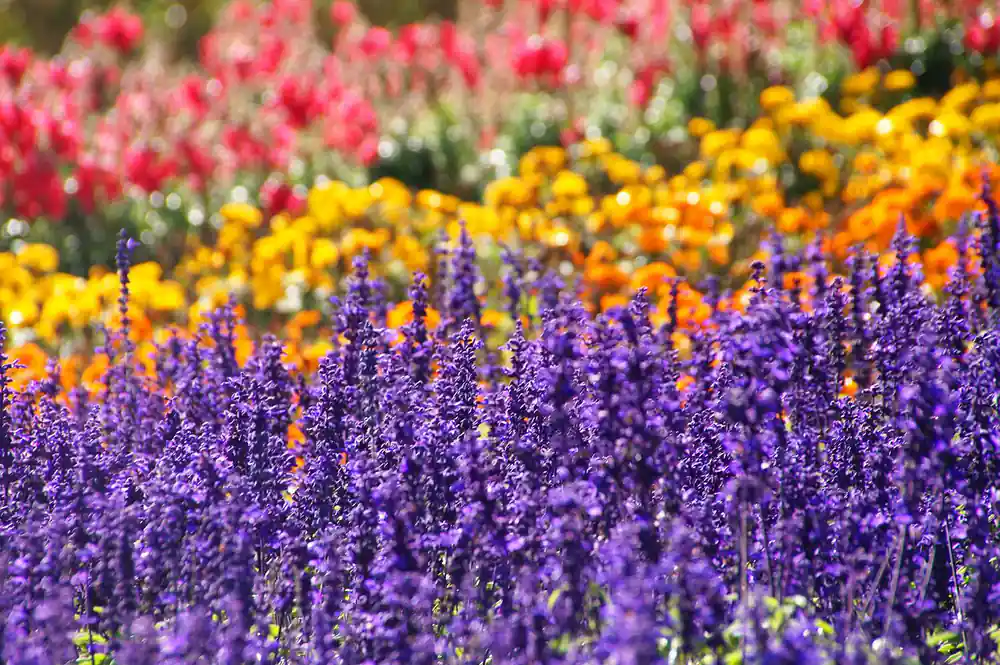
Lavender starts blooming from late June to mid-August, and it has been cultivated in Hokkaido since the 1940s.[2][3] The lavender rows draw the crowds, but they are one thread in a long season. Early summer leans green and white, high summer brings the purples and yellows, and the hillsides shift again later in the year as crops ripen and fields are turned over.
Part of the appeal is that Biei is farmed, not just gardened. Driving, cycling or walking the farm roads offers constantly shifting views, with different crops in each plot, and the colours run through golden wheat, purple potato flowers, green bean fields and brown plowed earth.[4] The patchwork changes week by week through the growing season, and no two visits look quite the same.
July is the warmest and busiest stretch for the flower hills. The average temperature in Furano in July is 22.1°C,[10] comfortable for walking on an open slope as long as you keep drinking water. Farm Tomita, the other big flower stop in the area, is 29 hectares after doubling in size in 2008 with the addition of Lavender East, and it welcomes over a million tourists annually.[13] Car parks fill early in high summer.
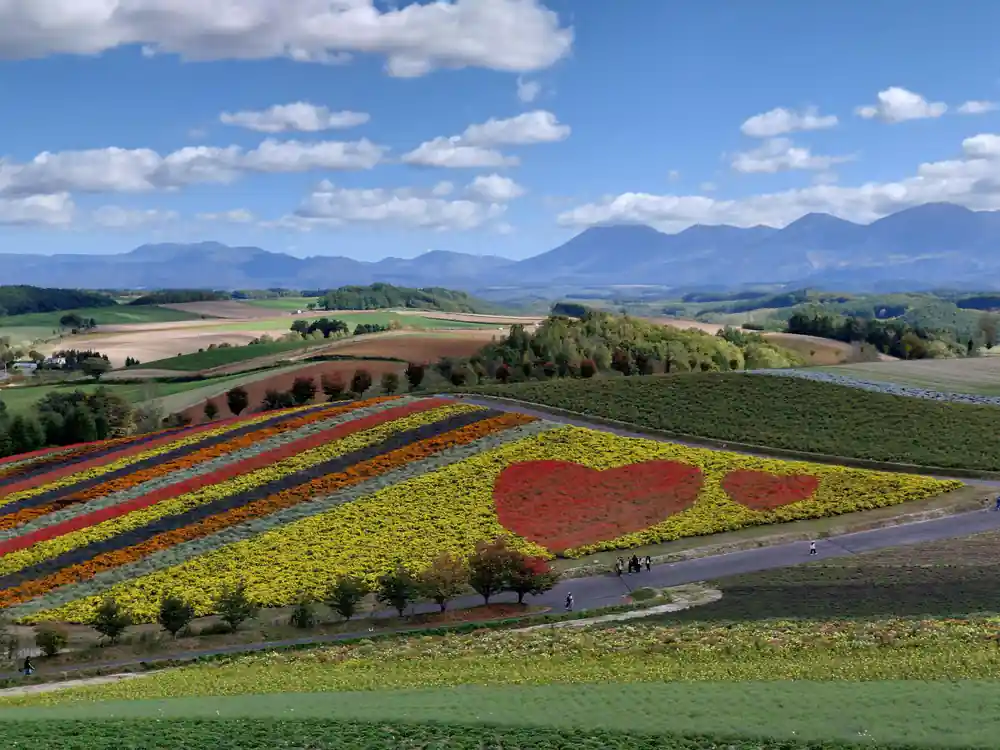
Rows of lavender running towards the hills outside Furano, Hokkaido
Walking the Slopes: Gradient and Ground
The garden is laid out on a hillside, so you are always walking gently up or gently down. The main loop is wide and firm underfoot, and side paths climb between the beds to viewpoints at the top. Benches along the upper path give you a reason to stop and look back across the whole slope.
Take your time and let the slope set the pace. The garden is bigger than it looks from the entrance. If you are with someone who finds hills hard, build your visit around the lower beds and the flatter ground near the entrance, and use the farm's own vehicles where they are running. Sturdy shoes beat sandals: paths can be dusty in dry spells and slick after rain.
There is little shade on an open flower hillside, so a hat or a small umbrella earns its place in your bag, and water matters more than you expect on a warm afternoon. Photographers often work the slope twice, once on arrival and once before leaving, since the light flattens in the middle of the day.
The Alpaca Paddock and Animal Encounters
Alongside the flowers there is an animal corner, where a small herd of alpacas stands behind a fence in a paddock near the greenhouses. They are calm, curious animals and will often wander over to the rail if you stand still and quiet. Children tend to enjoy this part of the visit as much as the flowers.
The alpacas are white and cream, which makes them easy to photograph against the green of the enclosure, and the fence line gives you a natural frame. Keep your voice low, move slowly and let them come to you. Follow whatever the farm asks on the day about feeding and handling, since the animals and their routine come first.
Animal encounters make a good break in the middle of a bus day. You get to sit down, stretch your legs and let the flower walking catch up with you before the next stop. If you are travelling with children, this is the stretch where a little patience with the camera pays off.
from US$48
The Colored Hokkaido tour from Sapporo to Furano, Biei and the Blue Pond is listed from US$48 and runs for 1 day.[7]
Buggy Rides and Tractor Cart Options
Not everyone wants to walk the whole hillside, and flower farms in Biei usually offer some kind of ride, whether a small buggy you handle yourself or a tractor-pulled cart that follows the lanes. Ask at the entrance when you arrive about what is running that day and whether it needs booking ahead.
A ride is a good way to see the layout before you commit to walking, especially if you are short of time or travelling with grandparents or small children. The lanes are shared with pedestrians, so keep an eye out for carts when you cross between the beds.
If you would rather stay on your own two feet, the paths are short enough to cover on foot across a visit, and the garden rewards slow walking more than fast laps. Pick a route, take it easy and let the tractor cart pass you by.
Photography Spots and Viewing Strategy
The Shirogane Blue Pond is the other headline stop on the Furano and Biei circuit, and it looks the way it does for a reason worth knowing. It was created when emergency erosion-control dams backed up water after the December 1988 eruption of Mount Tokachi, and it appears blue because suspended aluminium colloids scatter light.[5]
Nearby, groundwater seeping from the rock face at Shirahige Waterfall plunges about 30 metres to the river below, sending up sprays into the Biei River.[6] Mount Tokachi itself stands at 2,077 meters.[14] Both stops are short. Have your settings ready before you step off the coach.
At Shikisai no Oka, work the slope from the top down, use the bands of colour as leading lines, and crouch low if you want the flowers to fill the frame. A polarising filter helps on bright days, and a light tripod is fine on the wider paths as long as you keep out of other people's way.
What to Plan for and Bring
Furano is about a two hour drive from Sapporo using the Doo Expressway between Sapporo and Mikasa,[11] so a day trip is realistic but not short. Tour coaches handle the highway and the parking for you. If you are driving yourself, fill the tank in Sapporo and plan a coffee stop on the way.
Weather decides how the day feels. In summer the average temperature in Furano in July is 22.1°C,[10] pleasant on the slope and cooler once the sun drops. Winter is a different world: Furano received 158 cm of cumulative snowfall in the first two weeks of December, on top of 45 cm that fell in November.[15] Layers, a waterproof outer and shoes with grip cover most of the year.
Pack water, sun protection, a light rain shell and something to sit on. Furano is a small town, with a population of approximately 26,000 including the incorporated communities in the outskirts, while the main municipal area is said to be about 16,000,[16] so do not count on finding everything you need at the last minute. If you have an evening free, Ningle Terrace is a shopping area in the green forest of Furano, where the shops take the form of wood cabins that are lit up after sunset.[17]
From-prices for Furano and Biei flower tours
From-prices in US dollars as listed on each GetYourGuide tour page:[7][8][18][19]
What a Sapporo flower day costs
From-prices per person in US dollars from GetYourGuide listings. Child from-prices are not shown on the listings:[7][8][9][20]
When to go to the Furano flower fields
Plan your Shikisai day
Book the tour
The Colored Hokkaido tour from Sapporo is listed from US$48 with free cancellation up to 24 hours in advance.[7]
Choose a start point
Pick one of two starting location options in Sapporo and let the coach handle the roads between the stops.[7]
Time the flowers
Lavender starts blooming from late June to mid-August, which is when the hillside reads most blue.[2]
Pack for the hills
The average temperature in Furano in July is 22.1°C, and an open slope can be breezy, so bring a layer and sun protection.[10]
Add an evening stop
Ningle Terrace is a shopping area in the green forest of Furano, with shops in wood cabins lit up after sunset.[17]
Ride from Sapporo to Shikisai no Oka and the Blue Pond
from US$48Reserve now & pay later