What to remember
- A shopping area in the green forest of Furano, where the shops are wood cabins that are lit up after sunset.[1]
- Furano is about a two hour drive from Sapporo using the Doo Expressway between Sapporo and Mikasa.[2]
- Lavender starts blooming from late June to mid-August, and Furano averages 22.1°C in July.[3][4]
- The Colored Hokkaido tour from Sapporo is listed from US$48 and stops at the Blue Pond, Shikisai No Oka and Farm Tomita.[5]
- Free cancellation up to 24 hours in advance for a full refund, and reserve now and pay later, on the Sapporo day tours compared.[5]
- Top choice Colored Hokkaido day tour from US$48 Duration1 day[5]Rating4.56 from 122 reviews[5]LanguagesEnglish, Chinese, Japanese, KoreanMain stopsPatchwork Road, Blue Pond, Shikisai No Oka, Farm TomitaCancellationFree cancellation up to 24 hours ahead[5] Check availability
- Biei and Furano Flower Sea from US$43 Duration10 hours[6]Rating4.76 from 51 reviews[6]LanguagesChinese, English, Japanese, Traditional ChineseMain stopsBiei, Furano, Shikisai No Oka, Farm TomitaCancellationFree cancellation up to 24 hours ahead[6] See this tour
- Noboribetsu and Lake Toya from US$47 Duration10 hours[7]Rating4.30 from 323 reviews[7]LanguagesEnglish, JapaneseMain stopsJigokudani, Cape Chikyu, Mt. Usu-Shinzan, Showa-shinzanCancellationFree cancellation up to 24 hours ahead[7] See this tour
Ningle Terrace is a shopping area located in the green forest of Furano. It is nice to go shopping and enjoy the cool breeze as you walk through the area.
Is Ningle Terrace worth adding to a Furano day?
Know before you go
What to pack
- Sun hat and sunglasses for the open flower fields.
- Light layers: Furano averages 22.1°C in July.[4]
- A light rain shell for showers rolling over the hills.
- Shoes with grip for gravel paths and damp gravel paths.
What Ningle Terrace is
Ningle Terrace is a shopping area in the green forest of Furano, and its shops take the form of wood cabins that are lit up after sunset.[1] You walk a path between the trees, dip into small units selling crafts, sweets and souvenirs, and come out with the smell of pine still on you. It is a gentle stop rather than a big sight, and the cool forest air is half the point.
Time it for the end of the day. The cabins are small, the walkways between them are narrow, and the lamps come on as the light fades, which is when the place looks its best. Pair it with dinner in Furano town, or with an evening back at your hotel, and treat it as a slow stretch out of a busy itinerary. Bring a layer: forest evenings are cooler than the flower fields at midday.
Small details reward a slower pace: hand-painted signs on each cabin, workshop windows where you can watch someone at a bench, the smell of coffee drifting between the trees. If you are travelling with children, the scale is friendly and nothing is far from the main path. Leave room in your bag for something small and handmade.
Getting from Sapporo to Furano
Furano is about a two hour drive from Sapporo using the Doo Expressway between Sapporo and Mikasa.[2] The town is small. The population is approximately 26,000 including the communities in the outskirts, and the main municipal area is said to be about 16,000.[8] That scale shapes the visit. You are not arriving in a city with a grid of sights; you are arriving in a farming town where the flower fields begin at the edge of the streets.
Public transport and self-driving both work, but a coach day tour removes the guesswork about parking and timing. The Colored Hokkaido tour runs on a bus or coach with 2 starting location options in Sapporo and 2 drop-off locations at the end of the day.[5] Its stops are Patchwork Road in Biei, the Shirogane Blue Pond, Shikisai No Oka, a local restaurant and Farm Tomita.[5] Ningle Terrace is not among them, so keep it for your own evening.
Starting early suits this landscape. The light is softer, the fields are quieter, and you are back in Sapporo before the evening. Winter changes the maths: snowy roads and icy walkways make a driven tour the calmer choice, and it leaves the navigation to someone who knows the route.
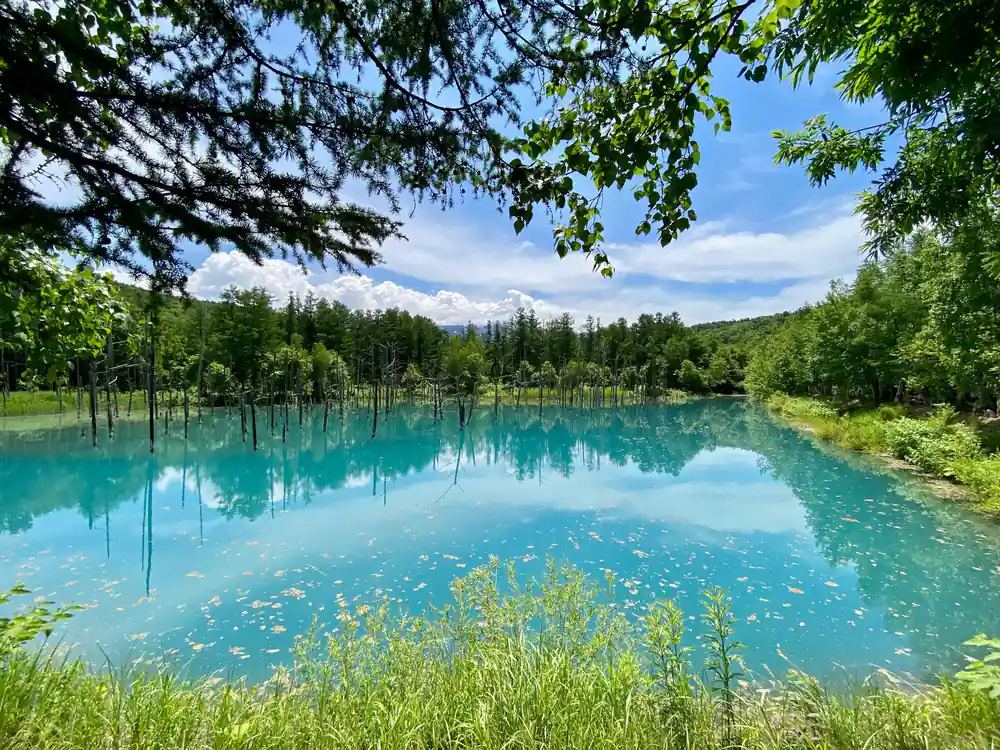
Wood cabins and warm lights among the trees of the Furano forest.
Farm Tomita, Shikisai-no-oka and the flower fields
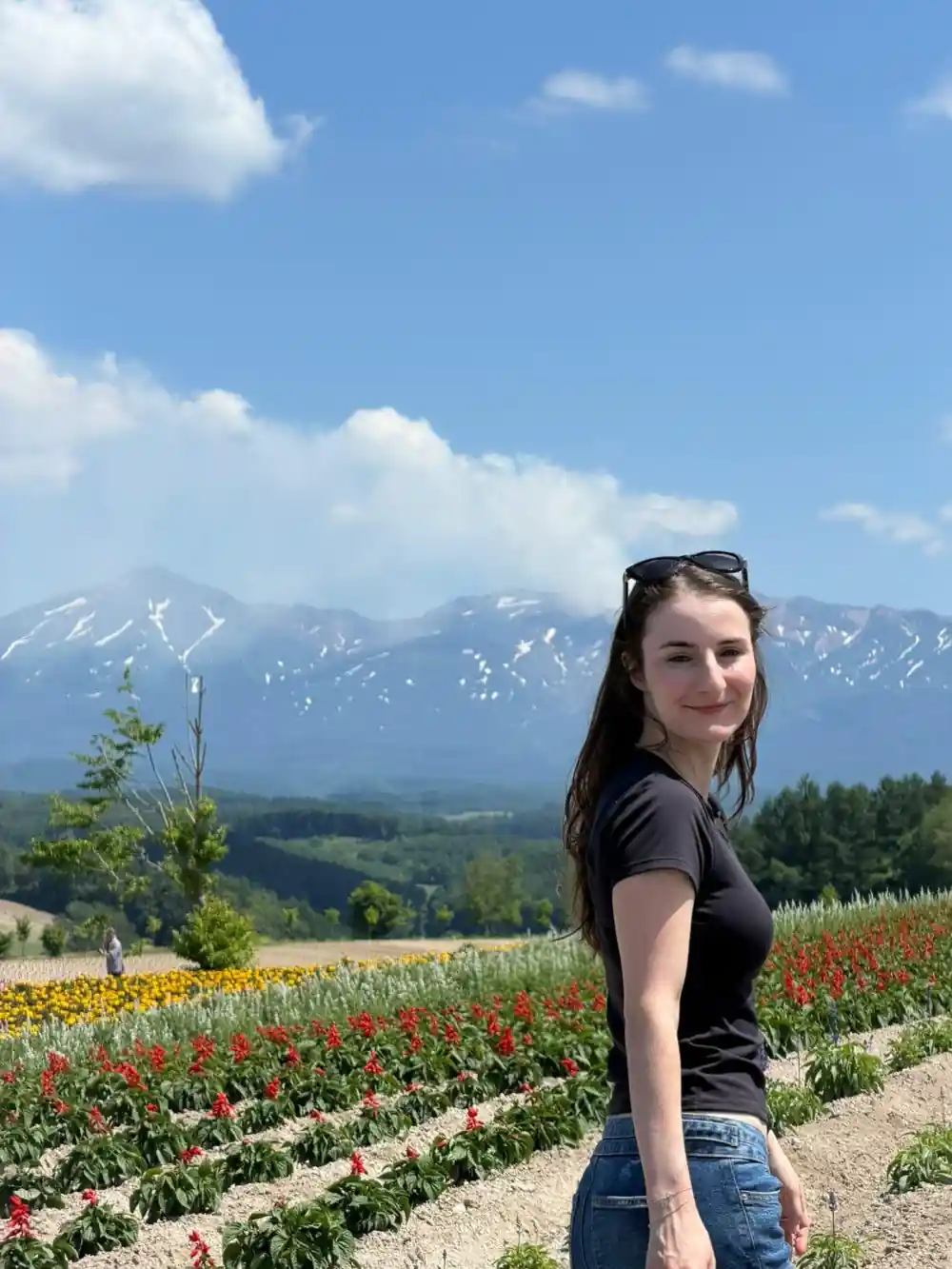
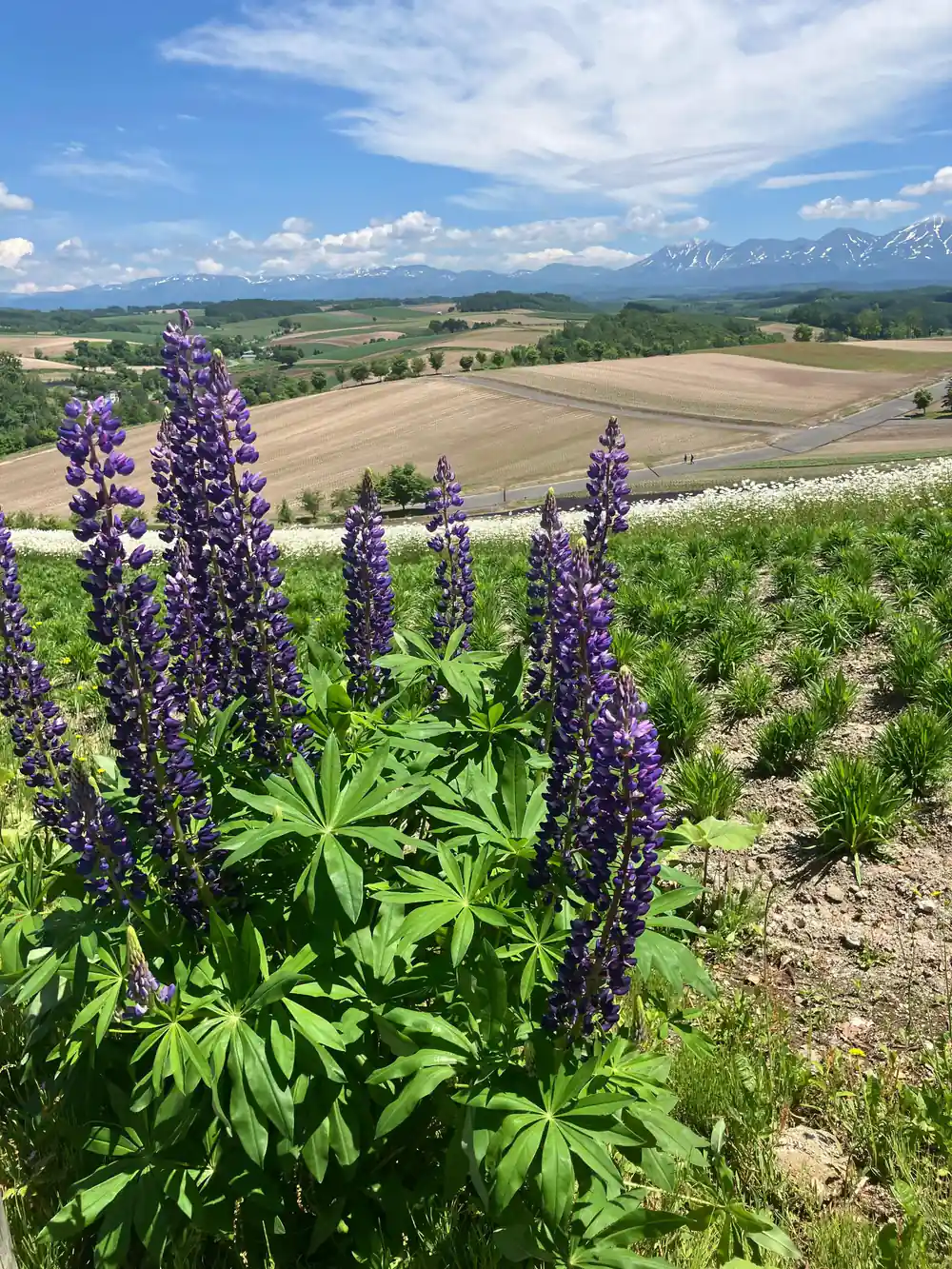
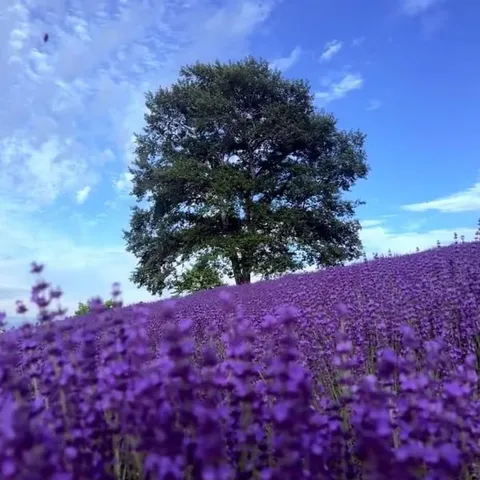
Farm Tomita is 29 hectares and welcomes over a million tourists annually, having doubled in size in 2008 with the addition of Lavender East.[9] Shikisai-no-oka is a panoramic flower garden in Biei that covers fifteen hectares of land.[10] Lavender starts blooming from late June to mid-August, and lavender has been cultivated in Hokkaido since the 1940s.[3][11]
The flower farms plant in strips and bands, so colour moves across the hillsides as the weeks pass and no two visits look quite the same. Expect wide open ground, little shade and a lot of photographers. Go early if you want the rows to yourself, and remember that these are working farms: stay on the paths, keep out of the planted beds, and buy something from the shop on your way out.
If flowers are the whole reason for the trip, give the farms a full day rather than squeezing them between other stops. Farm Tomita and Shikisai-no-oka sit in the same corner of the region, so pairing them is easy. Lavender starts blooming from late June to mid-August, and the light in the early morning is the kindest for photographs.[3]
Shirogane Blue Pond, Shirahige Waterfall and Mount Tokachi
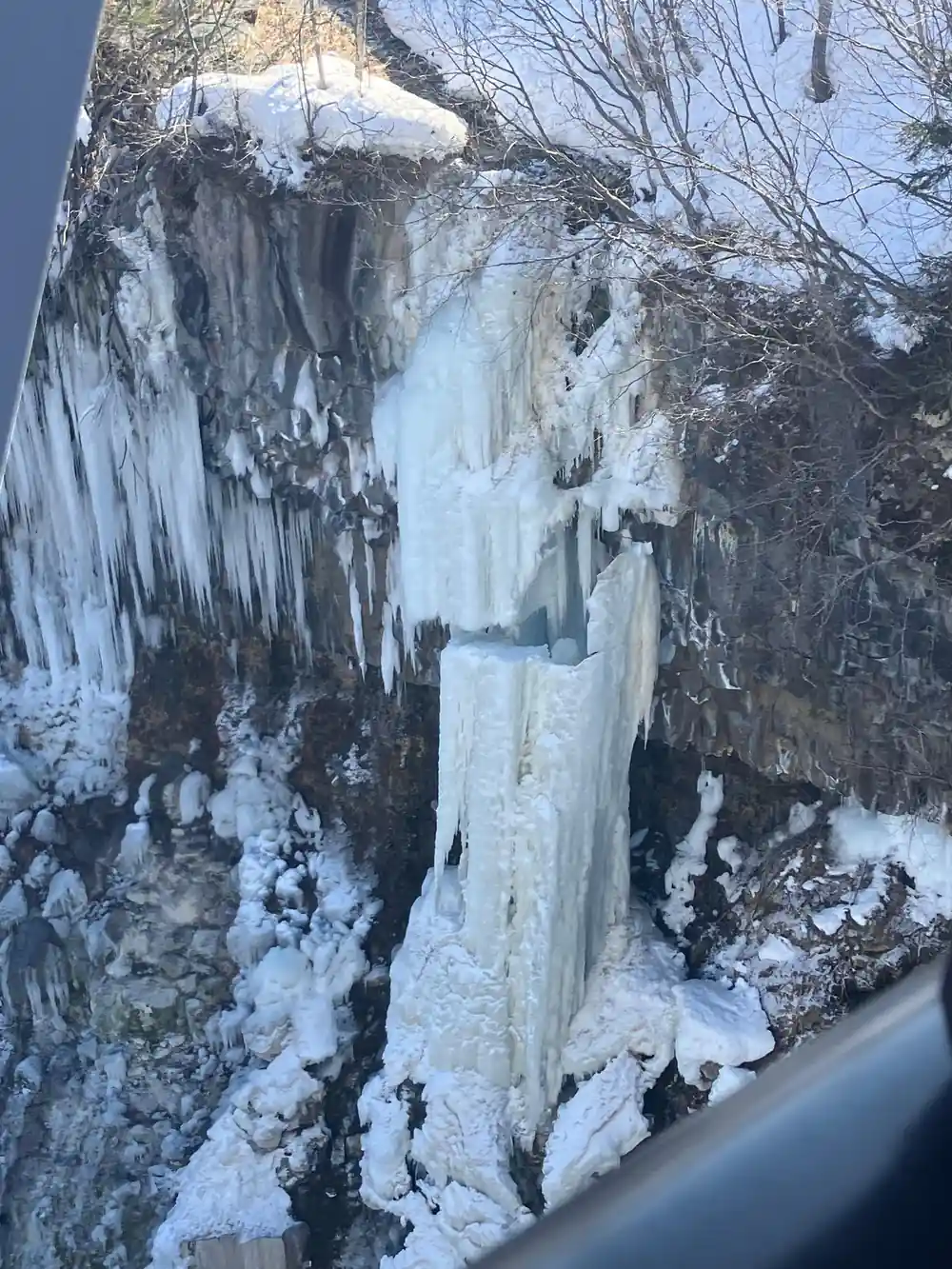
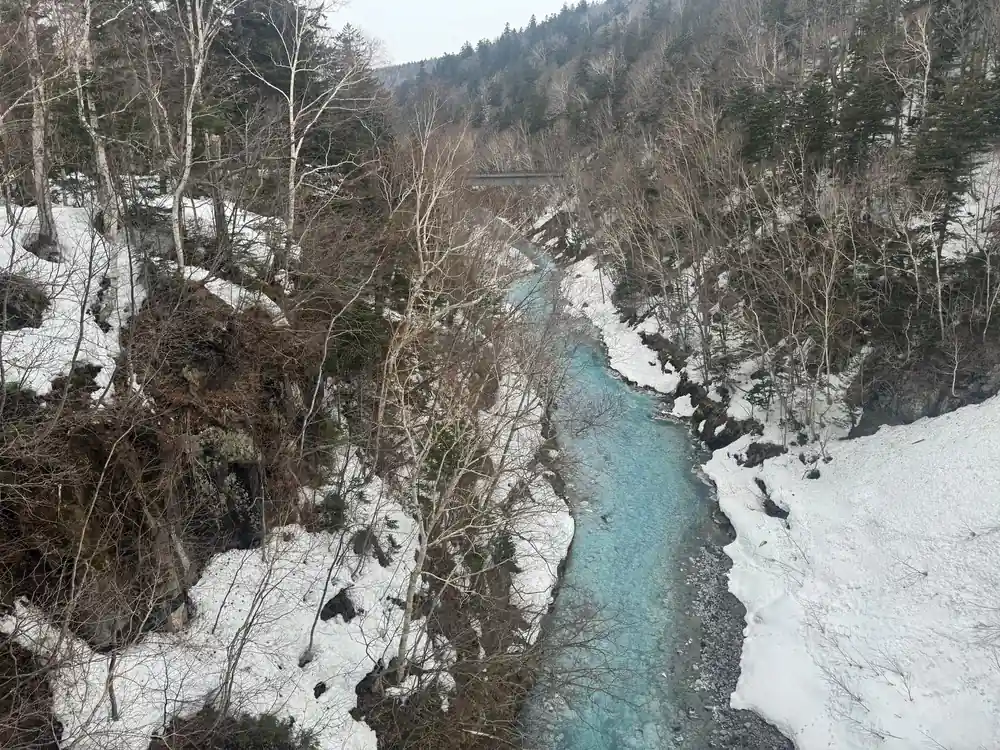
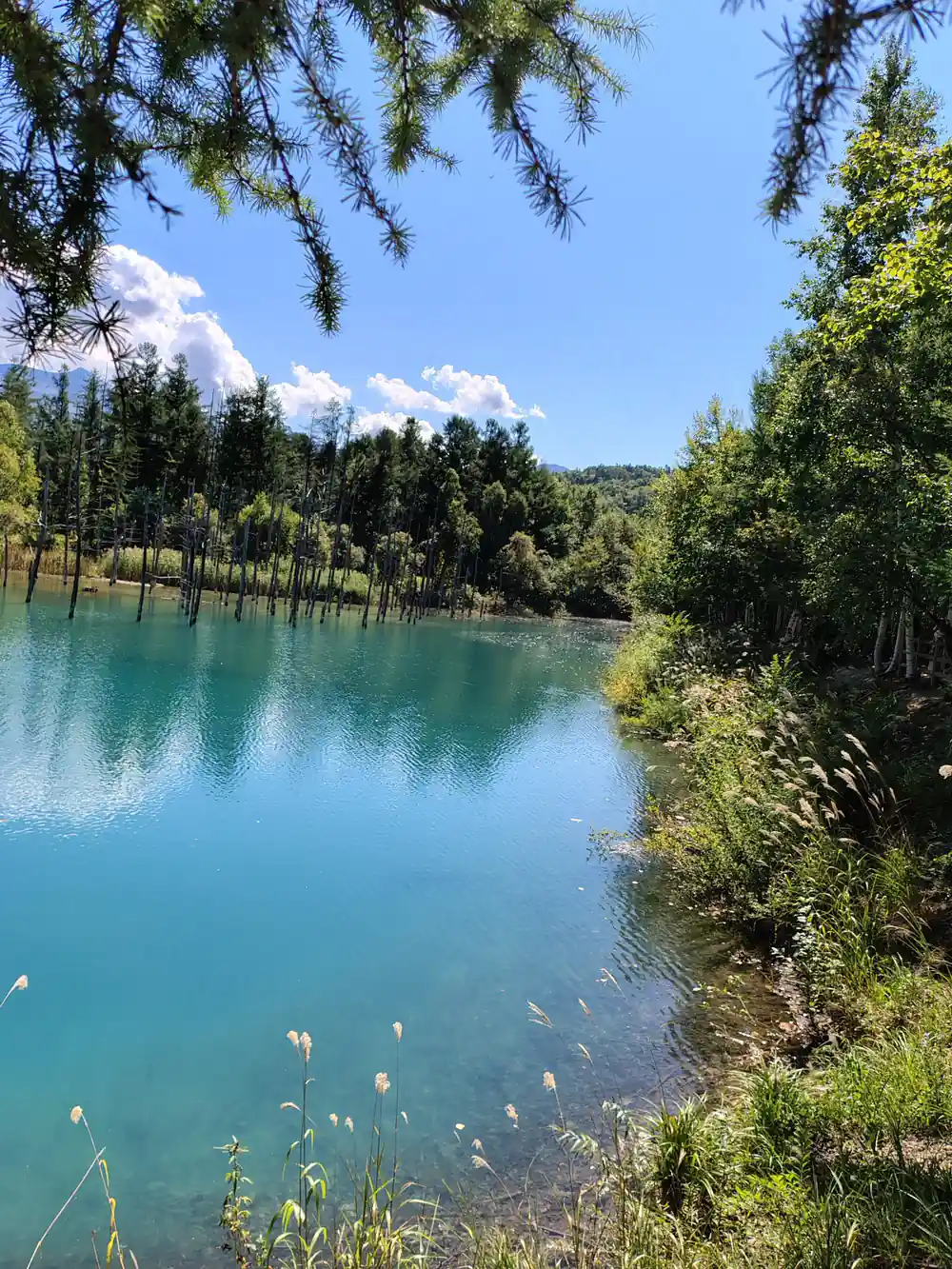
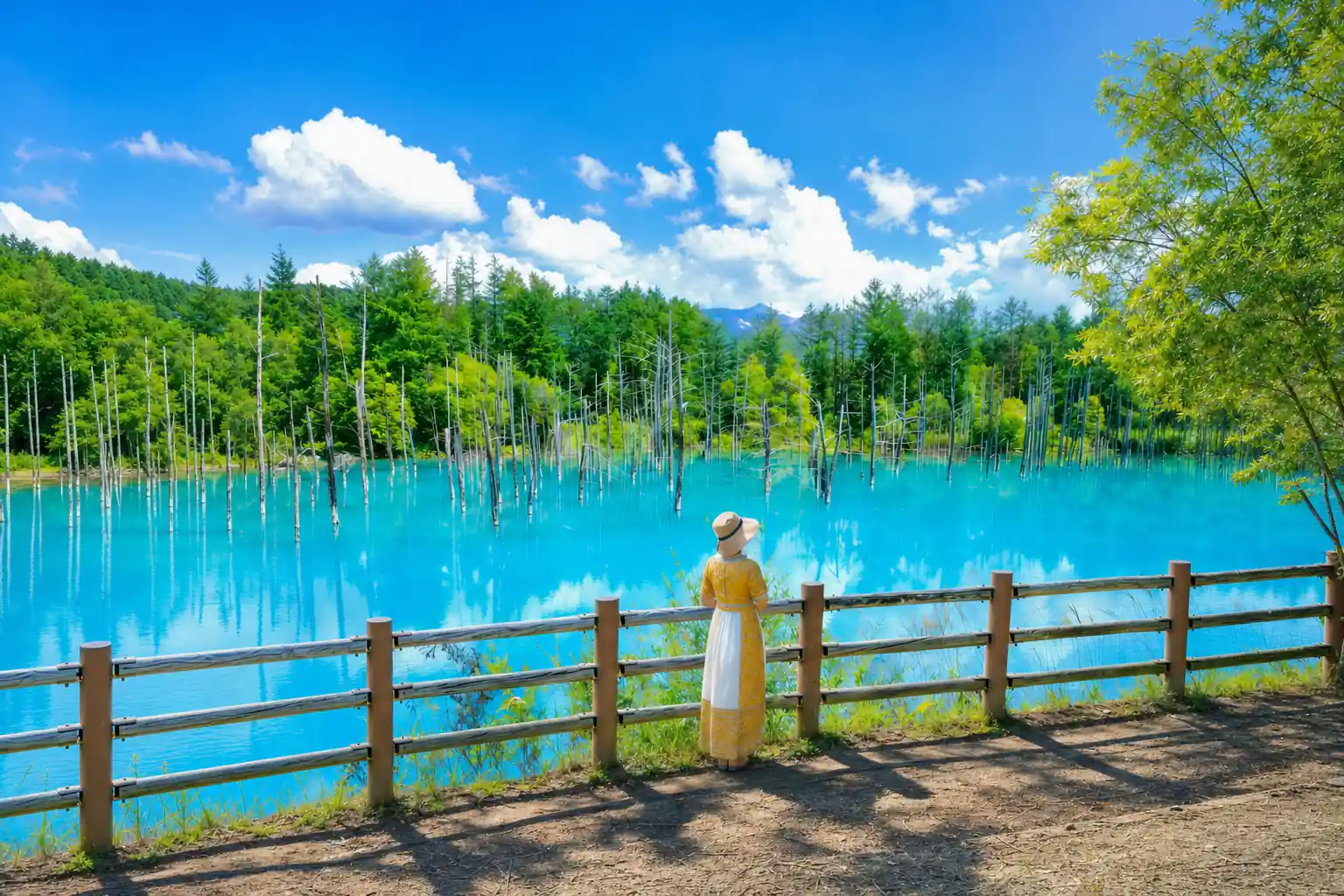
The Shirogane Blue Pond was created when emergency erosion-control dams backed up water after the December 1988 eruption of Mount Tokachi, and it appears blue because suspended aluminium colloids scatter light.[12] Mount Tokachi stands 2,077 meters high.[13] At Shirahige Waterfall, groundwater seeping from the rock face plunges about 30 metres to the river below.[14]
The pond is modest in size on the ground, with pale trunks standing in the water and a colour that shifts with the light, the weather and the time of year. It is at its most photographed in the quiet early hours, and in winter the surface freezes and the surrounding trees hold snow. Wear shoes with grip; the paths near the water and the waterfall can be wet underfoot.
The pond and the waterfall sit close enough to combine in one stop, and the drive between them runs through forest that is worth the trip on its own. In winter, access roads can be snowy and walkways icy, so check conditions before you set out and allow extra time.
from US$48
The Colored Hokkaido tour from Sapporo takes in the Blue Pond, Shikisai No Oka, a local restaurant and Farm Tomita over 1 day.[5]
Patchwork Road and the hills of Biei
The area around the Seven Stars Tree in Biei is known as Patchwork Road, where different crops are planted in each plot, forming the scenery the area is known for.[15] The views along the farm roads include golden wheat, purple potato flowers, green bean fields and brown plowed earth.[16]
This is landscape you look at rather than walk through. The colours change through the growing season, so a hillside that is green one month can be gold or brown the next. Pull over only where it is safe and legal, keep out of the crops, and watch for farm traffic on the narrow roads. A coach tour takes care of the parking and the viewpoints for you.
Early and late light runs long across the rows of colour, with the hills sitting behind them, and that is when the roads are quietest. Viewpoints are signposted along the farm roads, and a few of the famous trees have small parking areas beside them. Walk a section on foot if you can; the scale of the fields is clearer at walking pace.
Seasons, weather and what to wear
The average temperature in Furano in July is 22.1°C, warm enough for short sleeves and long evenings outside.[4] Lavender starts blooming from late June to mid-August, and this is the window the flower fields are known for.[3] Winter is a completely different trip: Furano received 158 cm of cumulative snowfall in the first two weeks of December, on top of 45 cm that fell in November.[17]
Pack for layers rather than one heavy coat. Summer days call for a t-shirt and a sun hat, with a light rain shell for showers rolling in over the hills, and grippy shoes for gravel paths at the pond and the farms. If you come for the snow, bring proper boots, gloves and a hat, and expect the light to fade early. A small towel and a water bottle earn their space in the bag in any season.
Insect repellent is worth packing for the green months, especially around the forest and the flower fields in the evening. Sun protection matters more than the mild temperatures suggest, since the open ground offers little shade. If you are visiting in the lavender window, book your transport before you book anything else.
Choosing a day tour from Sapporo
Day tours from Sapporo into this part of Hokkaido are listed from US$43 for the Biei and Furano Flower Sea route and from US$48 for the Colored Hokkaido tour that takes in the Blue Pond and Farm Tomita.[5][6] The Colored Hokkaido tour runs for 1 day with a live tour guide in English, Chinese, Japanese and Korean, and it is rated 4.56 from 122 reviews.[5] The flower sea route runs 10 hours, is rated 4.76 from 51 reviews, and has private or small groups available.[6]
Both listings offer free cancellation up to 24 hours in advance for a full refund and reserve now and pay later.[5][6] If you want the classic loop of blue water, patchwork hills and flower farms with someone else driving, a coach tour is the straightforward choice. If you would rather have fewer people around you at each stop, look at the small group options.
Read the stops before you commit. Two tours can both mention Furano and Biei and still spend the day in very different places, and a longer list of stops usually means more time on the coach. Check the meeting points as well: the Colored Hokkaido tour has 2 starting location options,[5] so know which one you picked before the morning.
From prices for Sapporo day tours
Day tour from prices
From prices per person as listed; child rates are set by each operator.[5][6][7][18]
When to go to Furano and Ningle Terrace
Plan your Furano day
Choose your season
Lavender starts blooming from late June to mid-August, while winter brings snow to the same hills.[3][17]
Decide how you will travel
Furano is about a two hour drive from Sapporo using the Doo Expressway between Sapporo and Mikasa.[2]
Book the day tour
Sapporo day tours to the area are listed from US$43 and from US$48, with free cancellation up to 24 hours ahead.[5][6]
Pack for the weather
The average temperature in Furano in July is 22.1°C, so plan light layers and a rain shell.[4]
Add Ningle Terrace
It is a shopping area in the green forest of Furano, with shops in wood cabins lit up after sunset.[1]
Ride from Sapporo to the Furano flower fields and the Blue Pond
from US$48Reserve now & pay later